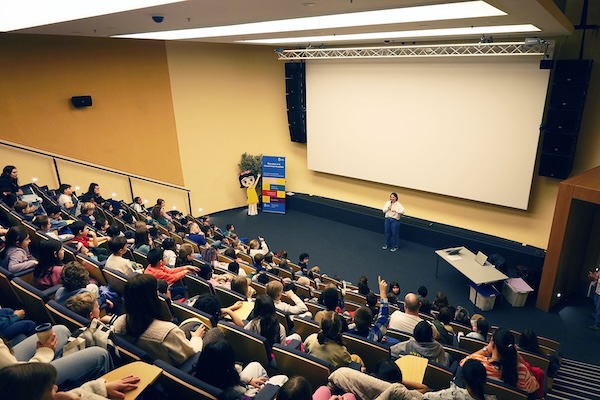
 Credit: © HI
On Monday 1 June 2026, Handicap International (HI), an independent international solidarity association with branches in eight countries, including Luxembourg, published the results of a survey indicating that seven in ten residents believe society should adapt to the needs of vulnerable people and persons with disabilities in order to create a more inclusive society.
According to HI, polling institute Ilres conducted the survey among 1,020 Luxembourg residents aged eighteen and over.
HI noted that seven out of ten residents believe that, in order to create an inclusive and harmonious society where all citizens enjoy equal rights, society should adapt to the needs of vulnerable people and persons with disabilities. The same proportion considers the inclusion of these groups to be an urgent priority in Luxembourg.
Regarding global challenges, HI reported that two-thirds of residents consider the use of explosive weapons in populated areas to be an urgent priority. The organisation noted that civilians account for 90% of casualties caused by such weapons, including children, who represent 25% of those victims. In 2024, 60,000 civilians were killed worldwide as a result of explosive weapons.
Geneviève Schmitt, Head of the Global Citizenship Education Team at Handicap International Luxembourg, commented: “Disability inclusion and the fight against the use of explosive weapons in populated areas are two of our key focus areas. We are proud to see that the awareness-raising work carried out by our team is bearing fruit and that the Luxembourg public also considers these issues to be priorities.”
The survey also examined attitudes towards defence spending and development aid. According to HI, 42% of respondents consider the current trend among European countries to increase defence spending legitimate for maintaining peace or reassuring populations, while 29% described it as understandable and 20% as unacceptable.
By contrast, reductions in official development assistance introduced by several Western countries, though not Luxembourg, were viewed as unacceptable by 38% of respondents. A further 28% considered such cuts understandable and 19% regarded them as normal.
Nevertheless, HI reported that seven out of ten respondents consider the work of NGOs in the development sector to be legitimate, while eight out of ten expressed the same view regarding NGO activities in emergency situations. The organisation added that its awareness-raising activities in Luxembourg are perceived by a majority of respondents as legitimate, essential and relevant.
Geneviève Schmitt noted that the survey was conducted in a particularly challenging global context, which may have influenced some of the findings. She added that the results underline the need to continue awareness-raising efforts aimed at strengthening understanding of key global issues and encouraging local action in response to them.
According to the survey, eight out of ten respondents reported having already engaged in or carried out an action in support of a cause.
The findings were published alongside the evaluation of the 2022-2025 framework agreement between Handicap International and Luxembourg's Ministry of Foreign and European Affairs, Defence, Development Cooperation and Foreign Trade.
HI reported that approximately 40,000 people interacted with awareness-raising campaign content produced by the organisation during the agreement period. Events and activities organised by Handicap International attracted more than 33,000 participants, while the NGO held 22 advocacy meetings with political authorities, leading to several public statements from decision-makers. Overall public satisfaction with the quality of the events was around 85%.
Geneviève Schmitt added: “This is a strong message. Awareness-raising, understanding and civic participation are objectives we work on every day. These results are encouraging and fully aligned with our goals. We will continue our efforts to revitalise the mobilisation potential of citizens in Luxembourg and contribute to profound societal changes in favour of disability inclusion, the protection of civilians affected by crises and humanitarian assistance.”