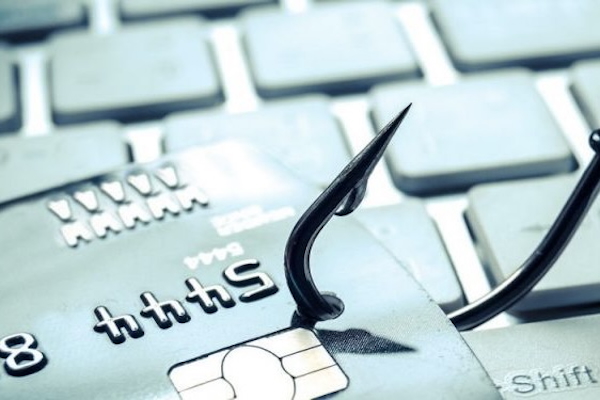
It often feels as if the most imaginative people in Luxembourg are those employed in attempting to scam the country’s residents.
The types of scam reported in Luxembourg are varied and can come in the form of telephone-based calls and messages, impersonations of relatives and authority figures, the physical manipulation of cash machines, fake bank websites and even fake parking meter payment information.
Sadly, the most targeted and susceptible demographic to such attempts at fraud are the elderly, with criminals often approaching such victims by telephone, electronically or even at their front door, with the intent to have the victim either hand over money or valuables or to provide personal data in order to access the victim’s money through other means.
With a notable increase in robberies and home break-ins across the country, scammers have boldly taken to using this rising type of crime as a means to impersonate police officers. The scam involves victims receiving a phone call from someone claiming to be a police officer. The caller will say that there had been several burglaries in the neighbourhood, some of the perpetrators had already been caught and the offenders were carrying a list which included the victim’s address information. The victim is then told that a police officer will visit their home to collect and record their valuables. Subsequently, a fraudster will arrive, show a fake police ID and take off with the valuables.
Regulatory authorities and established institutions have also been stung by misuses of their identity. In August 2025, the Commission de Surveillance du Secteur Financier (CSSF) issued a warning to the public about a notable increase in fraud attempts where consumers had invested in crypto-assets after being contacted by scammers impersonating CSSF representatives. In January 2026, Luxembourg bank Spuerkeess (Banque et Caisse d'Épargne de l'État, Luxembourg) had to issue a warning following the discovery of a fake investment brochure bearing its details which was being distributed in the country.
Even the Grand Ducal Palace has not been immune to attempts to use its identity for criminal purposes.
Money mules
One of the most significant types of fraud reported in recent years has been the “Luxtrust Scams”, which involved individuals being contacted by someone claiming to be a Worldline employee and then asked to confirm several transfers via their Luxtrust app. The victim would unwittingly transfer an unknown sum of money to the account of an intermediary. This type of scam is referred to as “Money Muling”, a money laundering technique in which perpetrators of crimes such as phishing use “money mules” to receive money from a bank account that is not their own and transfer it to another account or withdraw it in cash, before passing it on to someone else for a commission. Money mules are often young people or individuals in precarious financial situations who are recruited via social media and messaging platforms.
According to the Luxembourg City Public Prosecutors Office, 40 suspected money mules were arrested during 2025 after approximately 700 victims filed complaints. The estimated losses for this type of scam reached €10.2 million in that year, with authorities only able to recover around €1.6 million. Worryingly, these figures are not likely to be a true indication of the scale of this particular crime as many cases often go unreported due to the perceived embarrassment and stigma attached to falling victim to such a crime.
Cybercrime solutions
Luxembourg is no slouch when it comes to investing in infrastructure to combat and investigate high-level cybercrimes, having already established a significant cyber-defence ecosystem to protect its major industries, but it still has much to learn.
When it comes to lower level cybercrime, it is a very different picture. Fundamentally, the Grand Ducal Police have no dedicated department to deal with the everyday instances of cybercrime which affects individuals. Those instances of criminal activity fall under the police’s remit of “Crime against property” and “Support: New Technologies/Cybercrime”.
In 2025, a specialised task force was established within the police administration but only in response to the rising number of phishing cases taking place in the country. The team consists of around fifteen investigators and experts who come from the criminal investigation department. But, as phishing and other types of scam-orientated crime increase and become more sophisticated in nature, is this really sufficient to provide anything more than a reactionary response?
Because of the vast array of scams being undertaken, priority must be given based on the severity of the crimes involved. For example, investigations into recent money mule activities involved an individual who was the subject of an INTERPOL red notice issued by the Luxembourg judicial authorities in July 2025. That is not a status applied to your average scammer.
The individual was located in the United Arab Emirates by the Fugitive Research Section (FAST Luxembourg) and arrested in Dubai in December 2025 at the request of the Luxembourg authorities, on the basis of an international arrest warrant issued by a Luxembourg investigating judge. Her extradition to Luxembourg then took place on 29 January 2026, thanks to close cooperation involving diplomatic channels, the liaison officers of the United Arab Emirates and EUROPOL, the Fugitive Research Section (FAST Luxembourg), as well as the Anti-Money Laundering Section of the Economic and Financial Offences Department of the Judicial Police Service. This was a significant operation for Luxembourg authorities and represented the first extradition to Luxembourg from the United Arab Emirates.
With a traceable path of activity, it is somewhat more straightforward for the police authorities to build a case and take action for money mule crimes. Unfortunately, for illegal activities such as telephone and email based scams, or doorstep crime it is not so easy. Sadly, the damage to the victims of those crimes can be equally impactful, if not more personally invasive.
Recently, it took extensive investigations from the Grand Ducal Police just to be able to identify and arrest a man in relation to several cases of fraud which targeted older citizens in Luxembourg. According to the police, for several weeks they conducted investigations at a national level into a series of fraud offences where the perpetrators posed primarily as parcel couriers and delivery service employees and succeeded in obtaining credit cards as well as sensitive credit card data, which was then used to carry out various cash withdrawals and payments.
This is where the argument of “scale over severity” comes into play. It is not that the crimes are perceived as non-serious, it is that the resources to attempt to tackle these problems or bring someone to justice for committing them is hampered by a lack of investment. Large-scale crime receives investment. Small-scale scams seem to just be part of the world we live in, until they reach a scale where the police receive enough funding to establish a team dedicated to investigating them.
Another well-known scam preying on the elderly is known as the “Grandson Scam”, where the aim is to make the victim think they are talking to a family member in distress who needs help, and in particular, money. The scam is usually carried out over the telephone. When money is to be handed over, the alleged family member does not appear in person but sends someone else instead. A variation on this involves sending an SMS (text message) stating that the supposed relative's mobile phone has been stolen - removing any suspicion about them having new phone number - and the scam is then played out in the same way.
Then there is the “Shock Call”, where under the pretext that there has been a serious accident involving a close family member, the victim is contacted via phone and asked to deposit bail money to release a family member from police custody. The perpetrators pretend to be police officers, employees of the public prosecutor's office or close relatives.
Combine these types of crimes with similar scams taking place via email and social media and you have a vast array of relatively simple techniques criminals use to take advantage of unwitting victims. If, as the police have said, these crimes require extensive investigations to result in an arrest, imagine what the future holds as it becomes easier for criminals to take advantage of technology which allows the perpetrators to use artificial intelligence (AI) to easily impersonate voices or produce deepfake videos.
Where the fight lies
Let me be clear, I am not suggesting that the police do not care about these crimes or that they believe that they are not a significant problem. I am simply suggesting that as the number of instances of these scams rises further and the technology behind them becomes both more advanced and easier to utilise, a country like Luxembourg should be using its money, resources and existing knowledge to be more proactive about dealing with them, and this starts by improving the education around how they work now and will work in the future.
Scams are not going to go away; technology will make them more advanced to the scammer but innocently simple to the victim. This fight is no longer about being wary of a conman knocking at one’s door - it is a fight against technology.
Fake websites, caller ID spoofing, data scraping of social media profiles and malware are all real world, in-use technologies which are highly effective at acquiring the types of information required to commit a scam. Frustratingly, they often leave little in the way of an obvious evidence trail. Even scams which involve physical manipulation such as tampering with ATMs or applying fake QR codes to parking meters work without ever requiring any direct interaction between the victim and the scammer(s).
Luxembourg is certainly not alone in suffering from this problem but it is undeniable that the Grand Duchy’s status as an affluent country makes it a very attractive option for those looking to cash in on the fraud industry and invest in it too. Maybe it is time Luxembourg invested in a dedicated team to both deal with it and educate about it before the pace of technology begins to outrun the ability to police it.
Further information on how to prevent falling victim to the types of scams mentioned above can be found at: https://police.public.lu/en/prevention.html.