 Credit: M3S
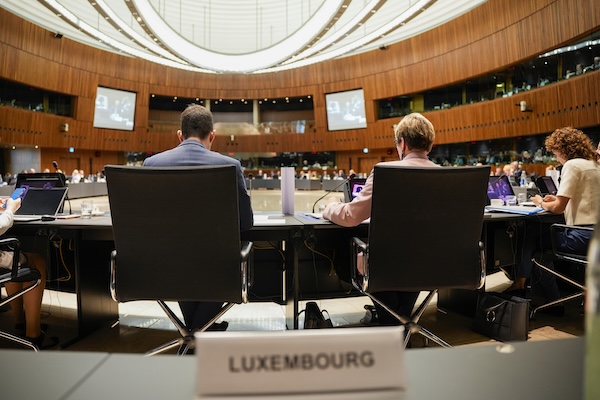
On Tuesday 16 June 2026, European Union (EU) health ministers met in Luxembourg for the Employment, Social Policy, Health and Consumer Affairs Council (EPSCO) to discuss measures aimed at strengthening the competitiveness, innovation and resilience of Europe's healthcare systems.
According to Luxembourg's Ministry of Health and Social Security, the discussions focused on legislative proposals related to the European Biotech Act I, simplifying the regulatory framework for medical devices and strengthening Europe's strategic autonomy in the pharmaceutical sector.
The Council reached a general approach on the proposed directive concerning the placing on the market of genetically modified micro-organisms and the processing of human organs, stated the ministry.
Ministers also held a policy debate on the proposed regulation establishing a framework of measures to strengthen Europe's biotechnology and biomanufacturing sectors, particularly in healthcare. Discussions focused on ways to support innovation, encourage investment and reinforce the EU's competitiveness in a sector considered vital to its industrial, scientific and healthcare future.
During the debate, Luxembourg's Minister of Health and Social Security, Martine Deprez, called for greater recognition of Europe's scientific excellence through a more agile regulatory framework that supports the development of strategic value chains across the continent. She also reaffirmed the need to develop a strong European ecosystem for biosimilars (highly similar versions of existing biological medicines), describing it as essential to the long-term sustainability of healthcare systems, and defended the continued use of regulatory sandboxes as an important tool for innovation, said the ministry.
Minister Deprez also supported the objective of simplifying the regulatory framework for medical devices and in vitro diagnostic medical devices, while underlining the need for further technical work before negotiations can be concluded.
Luxembourg also joined Germany in calling on the European Commission to carry out a more detailed impact assessment of how the "polluter pays" principle under the Urban Wastewater Treatment Directive could affect the availability and cost of medicines.
The Cypriot Presidency also presented a progress report on the proposed regulation aimed at simplifying the rules governing medical devices and in vitro diagnostic medical devices.
Ministers also received updates on several current issues, including the recent Ebola outbreak in Central Africa and progress on the Critical Medicines Act, said the ministry.
According to the ministry, on the margins of the Council, ministers held an informal working lunch with discussions highlighting the importance of securing supply chains, supporting European production and ensuring sustainable access to essential medicines for patients.
The ministry added that through these discussions, Luxembourg reaffirmed its commitment to building a healthcare policy that is more innovative, more competitive and better prepared to meet future health, industrial and geopolitical challenges.