The role and responsibilities of Boards of Directors were on the agenda at 'Fund Day', an event co-organised by PricewaterhousCoopes (PwC) Luxembourg and the Institut Luxembourgeois des Administrateurs (ILA) on Tuesday 26 January 2016.
As PwC Luxembourg explained, as boards have been institutionalised and aligned to effective standards of governance, the expectations of investors have increased. The chronic consanguinity of the past has given way to a new model which emphasises transparency, ethics and professionalism and brought with it the question of what value a board should place on investors. It was a consideration of this that brought together diverse stakeholders at the Fund Day conference.
According to PwC, the Board is not only a regulatory body, but also a source of added value for investors, with the archetypal Board diversified, transparent, ethical, professional and up to date with the latest practices in governance.
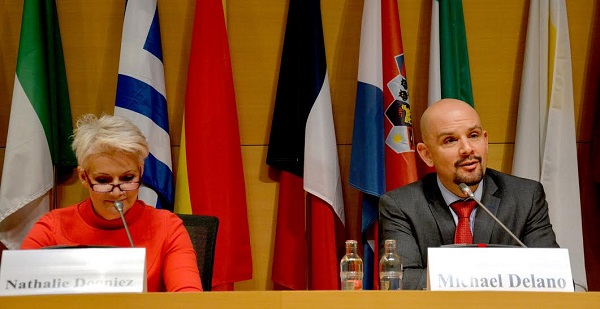
"A good board should be complementary, protect the interested of investors, act independently, and take particular care of its governance," advised Nathalie Dogniez, partner at PwC Luxembourg and President of the Working Group dedicated to funds within the ILA. "Regular assessment of the governance of the fund and its board is a response. Do not overlook the cohesion of the group. Team spirit is the cornerstone of the proper functioning of a board."
Value creators, administrators must fully understand the issues and evaluate whether sufficiently good practices are in place in order to define a strategy - a full-time mission. Stakeholders at the conference all agreed on the virtuosity of a balanced composition between executive and non-executive.
The Board should also have an exhaustive foothold on all information flows, made all the more important due to the rapid digitisation of all parts within an organisation and the proliferation of cyber attacks. Data have become the target of cybercriminals, with attacks intensifying and occasionally even manifesting in a ranson demand. The committee here has an important card to play in preventing this, by knowing where the data is and who has access to it.
Between compliance with current regulations and the establishment of new ones, boards of dirctors have their work cut out. AIFMD, UCITS, MiFID, PRIIPS and SFTR are just some of the examples on everyone's lips.
"The current regulatory environment is supported," commented Michael Delano, Associate at PwC Luxembourg. "On the ground, we can see that boards of directors pay special attention to compliance and to the associated risks, particularly with regard to the marketing of funds."
The reform of the audit market will also have repercussions for listed entities on regulated markets in Europe, when it comes to reviewing the audit report format and providing an additional document for the audit committee on 16 June 2016.
Photo by PwC Luxembourg (L-R: Nathalie Dogniez; Michael Delano)