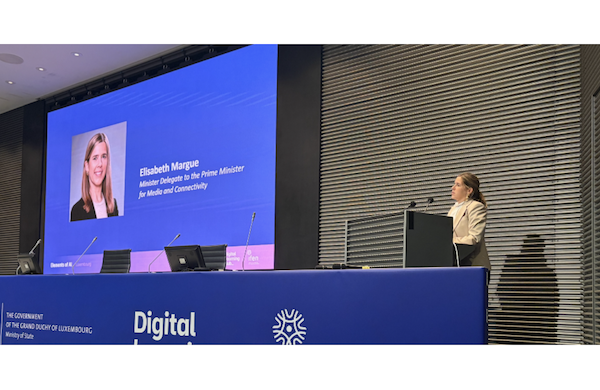
 Credit: SMC
On Wednesday 20 May 2026, the Digital Learning Hub hosted the closing conference of the 2026 edition of the “Elements of AI Luxembourg” programme, an initiative aimed at strengthening artificial intelligence literacy as part of Luxembourg’s national AI strategy, bringing together around 250 participants from public institutions, academia, the technology sector and the programme’s learners.
Luxembourg’s Minister Delegate to the Prime Minister for Media and Connectivity, Elisabeth Margue, took part in the event, which was organised by the Media, Connectivity and Digital Policy Department of the Ministry of State in partnership with the Digital Learning Hub and the National Education Training Institute.
According to the Media, Connectivity and Digital Policy Department and the Digital Learning Hub, the conference illustrated the growing interest in gaining a better understanding of artificial intelligence within Luxembourg society.
The fifth edition of “Elements of AI Luxembourg” combined a free certified online training course with expert-led support sessions, with the initiative aiming to make artificial intelligence knowledge accessible to a broad audience.
Minister Margue highlighted the continued growth of the initiative following this edition: “Since its launch in Luxembourg in 2021, the programme has enabled more than 7,600 people to acquire fundamental knowledge in artificial intelligence. This represents around 1.1% of the working-age population, thereby exceeding the national target set for 2030.”
She also stressed the broader significance of the initiative: “Providing widespread training in artificial intelligence is not only about developing technical skills. It is also about giving everyone the tools to critically understand ongoing transformations, while taking into account the ethical implications, risks and responsibilities associated with these technologies.”
During the conference, Minnalearn and the University of Helsinki discussed Luxembourg’s good practices and the positive effects of the programme’s deployment in the Grand Duchy. Data placed Luxembourg in second place behind Finland among European countries where the dissemination of AI knowledge is particularly “dynamic”.
According to the organisers, discussions during the conference also addressed future developments in artificial intelligence and its practical effects, notably through contributions from technology and institutional stakeholders. A presentation by ADEM Director Isabelle Schlesser highlighted changes in the labour market linked to artificial intelligence.
The organisers added that, in a context where artificial intelligence is profoundly transforming economic models and professional practices, skills development represents an essential lever. In this regard, “Elements of AI Luxembourg” contributes to preparing society for these changes by promoting a broad, informed and responsible understanding of AI.