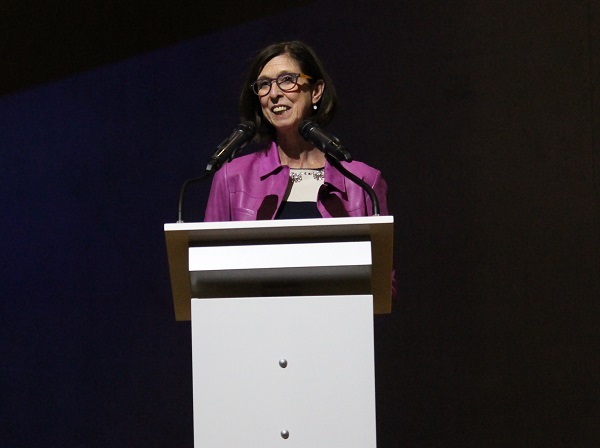
On Friday 14 July 2017, Luxembourg's Minister for Equal Opportunities, Lydia Mutsch, presented the 2nd Interim Implementation Report of Equality 2015-2018 to the cabinet of the government.
The Equality 2015-2018 plan was adopted on 8 March 2015, to be coordinated by the Ministry of Equal Opportunities through the inter-ministerial Committee for Equality between Men and Women. 19 ministerial departments have been involved in the development of the current Plan of Action and are thus responsible for the implementation and implementation of their respective measures.
The first interim report on the implementation of the measures set out in the Action Plan, dated 29 July 2016, showed that only a quarter of the measures had yet to be initiated. As the level of implementation of the measures was subdivided into 3 categories for the first report, a fourth level, indicating the permanent nature of the measures, was added in the second report.
Besides the actions and work carried out by the Ministry of Equal Opportunities, the Equality Plan includes 104 different measures concerning the equality of women and men.
As of 1 July 2017, 85% of the measures contained in the National Action Plan are either completed or ongoing or are permanent and 16% of the measures have been postponed. The involvement of equality delegates in the implementation of the measures is 49% compared to 27.2% in 2016.
Among the political priorities of the Government is the equality of men and women in economic decision-making.
Government's efforts to improve women's representation in decision-making bodies bear fruit - 4th intermediate assessment
In its meeting of 14 July 2017, the cabinet also analysed the 4th interim report on better representation of the under-represented sex in decision-making bodies of a total of 95 public institutions, economic interest groups (GIE) and companies (listed and unlisted) in which the government holds interests or participations. The target is 40% until 2019.
In 2014, the Ministry of Economy set up a monitoring system to monitor the situation.
Between January 2017 and June 2017, the total percentage of women members of boards of directors under supervision rose from 25.66% to 26.76%. In the case of representatives of the state alone, this rate rose from 32.24% to 33.46%. In other words: out of 867 directorships (private sector + state), 232 mandates belong to women. In order to reach the target of 40%, 115 additional mandates are to be filled by women until 2019. 523 of these 867 mandates are held by state representatives, 175 of them by women.
The Government's efforts in this area are in the context of a policy of equitable sharing of responsibilities between men and women in all areas of life, with economic decision-making being the area where women are still largely under-represented.
Between January 2015 and June 2017, the total percentage of women members of boards of directors under supervision rose from 21.75% to 26.76%. In the case of representatives of the state alone, this rate rose from 27.18% to 33.46%.