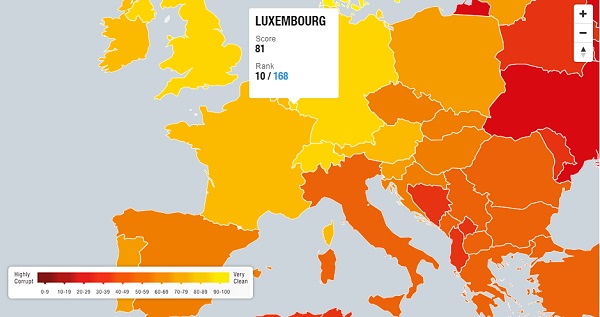
A 2015 study by anti-corruption organisation Transparency International has ranked Luxembourg 10th out of 168 countries for corruption.
Sharing the spot at 81 points with Germany and the UK, the Grand Duchy's number 10 position shows that the country is considered relatively clean in terms of corruption. The assessment of top performers was determined on characteristics such as freedom of press, public access to budget information, integrity among people in power and judiciaries that are truly independent from other parts of government.
However, according to Transparency International, low levels of corruption do not show what may be going on behind closed doors in terms of countries 'exporting' corruption overseas, and in August 2015 Luxembourg figured among 20 countries with 20.5% of world exports who exhibited 'Little or No Enforcement' of combetting foreign bribery since the OECD Convention on the topic entered into force sixteen years ago. By contrast, Luxembourg's number 10 neighbours, Germany and the UK, constituted two of the four countries demonstrating 'Active Enforcement' of measures against foreign bribery, with the latter country joining Greece and Senegal in improving its corruption status in the last year.
"The 2015 Corruption Perceptions Index clearly shows that corruption remains a blight around the world," commented José Ugaz, Chair of Transparency International. "But 2015 was also a year when people again took to the streets to protest corruption. People across the globe sent a strong signal to those in power: it is time to tackle grand corruption."
Denmark was ranked in first place for the second consecutive year, whilst North Korea and Somalia found themselves with the lowest scoring performances at just 8 points each. Brazil saw the biggest decline in the rankings, dropping 7 positions to 76th, with the study suggesting that the start of judicial process in the wake of the Petrobras scandal could see the country bring an end to corruption.
Based in Berlin, Transparency International works together locally and globally with governments, businesses and citizens in a bid to stop the abuse of power, bribery and secret deals. It is now present in over 100 countries, working to bring about change through collective conscience.
"Corruption can be beaten if we work together," continued José Ugaz in the report. "To stamp out the abuse of power, bribery and shed light on secret deals, citizens must together tell their governments they have had enough."
Maps by Transparency International