Under the auspices of the Luxembourg Presidency of the Council of the European Union, a debate was held on Monday between the European Council for Transport Safety (ETSC) and the Ministry for Sustainable Development and Infrastructure concerning road safety.
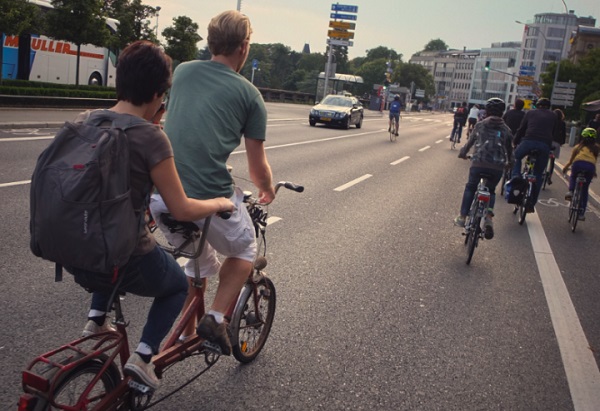
Hosted by Jeannt Mersch, President of the European Federation of Road Traffic Victims, the debate focused on measures that can be taken to imporve the safety of pedestrians and cyclists.
Luxembourg Minister of Sustainable Development and Infrastructure, François Bausch, gave an opening presentation on the Grand Duchy's commitment to road safety, citing the securing of roads as a priority to be enforced through education on good driving behaviours, particularly amongst younger drivers.
The policies which have been implement in this regard in Spain and the Netherlands were presented at the debate by Alvaro Gomez, General Directorate of Traffic in Spain, and Henk Stipdonk of the Road Safety Research Institute in the Netherlands, respectively.
These policies were then discussed by debate participants, who offered their main recommendations to improve the safety of pedestrians and cyclists in Luxembourg, a form of transport which often goes unused due to fears of subsequent accidents.
These fears are not necessarily unfounded, with the main risks for pedestrians and cyclists due to multiple factors, including driving behaviour such as speeding or driving whilst intoxicated; inadequate infrastructure meaning a lack of pedestrianised facilities such as zebra crossings; lack of suitably lit areas, leading to walking and cycling injuries at night or in low light conditions; as well as road users distracted by portable electronic devices.
Participants therefore proposed the implementation of better lighting, visibility and signed passageways for pedestrians and cyclists, with 30 km/h speed limits in school areas as well as traffic calming measures.
Debators agreed that, in addition to frequency, teo other factors also determine the effect of an educational deterrent punishment measures, these being the speed of the penalty and its certainty. The future installation of speed cameras was cited as an absolute necessity, although the participants found that 20 fixed speed cameras and 5 mobile ones was an insufficient amount. Police checks would therefore need to be added and consistently and strategically enforced.
MEP and Member of the Committee on Transport and Tourism, Georges Bach, concluded the debate by highlighting the Eurpean Parliament's commitment to the endeavour, stating that road safety concerned everyone and required constant efforts. He requested that exchnaging knowledge and best practice be encouraged among Member States so that they could be aware of national, regional and local plans with regards to road safety.
Photo by European Transport Safety Council