 Credit: Ali Sahib, Chronicle.lu
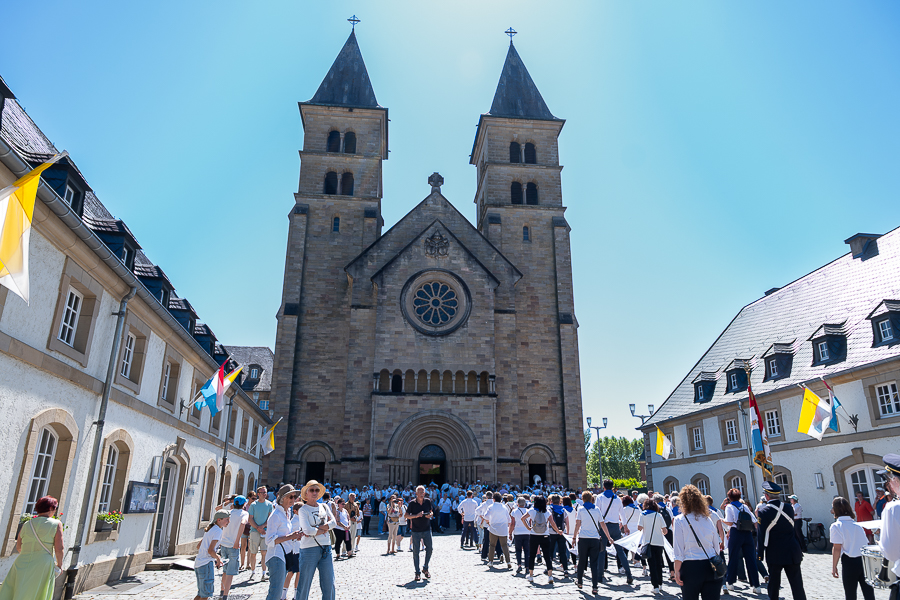
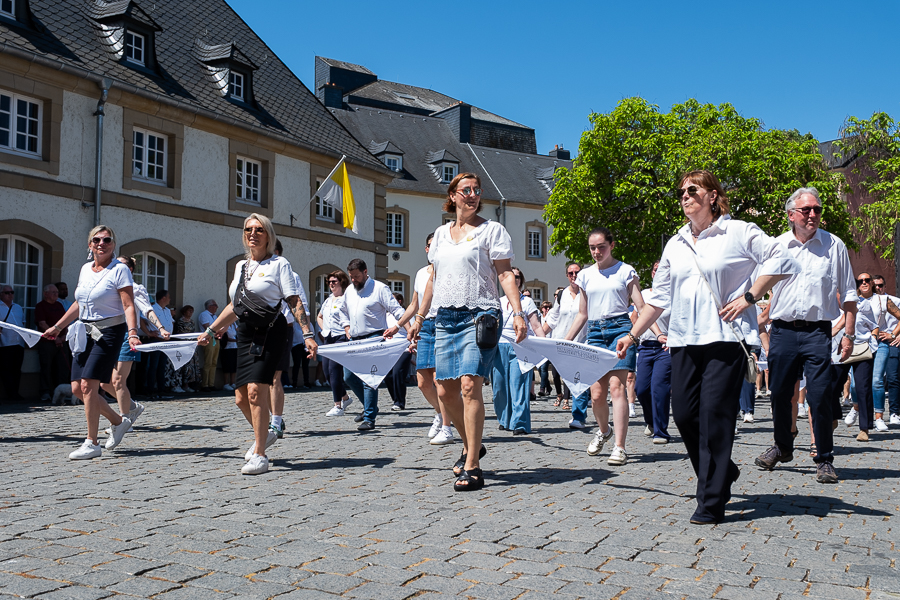
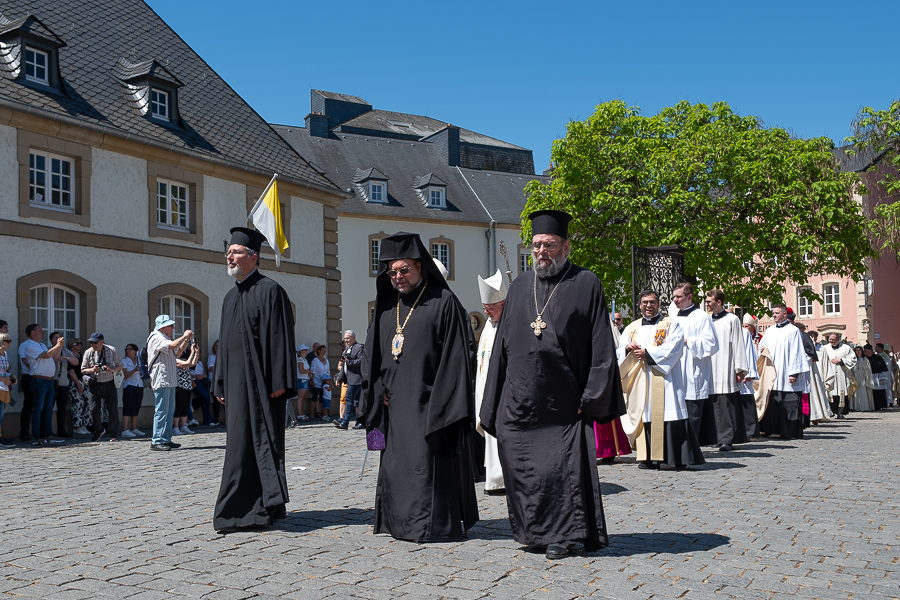
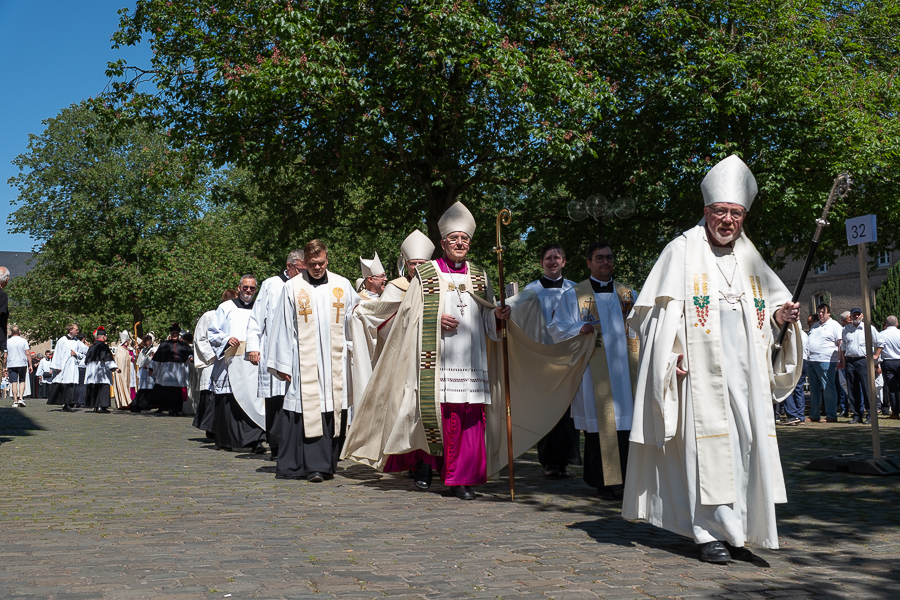
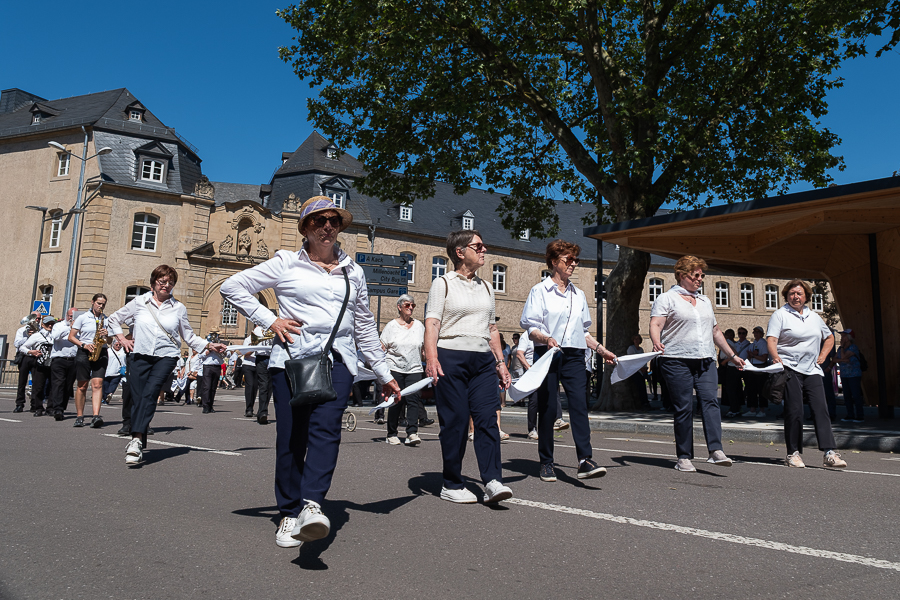
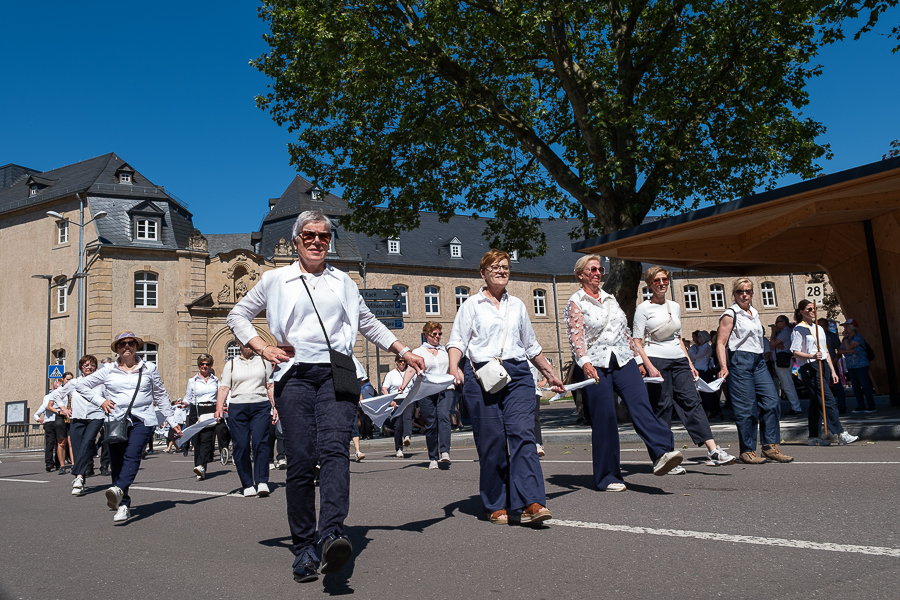
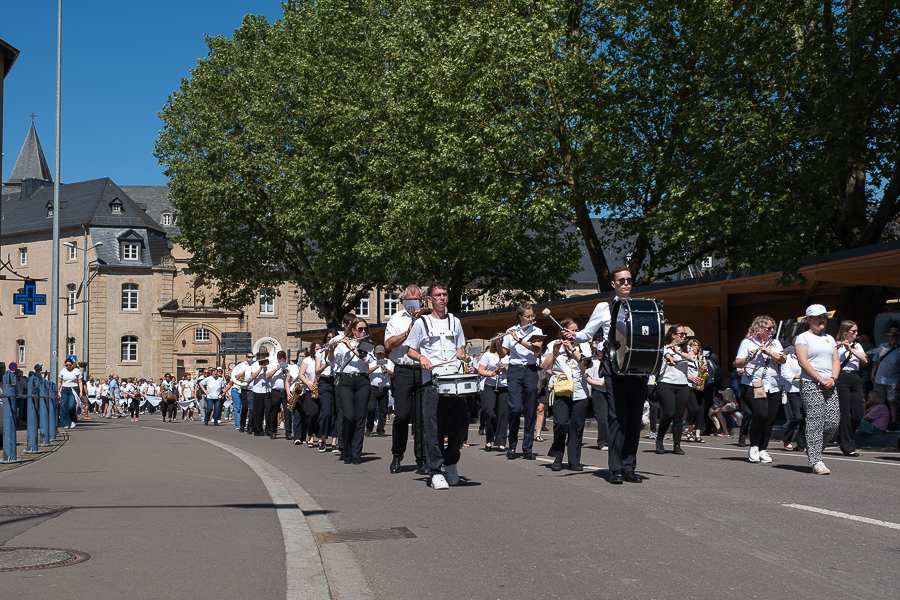
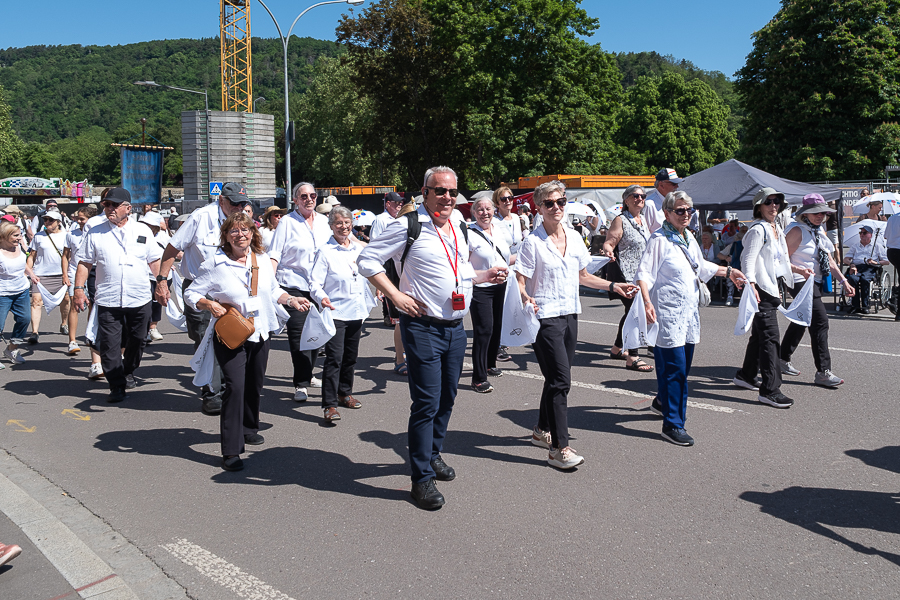
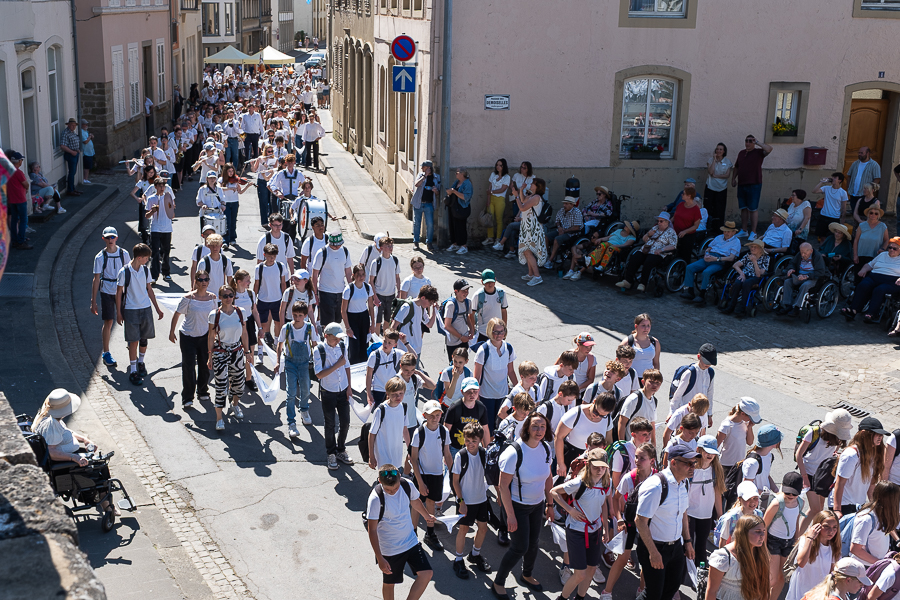
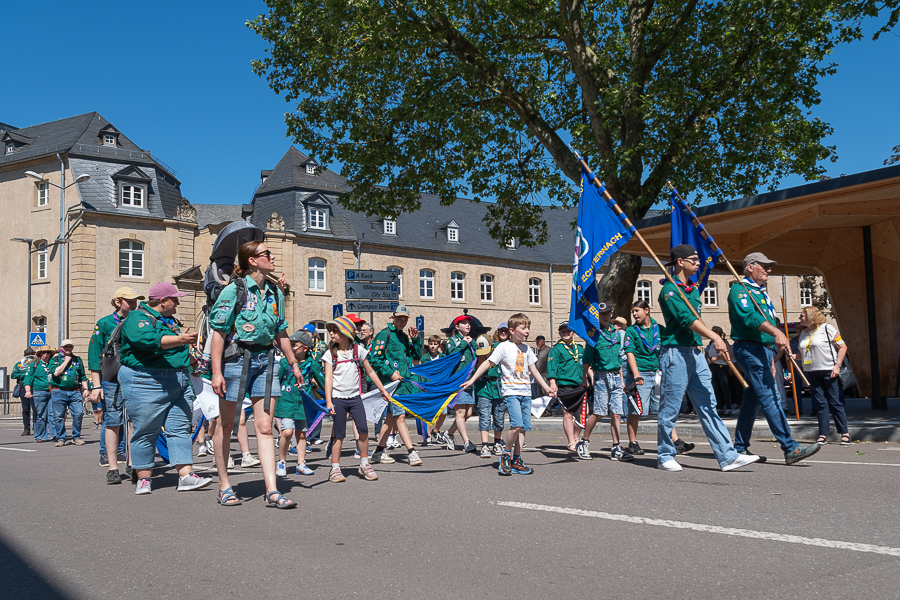
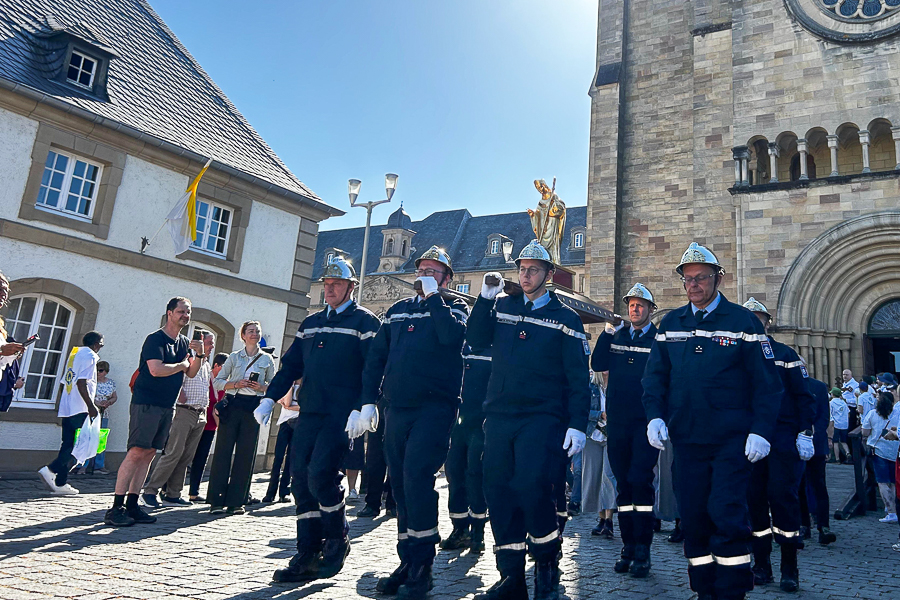
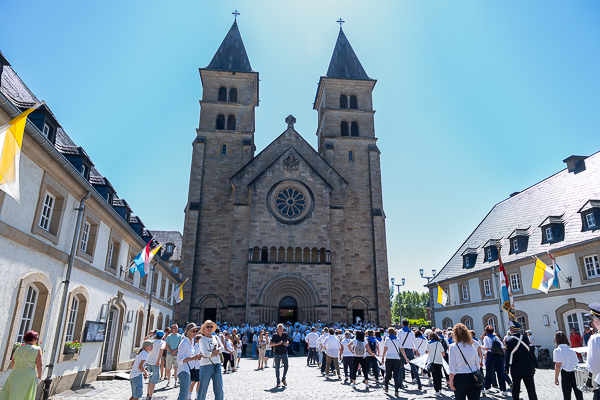
On Tuesday 26 May 2026, a few thousand pilgrims and visitors from 35 groups gathered in Echternach for the annual hopping procession (Iechternacher Sprangprëssioun), known locally as the “Sprangprozessioun”.
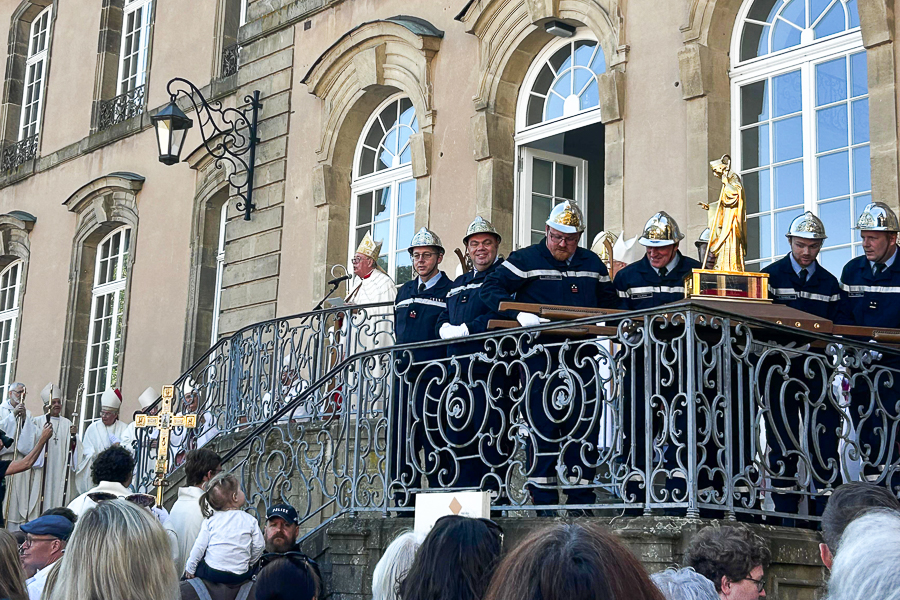
The procession, which takes place every Whit Tuesday in honour of Saint Willibrord, began after a morning mass at the Basilica of Saint Willibrord. This religious tradition was recognised as Intangible Cultural Heritage by UNESCO in 2010.
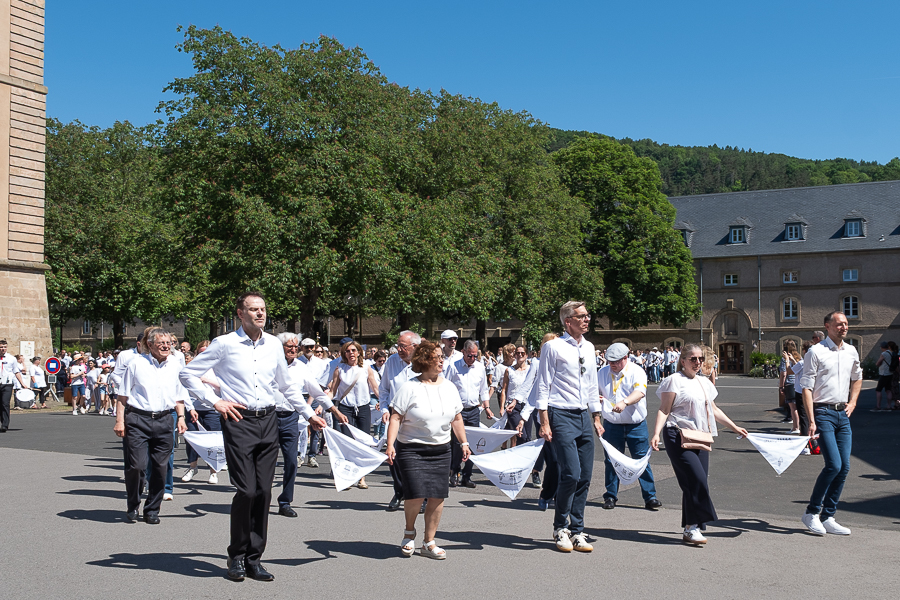
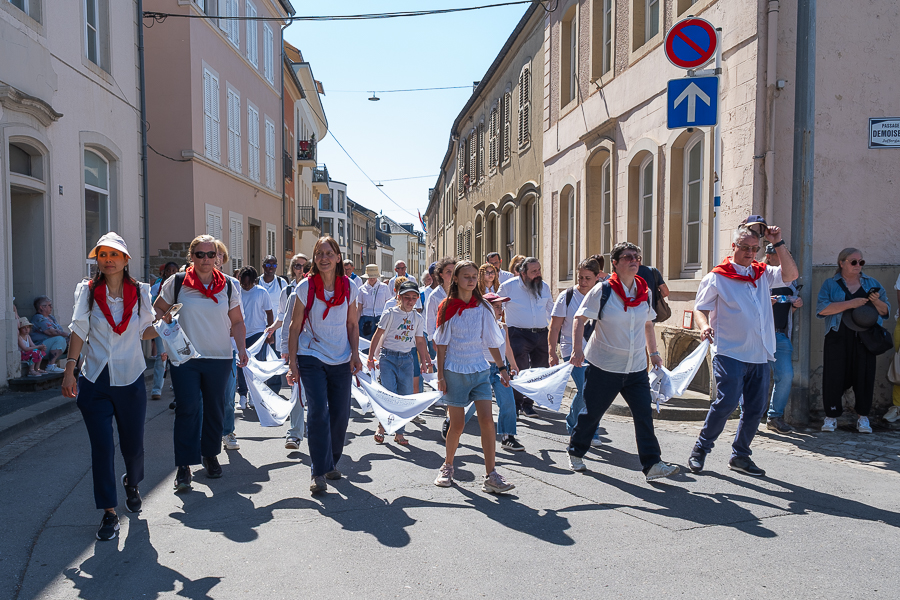
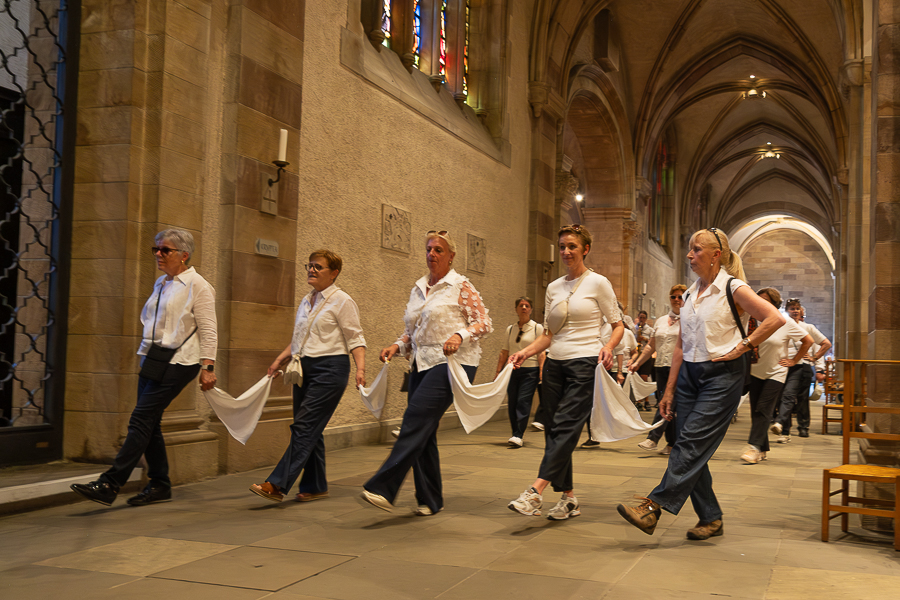
Participants were dressed in white shirts and dark trousers or skirts as a symbol of unity and tradition. Together they moved through the streets of Echternach in coordinated hopping steps accompanied by musical groups.
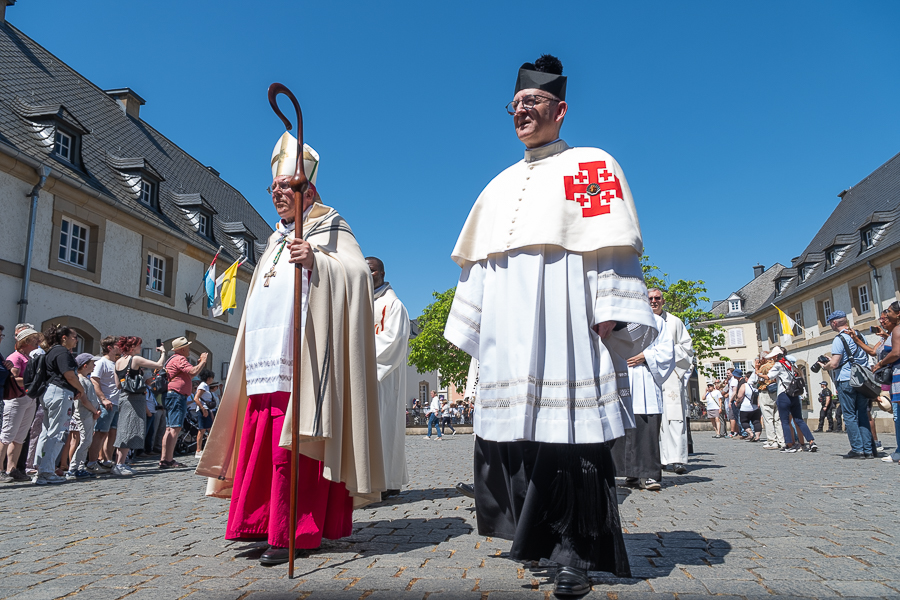
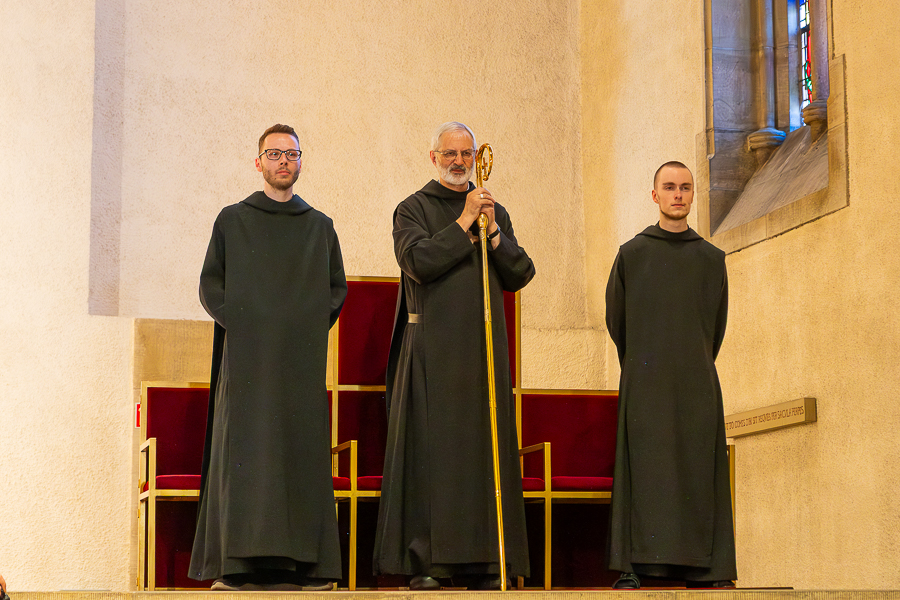
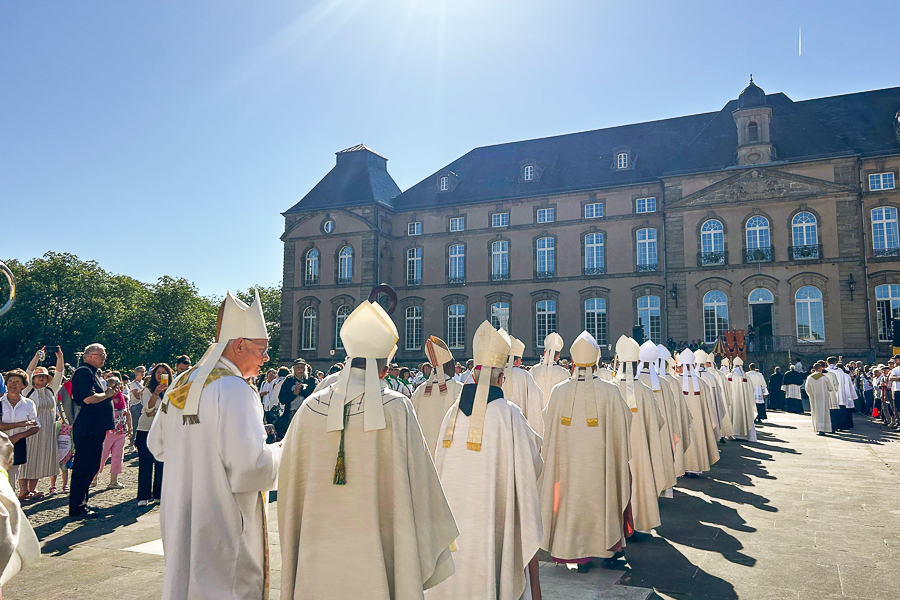
Before the procession began, Archbishop Jean-Claude Hollerich welcomed pilgrims and religious representatives from Luxembourg and abroad. During his speech, held in Luxembourgish and English, he greeted bishops, abbots and visitors from Germany, the Netherlands, Belgium, France, Africa and other European countries. He also welcomed participants attending a joint seminar involving the Council of Bishops’ Conferences of Europe and representatives from Africa and Madagascar.
The Archbishop thanked the international delegations for joining the celebrations and spoke about the importance of solidarity and peace. He also mentioned regions affected by conflict, including Palestine, Libya, Iraq, Crimea, Congo, Sudan and Myanmar, expressing hope for “peace around the world”.
Among the visitors was a American tourist group that chose to visit Luxembourg during the hopping procession. Speaking with Chronicle.lu, Kevin, a group leader from Luxembourg Legacy, explained that a recognisable Luxembourgish diaspora continues to travel to the Grand Duchy to reconnect with and learn more about their family roots. “Many of them are discovering where their ancestors came from for the first time,” he said.
He added that part of the fascination surrounding the procession comes from the “mystery of its origins” and the “uncertain” meaning behind the hopping movements, elements which have partly been lost through history.
Chronicle.lu also spoke with Michel, one of the procession coordinators, who described the logistical challenges involved in organising the event.
He highlighted the strong family tradition linked to the event. “My grandfather did it, my father did it, I do it, my son is going to do it. It’s a big tradition in the town. We have the spirit and we won’t let it go,” he said.