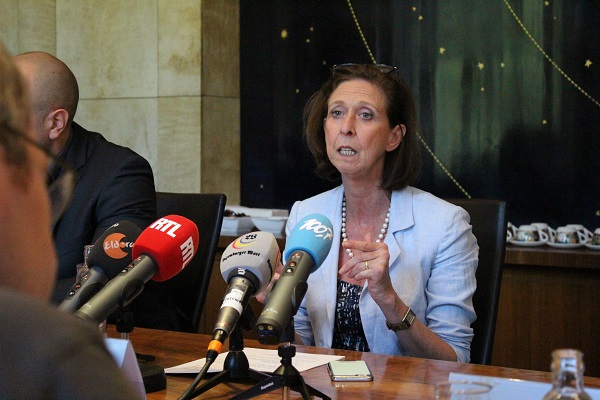
At a press conference earlier this afternoon, the Ministry of Health presented Luxembourg's first regulatory framework for body modification.
Unlike most other European countries, the Grand Duchy previously held no regulations concerning tattooing, piercing, branding and cutting, meaning that any form of control on the matter from public authorities was virtually impossible. The planned regulations therefore intend to reduce risks and create a safe environment for clients drawing on these techniques.
As Health Minister Lydia Mutsch explained, "The need for regulation in these areas is explained by the fact that those activities, by their inherent nature, involve gestures / actions / techniques which hold certain risks to the client's health, if they are not carried out according the rules of the craft".
The regulations, the draft law of which was agreed by the Luxembourg government in a July cabinet meeting, are as follows:
Tattoo, piercing, branding and cutting: no regulations to date
A notification requirement is reportedly needed for these activities, in the case of informing tattooists of a RAPEX formal warning which is a European-level information exchange system regarding products which may endanger the health and safety of people involved.
The Ministry of Health repeatedly found that it was not able to communicate a RAPEX alert of tattoo ink colours containing carcinogens, as there was no official list of tattoo artists operating in the Grand Duchy.
Hygiene and Informed Consent
These activities are likely to have negative effects on the recipient's health if they are not carried out hygienically. Potential dangers thereof can range from simpl infections to the spreading of viruses such as AIDS or hepatitis. Lydia Mutsch said of the matter "We want to establish a series of health and safety practices to avoid such an infection".
In order to achieve this, professionals in this sector must first undergo specific training on the practice of tattoing, piercing, branding and cutting. This training however will not touch upon the artistic skills of the professionals, and therefore will not regulate the tattoo-piercing profession in this manner. Tattoo inks and piercing needles will be similarly subject to certain conditions.
As body modification is not easily reversible, the text also demands a prior interview with the intended recipient to inform the customer of the consequential nature of the treatment, and written consent on the part of the client will have to be subsequently given.
Protection of minors
Tattooins and piercing on minors will be subject to the prior written consent of a guardian or other person holding parental responsibility. However, the practice of branding and cutting will be prohibited for minors. According to the Ministry, the widespread nature of tattoos and piercings is not shared by branding and cutting techniques which do not conform to a social consensus in European culture and society. In addition, the removal of subsequent scars from these technqiues require invasive medical procedures which even then cannot guarantee the restoration of a natural appearance of this part of the body.
"This prohibition applies not only to protect minors against excessive pain but also to avoid a possible effect on their future prospects," stated Minister Mutsch. The Ministry stated that another grand-ducal draft regulation should reserve the right for the use of lasers for hair, wrinkle and tattoo removal to certified medical practitioners.
UV tanning as a proven carcinogen
The International Agency for Research on Cancer of WHO (World Health Organization) classifies UV radiation, including those from UV tanning equipment, as proven carcinogens. In addition, the harmful effects of UV radiation on the human body are even more harmful to people, toddlers and adults.
Indeed, children's skin is thinner and fragile than adults. UV rays pass through it more easily and damage the root cells.
For this reason, Luxembourg intends to prohibit the provision and sale of UV tanning devices to minors. Such a ban is currently in place in various countries of the European Union, other States are now finalizing such a ban (France, Belgium, Germany, United Kingdom, Austria, Portugal, etc.).
In addition, the proposed text introduced a series of rules to tackle the use and provision of UV tanning devices for adult clients. The rules provided concern the equipment used, hygiene, staff training and information and the development of customer care.
Photo by Ministry of Health (Minister of Health Lydia Mutsch)