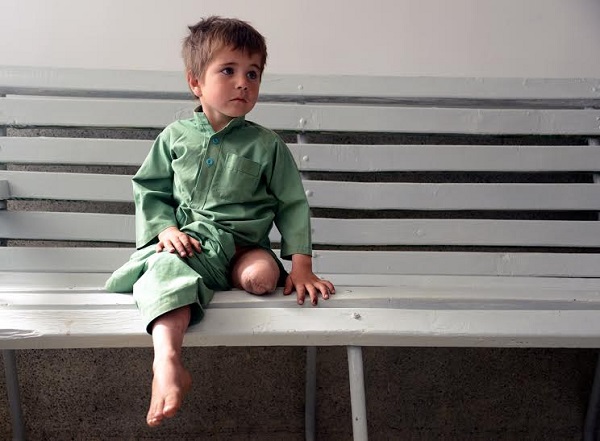
To honour the International Day of Mine Awareness and Assistance in Mine Action taking place today, Handicap International Luxembourg has joined its branches around the world in demanding an immediate end to the use of what are meant to be banned explosive weapons.
The prohibited status of these weapons as determined by the Convention on Cluster Munitions has largely gone ignored, with even a significant spike experienced in their use in 2014 and 2015 in countries from Syria, Yemen and Afghanistan to Colombia, Myanmar and Tunisia. As the exploitation of cluster munitions enters its highest level since 2010, Handicap International is leading the call for the immediate cessation and condemnation of the use, sale and transfer of any such weapons.
The Cluster Munition Monitor report, published in August 2015, found that cluster munitions were used in five States which have not signed the treaty - Libya, Syria, Sudan, Ukraine and Yemen - between July 2014 and July 2015, marking the highest amount of States or non-State actors involved in the use of cluster munitions since the ban treaty entered into force in 2010.
Meanwhile, November 2015's Landmine Monitor report determined that the use of anti-personnel mines and improvised explosive devices has increased amongst non-State armed groups to incorporate the ten countries of Afghanistan, Colombia, Iraq, Libya, Myanmar, Pakistan, Syria, Tunisia, Ukraine and Yemen. The report showed that 3,678 people were killed or injured by mines and ERWs in 2014, 12% more than the previous year. The victims of anti-personnel mines and cluster munitions are predominantly civilians, who make up 79% of the reported total.
"The rise in the use of cluster munitions, after a sharp drop following the entry into force of the Convention on Cluster Munitions, illustrates the level of violence experienced by civilians in conflict zones," commented Martin Lagneau, director of Handicap International Luxembourg. "War does not justify everything. Not everything is allowed. There are international laws, including the Geneva conventions, and the Ottawa and Oslo treaties. They must be enforced at all costs because they protect us from brutality. All States have a responsibility to ensure these rules are upheld and enforced."
Photo by Jaweed Tanveer / Handicap International