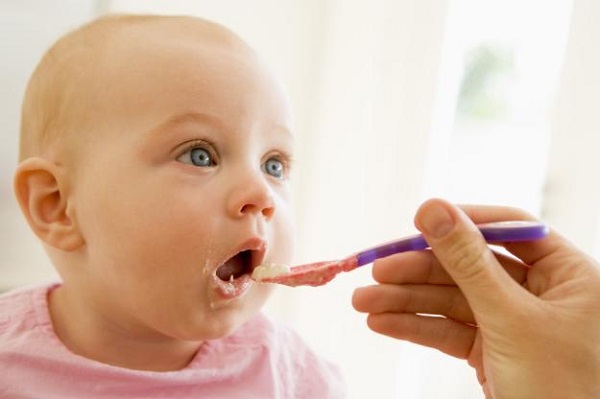
The Luxembourg pregnancy, childbirth and parenting centre Initiaitiv Liewensufank has joined the rest of the International Baby Food Action Network (IBFAN) in breathing a sigh of relief after draft EU rules that would allow baby foods to continue containing up to three times more sugar than WHO recommendations were vetoed by the European Parliament.
MEPs advocated instead reducing the EU sugar content limit to match the recommendations put forward by the World Health organisation (WHO), stating that the baby foods surpassing this threshold failed to protect infants and young children against obesity.
"Today's vote is an important step in helping to ensure that EU rules on baby food are designed with their helath as the utmost priority," declared MEP Keith Taylor (Greens/EFA, UK), who drafted the objection. "The proposal by the EU Commission would have allowed baby foods to contain far higher levels of sugar than those recommended by the World Health Organisation (WHO). The introduction of such high levels of sugar to foods - espcially so early - would have contributed to the rising levels of childhood obesity and may affect the developing taste preferences of children. For infants and young children in particular, added sugar levels should be kept to a minimum."
Under the European Commission's proposal, sugars could continue to provide up to 30% of the energy intake from baby foods. MEPs found the Commission's proposal "contrary to all health advice from the WHO", which recommends limiting intake of free sugars to less than 10% of total energy intake, and MEPs stated that as "poor diet is now by far the biggest underlying cause of disease and death globally - bigger than tobacco, alcohol and physical inactivity combined [...] the allowed maximum sugar level should be substantially lowered in line with WHO recommendations".
Futhermore, it was put forward that the labelling and marketing of processed baby foods should show outright that such products are not appropriate for infants of less than 6 months of age, and should not contradict the 6-month exclusive breastfeeding recommendation.
"We are delighted with this vote," commented Patti Rundall, OBE, Policy Director of Baby Milk Action, IBFAN UK. "On the labelling issue its worth remembering that the 1994 World Health Assembly Resolution (WHA 47.5) called for appropriate complementary feeding of babies to be 'fostered from the age of about six months.' The baby food industry has fought this recommendation tooth and nail ever since, and has targeted mothers with claims that their products are the 'healthy choice'. The 4-6 month window is worth more to companies than just the foods sold in that period. Baby foods are the fastest growing food and beverag segment - growing 7.8% a year."
MEPs also considered that lack of knowledge on the long-term risks of GMOs and nanotechnologies meant that such emerging technologies should be prohibited in these foods.
"We welcome that the EU parliament stood strong to protect the health of babies and toddlers by asking for policy coherence between WHO recommendations and European legislation," stated Maryse Arendt from Initiativ Liewensufank/IBFAN Luxembourg who was very active on this topic. "We are somewhat disappointed that two other important objections tabled by Keith Taylor did not pass in ENVI."
The objection was approved by 393 votes to 305, with 12 abstentions, sending the legislative act back to the drawing board of the Commission.
Photo by Shutterstock