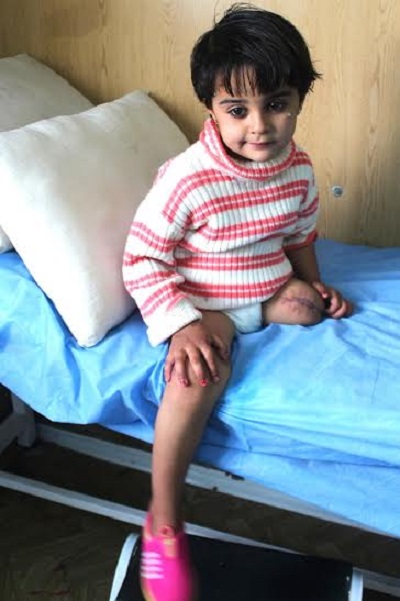
On the occasion of World Refugee Day on Monday, Handicap International published its report entitled "Syria, A Mutilated Future", highlighting the devastating effects of bombing on displaced Syrians inside the country or refuged in Jordan and Lebanon.
According to the report, 15% of identified victims had to be amputated, 80% were traumatised and in great psychological distress. The association has therefore urged all parties involved in the conflist to end the use of explosive weapons in populated areas and recalled the importance of humanitarian access to meet the needs of people affected by the conflict.
The report was based on an analysis performed between June 2013 and December 2015 of the situation of 25,000 beneficiaries of Handicap International actions, either those displaced in Syria itself or those forced to become refugees in Jordan or Lebanon.
The report showed that the majority of injuries were caused by explosive weapons, with 53% of respondents having sustained injuries from these weapons.
"Syria, A Mutilated Future" revealed the devastating consequences of the use of explosive weapons in populated areas: 89% of people injured by explosive weapons were left with a temporary of permanent disability; 80% demonstrated signs of psychological distress; and 66% felt unable to carry out everyday activities due to anxiety, stress, or physical or mental exhaustion.
Whilst 47% of the injured identified in the report are suffering from simple or complex fractures and 15% of them have had to undergo amputation, Handicap International pointed out that the lack of access to health care exacerbates the effects of explosive weapons on the wounded. The lack of adequate medical services - due to the collapse of the health system in Syria or, in neighbouring countries, the incapacity of medical structures to respond to the needs of injured refugees - has serious consequences for patients: pain for life, amputation, deformity of the affected limb, disability or death.
"Because of their blast of fragmentation effects, explosive weapons kill or cause complex injuries," commented Patrick Le Folcalvez, technical rehabilitation adviser for Handicap International in Luxembourg. "Their wide use, associated with the absence of medical care and appropriate psychological support in Syria, has devastating consequences on people's lives. With over a million injured in Syria, this is a generation that will suffer from the effects of these weapons."
In September 2015, Handicap International launched an international campaign to stop the bombing of civilians. The organisation is calling on states to join a political declaration aimed at ending the use of explosive weapons in populated areas and to recognise the suffering of civilians. To this end, the association co-founded the International Network on Explosive Weapons (INEW), which forms a coalition from several international and national organisations.
Photo by Handicap International/E. Fourt (5 year-old Malak)