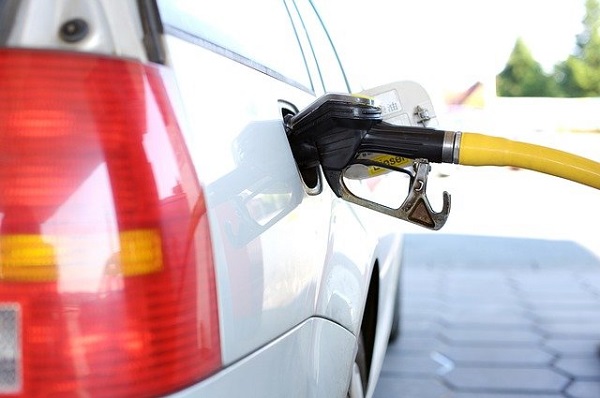
In light of soaring fuel prices, worsened by Russia's invasion of Ukraine and the resulting sanctions on Russian oil and gas, Chronicle.lu reached out to Luxembourg's Ministry of Finance to see whether there were any plans at present to cut excise duties.
Other European countries, such as Ireland, recently announced plans to reduce excise duty on petrol and diesel in light of current economic conditions. On Wednesday 9 March 2022, Ireland's Minister for Finance, Paschal Donohoe, announced a temporary reduction in the excise duties charged on unleaded petrol (to be reduced by 20 cents per litre), diesel (to be reduced by 15 cents) and marked gas oil (to be reduced by 2 cents) until 31 August 2022.
When asked by Chronicle.lu if the Luxembourg Government had similar plans, a representative of the Ministry of Finance could not confirm that such an action was on the agenda. However, she explained that the Grand Duchy was among the 31 Member Countries of the Governing Board of the International Energy Agency (IEA) to have agreed recently to release 60 million barrels of oil from their emergency reserves to avoid a shortfall in supplies as a result of the Russian invasion of Ukraine.
The Finance Ministry spokesperson recalled that the Luxembourg Government had already launched a first package of measures (for a total of €75 million) on 28 February 2022, aimed at supporting individuals in the context of soaring energy prices. Everyone who is entitled to the cost-of-living allowance can access an energy bonus of between €200 and €400, depending on the number of people in the household. These measures particularly target low-income households. She added that after someone receives a second or third reminder for unpaid bills from their energy supplier, the social office will be contacted to provide non-repayable assistance.
The ministry spokesperson also recalled that the government had supported individuals and businesses throughout the COVID-19 pandemic with guarantees, financial aid, short-time work, indexation of child benefit, free COVID-19 tests and an increase of the Social Inclusion Income (REVIS). "Many of these measures are still in place. The [COVID-19] aid alone has cost the Luxembourg state €2.7 billion in the past two years", she noted.
Returning to the current context of soaring oil prices and "the potentially significant impact of the Russian invasion of Ukraine on the supply of oil and oil products to the markets", the ministry representative explained that Luxembourg is participating in the joint voluntary action of the IEA (detailed above) to "release emergency oil stocks of 108.685 kb of oil products".
Chronicle.lu understands that more information concerning government measures to tackle rising fuel prices may be available following the upcoming tripartite meeting between the government, employers and trade unions / staff representatives. The date of this meeting is yet to be confirmed but is expected to be before Easter.