 Credit: Ali Sahib,Chronicle.lu
Gender equality in sport is often presented as a success story, yet the reality behind the headlines tells a more complicated one.
A recent case in Luxembourg illustrates this gap: a few weeks ago, the head coach of Luxembourg’s women’s national football team, Daniel Santos, was dismissed following reports of inappropriate messages sent to players. According to the Luxembourg Football Federation, the decision followed testimonies from players and a breakdown of trust, with the federation emphasising its commitment to ensuring a safe and respectful environment.
While the federation acted decisively, the incident also raises broader questions about how women are treated within sporting structures, both in Luxembourg and internationally.
The most high-profile case in recent years involved Luis Rubiales, then president of the Royal Spanish Football Federation (RFEF), who kissed Jennifer Hermoso the footballer during the medal ceremony after Spain’s 2023 World Cup victory. Jennifer Hermoso later stated that the kiss was not consensual. The RFEF president insisted it was “mutual” and “spontaneous.” The incident triggered widespread criticism and protests from players. Several members of the national team refused to play until changes were made. Luis Rubiales subsequently resigned on 10 September 2023 and had already been suspended by FIFA. In response, the Spanish football authorities announced measures to strengthen player protection and review internal governance practices.
Similar cases have emerged in other sports. In the United States, former USA Gymnastics doctor Larry Nassar was convicted of sexually abusing hundreds of athletes over nearly two decades, from the late 1990s until 2015. Complaints were repeatedly ignored by officials. In 2018, Larry Nassar was sentenced to up to 175 years in prison. In Mali, former basketball federation president Boubacar Baba Diarra was investigated following allegations of abuse involving youth players between 2019 and 2021. He was later sanctioned by international bodies, and the federation was suspended. These cases highlight long-term failures in safeguarding, oversight and accountability across different sports.
A Luxembourg Perspective
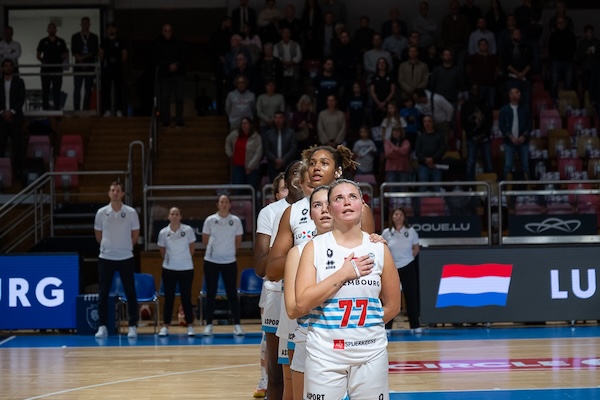
In Luxembourg, such issues may appear less visible, yet certain patterns can already be observed. While I have attended many sporting events, my experience of women’s national teams across different disciplines remains more limited, but some trends stand out. The women’s national football team was coached by a man for nearly six years. The same applies to the current coaching staff of the women’s volleyball and basketball national teams. Women are present within these structures, often as physiotherapists or assistants. However, leadership roles remain largely male-dominated. This contrast became particularly noticeable during a recent EuroBasket 2027 qualifier at the Coque, where Luxembourg faced Israel. The visiting team’s entire coaching staff consisted of women.
Progress remains uneven across countries. In Ukraine, for example, change has been slow. Only at the beginning of 2026 did the women’s national football team appoint a female head coach for the first time in its history. The role was taken by former international player Iya Andrushchak. The milestone reflects a shift, but also highlights how long it has taken for women to reach leadership positions even within women’s sport.
Yet the growing presence of women in sport does not necessarily translate into positions of authority or leadership.
At the international level, there are also signs of change. In 2025, Kirsty Coventry of Zimbabwe, a former Olympic champion swimmer, became the first woman to be elected president of the International Olympic Committee. The appointment was widely seen as a historic step for global sport governance.
Returning to Luxembourg, the picture appears less balanced. A review of several national federations and associations, including the Luxembourg Football Federation (FLF), the Luxembourg Basketball Federation (FLBB), the Luxembourg Volleyball Federation (FLVB), the Luxembourg Athletics Federation (FLA), the Luxembourg Tennis Federation (FLT), the Luxembourg Swimming and Lifesaving Federation (FLNS), the Luxembourg Rugby, the Luxembourg Handball Federation and the Automobile Club Luxembourg (ACL Sport), shows that leadership positions are overwhelmingly held by men. Among these organisations, only one is currently headed by a woman. Norma Zambon serves as president of the Luxembourg Volleyball Federation, where the board of directors is also evenly split between women and men, a balance not observed in the other federations reviewed. This suggests that progress remains uneven and often dependent on individual organisations rather than a broader systemic shift.
Outside the world of sport, Luxembourg has made progress towards gender equality in decision-making roles, particularly in public institutions. According to the Ministry of Gender Equality and Diversity, women accounted for just over 40% of board members in public institutions as of early 2026, up from around 27% a decade earlier.
Steps Towards Change
Efforts to address gender equality in sport have also emerged at policy level. In Luxembourg, initiatives aimed at promoting inclusion and increasing female participation in sport have been introduced in recent years. Programmes focus on encouraging girls to engage in sport from a young age, as well as improving representation in coaching and leadership roles.
At the same time, awareness campaigns such as Ask for Angela, launched in Luxembourg in 2026, highlight the importance of creating safe environments in public spaces, including sports venues. While not limited to sport, such initiatives reflect a broader shift towards recognising and addressing issues related to safety, respect and gender equality.
A more sport-specific approach can be seen in initiatives such as She Plays Luxembourg, launched in February 2026. The volunteer-led project aims to support girls in staying involved in participation sport, particularly during their teenage years, when drop-out rates tend to increase. It works with clubs, federations and institutions to promote participation, visibility and a sense of belonging.
Beyond participation, the initiative also seeks to create pathways for women in coaching, administrative and leadership roles, addressing structural imbalances within sport. Its activities include workshops, awareness campaigns and a Female Ambassador Programme designed to empower young athletes and strengthen long-term engagement.
At the same time, perceptions also play a role. Women’s sport continues to receive less media coverage and visibility compared to men’s competitions. Female coaches also appear to remain less visible at the highest levels, particularly in leadership roles. While more women are present within sporting environments, their presence does not always translate into influence. Visibility, in this sense, does not necessarily mean authority.
The examples from Luxembourg and beyond suggest that progress in gender equality in sport is real, but uneven. Initiatives, campaigns and individual breakthroughs point in the right direction, yet structural change remains slow. The question is no longer whether change is needed, but whether sporting institutions are prepared to move beyond symbolic steps and address the deeper imbalances that persist.