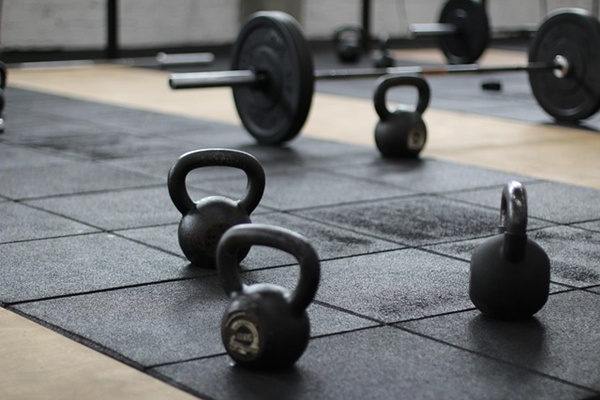
 Credit: Peggy Marco - Pixabay
As a child, but particularly as a teenager, I really disliked sports; Physical Education (PE) classes at school often felt like a form of torture.
I remember how differently students reacted. Some classmates - usually the popular ones - seemed to thrive on the adrenaline and competition of field hockey matches. Others looked miserable, dragging themselves around the pitch or, in some cases, even being sick after being pushed to run one lap too many. I was somewhere in between, but I definitely sympathised with the latter.
A Complicated Relationship with Sport
I will admit to having faked illness more than once to get out of swimming lessons - although, in fairness, the anxiety and the smell of chlorine often did make my stomach ache. Like many teenagers, I also felt self-conscious about my body during those awkward early-adolescence years.
I didn't come from a particularly sporty family either. While my father was apparently a good cross-country runner - a skill I sadly did not inherit - he did not enjoy it much and didn't pursue it beyond his obligatory school years. I tried various activities myself and briefly enjoyed things like basketball and tennis, but only up to the point where they became too competitive. Team sports, in particular, never really appealed to me. So, naturally, I assumed that exercise just wasn't for me.
That relationship became even more complicated in my later teenage years, when body image struggles led me to approach physical activity in an unhealthy way. It has taken time and conscious effort to build a healthier, more balanced relationship with both my body and exercise.
Changing Perspectives & Why Physical Activity Matters
That shift began at university, when I started going to the gym and trying out different classes - spinning, dance, yoga, anything that felt less rigid than school sports. For the first time, exercise became something I could actually enjoy. I also quickly felt the benefits of movement for both my physical and mental health.
Health authorities certainly emphasise the importance of regular physical activity. In the United Kingdom (UK), the National Health Service (NHS) recommends that adults aim for at least 150 minutes of moderate-intensity aerobic activity - or 75 minutes of vigorous activity - a week, alongside strength-based exercises at least two days a week, while also reducing time spent sitting or lying down. According to the NHS, exercise can reduce the risk of major illnesses such as heart disease, stroke, type 2 diabetes and cancer, and lower the risk of early death by up to 30%.
The World Health Organization (WHO) also recognises the significant benefits of regular physical activity for physical and mental health. And yet, despite these well-documented benefits, inactivity remains widespread. In 2024, WHO estimated that nearly one-third (31%) of adults and more than 80% of adolescents did not meet recommended activity levels, with women and girls consistently less active than men and boys. Modern lifestyles, which are increasingly sedentary and screen-based, are certainly not helping.
Luxembourg is no exception. A 2023 study by the Luxembourg Institute of Health (LIH) found that the average adult resident spent half their day sitting. To tackle this issue among children, the Ministry of Education, Children and Youth launched an action plan in recent years aiming for a "healthy screen-life balance", promoting more physical activity and less time in front of screens.
The challenge is thus not just raising awareness but encouraging healthier habits.
Making Movement Work for You
For me, what helped was making movement part of my routine. Signing up for classes, following a training plan, occasionally training with others, and scheduling gym sessions in my agenda all added a sense of accountability. (Of course, one can also exercise at home or outside free of charge, but I personally need a bit more structure.) It also helped to shift my mindset, to see exercise not as a chore or punishment, but as a non-negotiable part of my overall wellbeing.
Crucially, it became easier once I found activities I genuinely enjoyed, and when I overcame my "fear" of lifting weights. Women naturally lose muscle mass with age, yet many of us still avoid lifting weights for fear of injury or outdated stereotypes about looking "too masculine". With proper guidance, lifting safely can build long-term strength and improve overall health.
And, as touched upon above, the benefits of regular movement go far beyond the physical. Like many women of my generation, I once primarily associated exercise with weight loss; a means to (try to) fit into unrealistic beauty standards. Now, in my early 30s, I see it very differently. Movement has become essential not just for physical health, but for mental wellbeing: a way to manage stress, clear my mind and feel grounded.
Sometimes, it is as simple as getting outside. Living in Luxembourg, we are never far from a forest, walking trail or green space. In my case, having a dog also provides daily motivation (or obligation) to go out for a walk, whatever the weather.
Opportunities to Get Moving in Luxembourg
We are also spoiled for choice in Luxembourg in terms of physical activities. The Grand Duchy offers a wide range of activities and classes catering to all ages, abilities and interests - from team sports to individual pursuits, from high-intensity training to more mindful movement. Running clubs, yoga and Pilates studios, dance classes, gyms (including women-only options), team sports and children's programmes are widely available. Initiatives such as "Sport for All" and the Sport-Santé label also help make physical activity more accessible. Don't forget to also check out municipal programmes offering opportunities to stay active locally.
Even small changes can make a difference and really add up. A short walk after meals, for example, can improve digestion, regulate blood sugar levels and improve your mood. Technology, too, can encourage movement, with fitness watches and their various "challenges" making exercise more fun and motivating.
I know I am not the only adult to have had to shift their relationship with exercise. For many people, sport and physical activity are things we either return to - or discover for the first time - as adults, free from the pressure of grades, competition or forced participation.
So, if you are just getting (back) into sport, exercise or movement, know that you are not alone, and it is never too late to start building healthy habits that can transform your wellbeing and health.
The key is finding something you enjoy and making it a part of your routine.