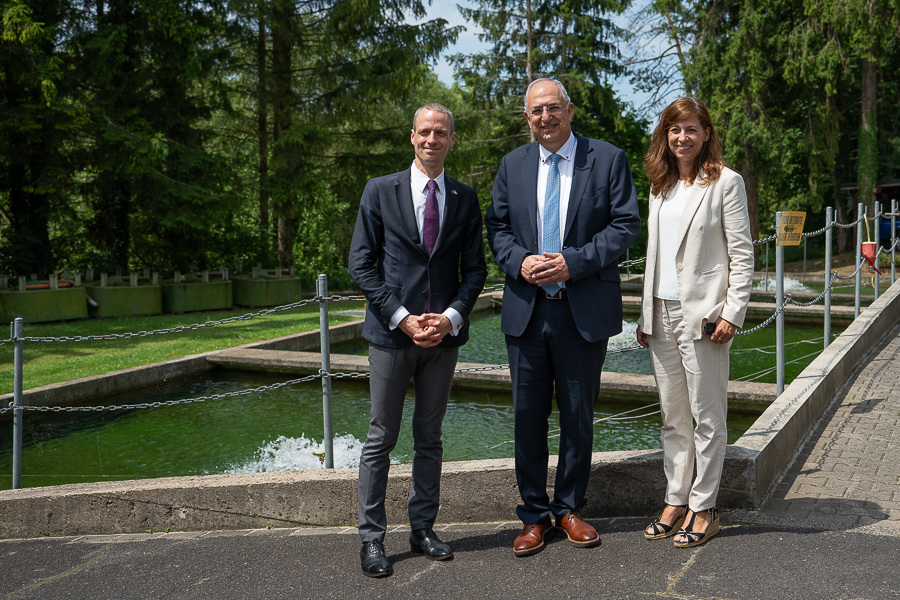
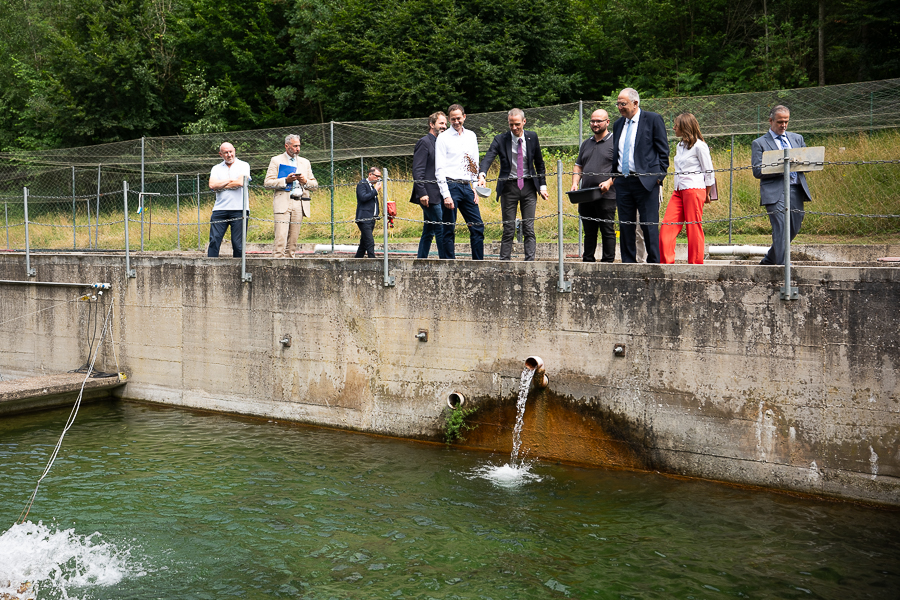
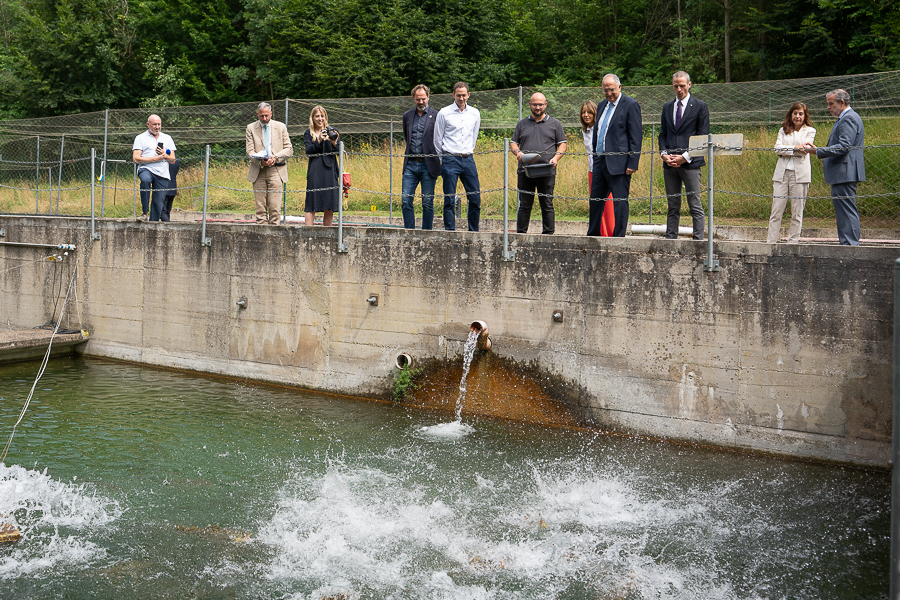
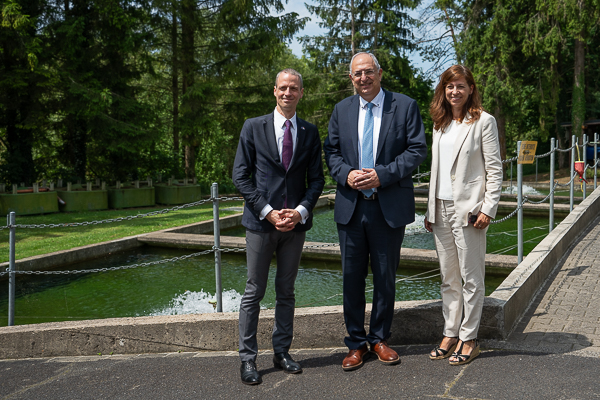
 (L-R) Serge Wilmes, Luxembourg Minister of the Environment, Climate and Biodiversity; Costas Kadis, European Commissioner for Fisheries and Oceans; Anne Calteux, Head of Representation of the European Commission in Luxembourg;
Credit: Ali Sahib, Chronicle.lu
(L-R) Serge Wilmes, Luxembourg Minister of the Environment, Climate and Biodiversity; Costas Kadis, European Commissioner for Fisheries and Oceans; Anne Calteux, Head of Representation of the European Commission in Luxembourg;
Credit: Ali Sahib, Chronicle.lu
On Monday 29 June 2026, Luxembourg’s Minister for the Environment, Climate and Biodiversity, Serge Wilmes, visited the State fish farm in Lintgen in order to highlight the essential role of the facility in the preservation of aquatic ecosystems in Luxembourg.
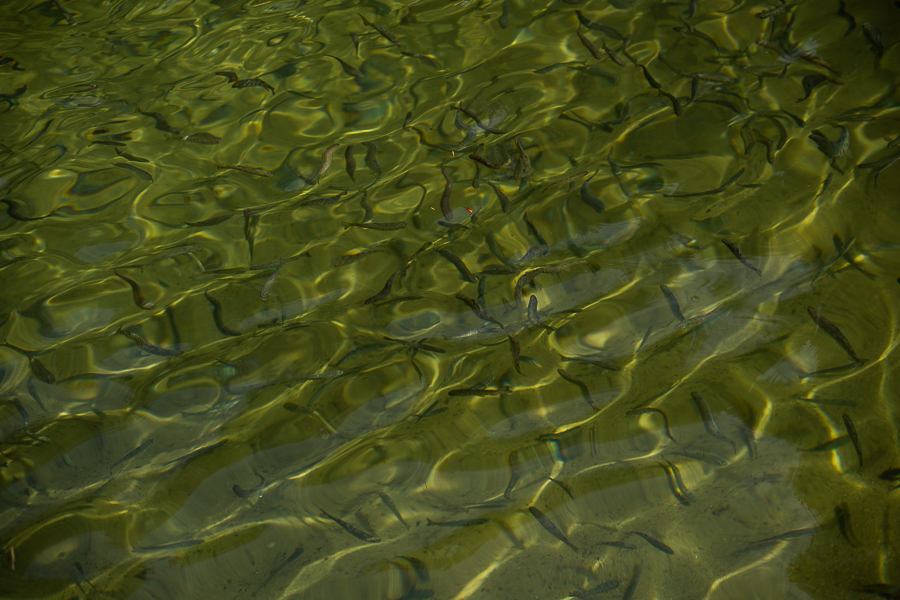
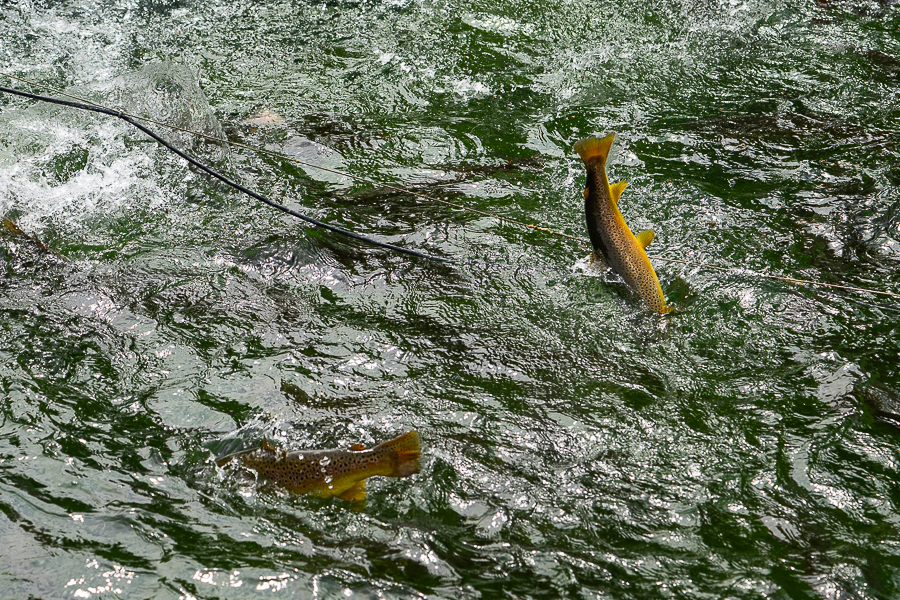
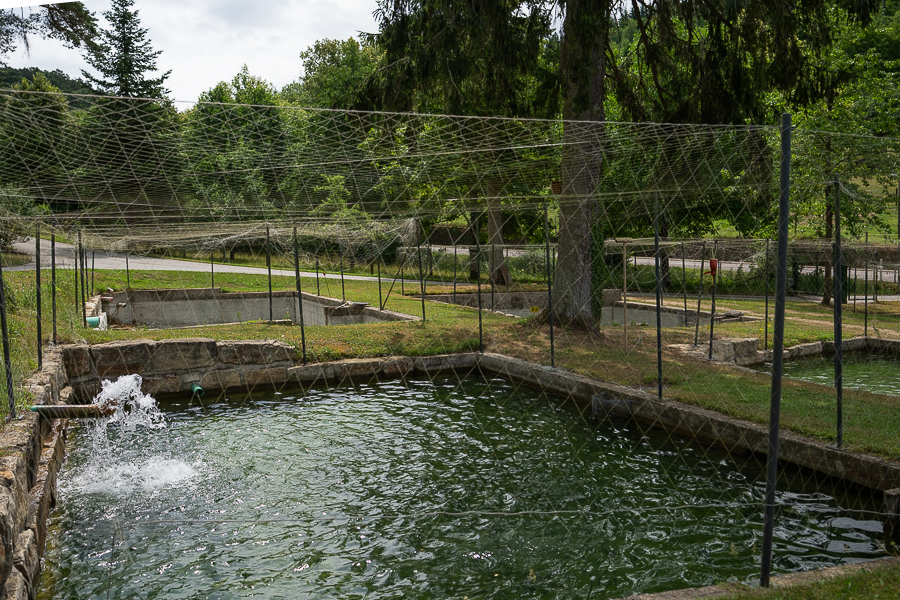
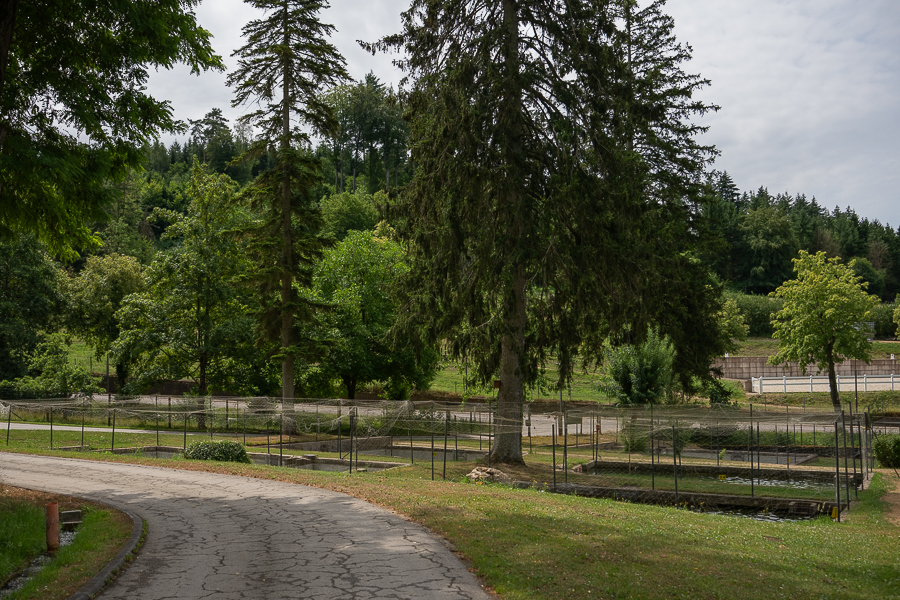
Accompanied by the European Commissioner for Fisheries and Oceans, Costas Kadis, and Representative of the European Commission in Luxembourg, Anne Calteux, Minister Wilmes toured the facility, which is seen as a central tool in Luxembourg’s water management policy; enabling the annual breeding and restocking of watercourses with several hundred thousand native river trout, a typical and dominant species in Luxembourg’s rivers.
The Ministry of the Environment, Climate and Biodiversity noted that these actions help to support river trout populations and restore the biological balance of rivers and streams. The ministry added that in a context where surface water quality remains a major challenge, these efforts form part of a comprehensive approach aimed at strengthening the resilience of aquatic environments and preserving biodiversity.
Speaking to Chronicle.lu, Minister Wilmes provided details of the history of the fish farm, detailing its post-World War Two origins and beyond. He said: “This is the state-owned fishery reproduction facility and it's from after World War II…Then in the 70s it became even a legal obligation to guarantee the restocking of the fishes in our streams. It's very important to guarantee the local genetic integrity and also [the] biological diversity to ensure enough fishes are in our streams.”
He added: “We had to visit here with the commissioner Mr Kadis, who is in charge of oceans and fisheries at the European Commission, because he's now on his country visit and we wanted to show him what we are doing to guarantee the aquatic diversity of our streams and what we do to improve the ecological conditions of our streams because all these streams will end up eventually in the ocean in the Atlantic Ocean. Even if we are landlocked we have a responsibility for the oceans. It’s important to show that nature is always interconnected [because] what we do here locally has a global impact. Also, as a landlocked country, we need to take care of our streams because it's very important for Luxembourg.”
The ministry said that the exchanges during the visit provided an opportunity to discuss European policies on the protection of aquatic ecosystems, as well as synergies between national actions and European initiatives aimed at restoring biodiversity and improving the condition of water bodies, and highlighted the importance of a coordinated approach, both at national and European level, in addressing environmental challenges and ensuring the sustainability of natural resources.