Luxembourg’s people clearly like to move and be moved, with almost 60% saying they’d gone to a live show at least once over the last twelve months. And whether they were dancing their way through a rock concert or watching others tread the boards at the theatre, ballet, dance or opera, almost half of those had managed to take in at least three shows in the year.
As might be expected, the big screen drew almost as many people away from their computer and television screens with 56% of residents saying they’d been to the cinema at least once over the last year, a figure that jumps to 88% if you’re only talking to young people (16 to 24 year olds).
The people of Luxembourg are a cultural bunch though, who enjoy a trip to the museum just as much as they did Night at the Museum. 56% also said they’d visited an art gallery, historical monument, museum or archaeological site over the last year, and half of those again had made at least three cultural excursions in the last 12 months, also the same as cinema-goers.
Culture seems to be a generational unifier too, with similar numbers across the ages making it the focus of their trips out.
Live sports events are going to need to up their game if they want to attract more people though. Only 40% said they’d gone to watch at least one event over the year, but almost as many (32%) said they’re simply not interested in going to watch a football match or other performance.
It is not a lack of time or money that’s keeping those who don’t go out away. Fewer than 5% cited this as a reason for not participating in any activities at all.
But sometimes life is just about sitting down and catching up with friends and family, with family remaining central to many people’s lives. 51% say they see family members — other than those they live with — at least once a week. And perhaps because friends are the family we choose, we tend to see a little more of them, with 58% saying they catch up with friends at least once a week, and only 8% of residents admitting to letting a whole month go by without seeing their friends. This figure jumps to 21% when it comes to seeing family though.
On the other hand, just because people don’t see them, it doesn’t necessarily follow they’re not reaching out to friends and family in other ways. 37% of people communicate everyday through social media, which might seem low until you break down the generations. Of those, more than 80% of 16 to 24 year olds engage on social media, compared to just 8% of the over 65s. Only 3% of 16 to 24 year olds bravely never use social media. There is a difference among nationalities too, with 42% of the Portuguese population saying that they use social media every day, compared to 36% of Luxembourgers.
Regular engagement with friends and family pays off in more ways than one. 94% of people said that they had someone to confide in if they had a problem, and 87% would be able to ask friends or family for financial or other support if the need arose.
These figures hide some uncomfortable realities however, as more than one fifth of the poorest 20% of the population said they had no one they could ask for support of any kind, and 16% of the over 65s felt the same way.
Social engagement does not mean that civil engagement engagement gets crowded out. Almost half of the people interviewed said they had formally or informally undertaken voluntary service over the last year. On the other hand, only 17% had engaged in civil action such as signing petitions, attending party political events, joining local interest groups, writing to politicians or the media, or joining protests, among others.
Civli participation is another generational unifier, with a similar number of people getting active across the ages. However, it is telling that those who are arguably already well-looked after are significantly more active than those who are not. 24% of the well-off said they had engaged in some sort of civil action over the last year, compared to just 11% of the poorest. Vigilance pays.
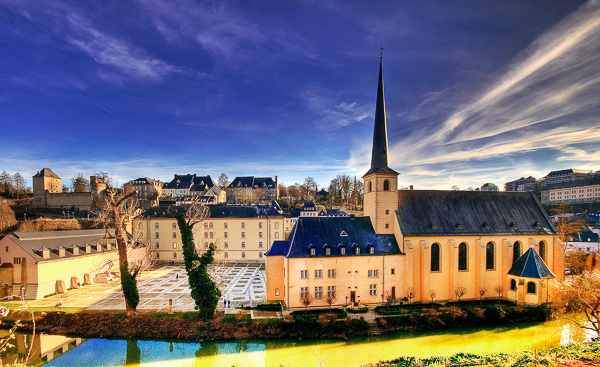
Image: Neumünster Abbey. Wikiemdia Commons