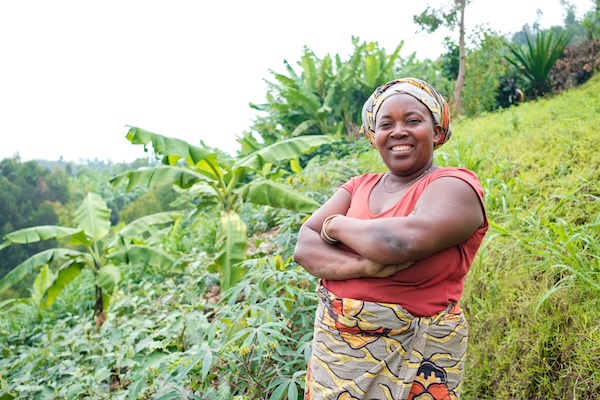
 Credit: Appui au développement autonome
On Monday 29 June 2026, Luxembourg NGO ADA (Appui au développement autonome) announced the publication of its 2025 annual report.
Following the publication of the report, ADA said it had strengthened its role as a leading actor in impact finance in support of economically vulnerable people in Africa, Latin America and Asia, and noted that its 2025 annual report presents the main results of a year marked by the expansion of its programmes, the publication of a first multi-year impact report and the preparation of its 2026–2030 strategy.
ADA said its objective is to leverage impact finance to reduce economic vulnerability and bring lasting improvements to the living conditions of people with low or irregular incomes who are often excluded from essential financial services.
“At ADA, we use impact finance to change lives in a lasting manner in Africa, Latin America and Asia. We help women and men to obtain tailored financial services or to gain access to energy in order to grow their businesses and face life’s uncertainties”, said Laura Foschi, Executive Director of ADA.
According to the report, in 2025, ADA supported 290 organisations (financial institutions, SMEs, cooperatives and incubators) in 47 countries. ADA noted it strengthened these local organisations as they are best placed to provide lasting services which are tailored to the local context and the target population.
In total, ADA helped 430,511 economically vulnerable people, 55% of whom were women, to benefit from at least one service for the first time in 2025. These services included financial products (loans, insurance), market access solutions, technical and entrepreneurial training, as well as access to energy, water and education.
In detail (factoring in that one person may benefit from several services) 194,373 beneficiaries accessed tailored financial services, including 64,813 through ADA’s investment advisory services to entities such as the Luxembourg Microfinance & Development Fund (LMDF) and the Financing Innovation Tool (FIT). Some 204,989 people benefited from technical and/or entrepreneurial support services, 64,934 from market access solutions and 2,569 households were provided with access to energy or education.
ADA said that it documented the effects of its interventions from 2022 to 2025 in a consolidated way for the first time. The main effects were economic (higher agricultural yields, income, turnover and employment in the businesses supported), improved resilience to shocks, as well as a positive environmental impact when fossil-fuel-powered equipment was replaced by more efficient or solar-powered solutions.
Among its key programmes, the first phase of the Smallholder SustaiNability Upscaling Programme (SSNUP) — coordinated by ADA and mainly supported by the Luxembourg Development Cooperation — came to an end in 2025: it directly or indirectly supported around one million smallholder farmers in 35 countries through 228 beneficiary organisations since its launch. More than €10 million in technical assistance helped to attract €188 million in investments in strengthened agricultural value chains.
The EVER programme (Énergie verte pour le développement rural — Green Energy for Rural Development) supported five operators managing 79 solar mini-grids in Benin and Senegal, contributing to the electrification of 933 rural entrepreneurs as well as to the roll-out of training and initial financing mechanisms for the acquisition of productive equipment.
Operationally launched in 2025 in Senegal, the “Young people and green jobs” programme supported the first SMEs and women’s groups in the ecological transition and in creating jobs in the green economy.
Knowledge sharing and sector-wide mobilisation remain central. In October 2025, SAM, the African Inclusive Finance Week organised by ADA, brought together 1,131 participants in Nairobi, Kenya from 63 countries representing 514 organisations. The event featured conferences, workshops, training sessions, an Investor Fair and an Innovators’ Village. The event strengthened the visibility of Luxembourg’s impact finance ecosystem with the participation of seventeen Luxembourgish organisations and the presence of Luxembourg’s Minister for Development Cooperation and Humanitarian Affairs, Xavier Bettel.
“In 2025, ADA reached a defining milestone, becoming an organisation that not only supports change but actively helps shape it”, explained Laura Foschi, Executive Director of ADA, in the report’s editorial. “The results speak for themselves: behind the figures lie lives that are changing — women and men gaining access to tailored financial services, growing their businesses, strengthening their resilience in situations of vulnerability, and unlocking new opportunities through access to energy and markets.”
The report also provides an outlook on ADA’s 2026–2030 strategy that centres on two priorities: strengthening the capacities of local businesses and organisations, as well as consolidating the financing chain to channel capital towards local economies.
The non-governmental association’s 2025 annual report is available online at: https://adaimpact.lu/en