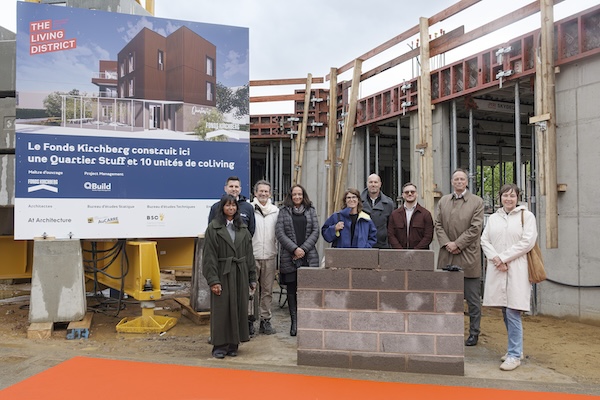
 (L-R) Ishani Mohanathas and Fabien Bedet (qBuild); Marc Ewen (AuCarré); Sylvie Siebenborn (Fonds Kirchberg), Claudine Arend (AT Architecture), Johan Couset (qBuild), Suad Sabotic, Marc Widong and Fabienne Wagner from Fonds Kirchberg;
Credit: Pancake! Photographie
(L-R) Ishani Mohanathas and Fabien Bedet (qBuild); Marc Ewen (AuCarré); Sylvie Siebenborn (Fonds Kirchberg), Claudine Arend (AT Architecture), Johan Couset (qBuild), Suad Sabotic, Marc Widong and Fabienne Wagner from Fonds Kirchberg;
Credit: Pancake! Photographie
On Monday 11 May 2026, Fonds Kirchberg marked the start of construction works for the KIPI building project in Luxembourg-Kirchberg, which will combine a permanent Quartier Stuff community space with ten coliving rooms.
According to Fonds Kirchberg, the project is being developed on a plot located at the corner of Rue Simone de Beauvoir and Boulevard Konrad Adenauer in the Kiem residential district. The triangular three-storey building will provide a gross built area of 683 m², including 550 m² of usable space, of which 140 m² will be dedicated to the Quartier Stuff. Delivery of the building is scheduled for early 2028, with the total project budget estimated at €4.8 million, including VAT and fees.
Fonds Kirchberg noted that the KIPI project forms part of a “mixed and sustainable urban development approach”, combining neighbourhood activities through the Quartier Stuff community structure on the ground floor with coliving accommodation on the upper floors. The public body is overseeing the development and will retain ownership of the building. Architectural design has been entrusted to AT Architecture, together with engineering firms AuCarré and BSC. Construction works are being carried out by LuxTP, while QBuild has been appointed for project management.
The ground floor of the building will host the Quartier Stuff community structure for the Kiem district. Initially launched by Fonds Kirchberg as a pilot initiative in the Grünewald district and housed in a red container, the concept was designed to encourage citizen participation in neighbourhood development projects. Fonds Kirchberg stated that the Quartier Stuff gradually evolved into “a genuine place for community life”, hosting workshops, events, homework support and neighbourhood activities.
Following its introduction in the Kiem district between 2022 and 2025 through a temporary container structure, the Quartier Stuff will now move into permanent premises within the KIPI project. The facilities will include a multipurpose room, shared kitchen, additional spaces, an outdoor terrace and a vegetable garden. Fonds Kirchberg stated that management of the premises will be entrusted to a dedicated coordinator to ensure participatory use of the space.
The two upper floors of the building will accommodate two coliving units, one on each level. Each unit will include four individual bedrooms and one double room organised around shared living areas comprising a lounge, kitchen and dining room, together with a terrace. Each bedroom will feature a private bathroom and workspace, while residents will also have access to a shared laundry room and secure bicycle storage.
According to Fonds Kirchberg, the KIPI project and its coliving offer aim to respond to “current housing needs”, particularly for “more flexible and shared lifestyles”. The organisation added that the project forms part of a broader diversification of its residential offer, which already includes below-market housing sales, rental apartments managed through SNHBM and free-market apartments and townhouses.
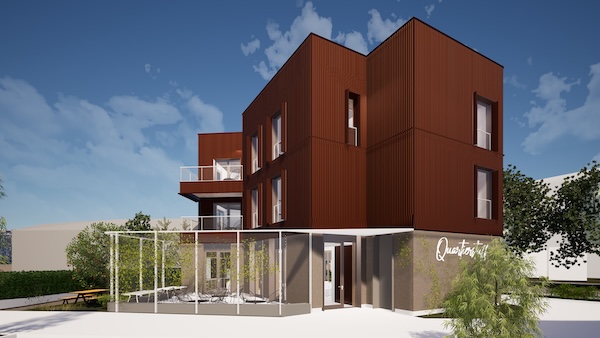
From an architectural and environmental perspective, the building has been designed to minimise its carbon footprint, notably through the absence of an underground level. The ground floor will feature textured mineral cladding, while the upper floors will be covered in deep red powder-coated aluminium panels. Vegetation, including climbing plants installed on metal cables, will contribute to integrating the building into its surroundings.
The project also incorporates sustainable energy solutions, including a heat pump and rooftop photovoltaic panels. Outdoor areas will prioritise permeable surfaces and greenery, while a pergola will provide additional comfort on the terrace.
Fonds Kirchberg stated that the KIPI project reflects its ambition to combine neighbourhood life, sustainable urban development and new housing models adapted to evolving lifestyles.
(Caption: Illustration; Credit: AT Architecture)