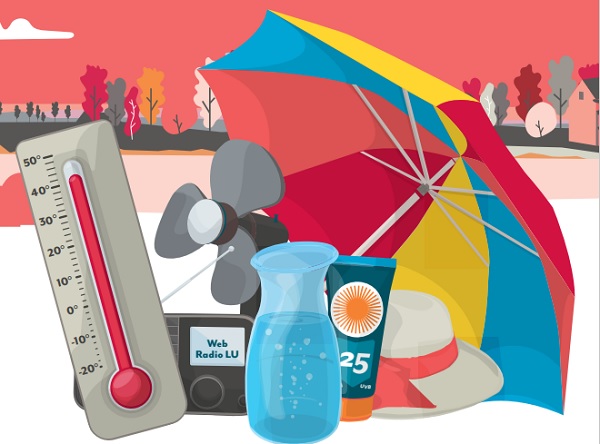
The severe weather risk assessment unit (CERI) has convened in light of the orange alert for high temperatures issued by MeteoLux from Friday 19 until at least Monday 22 June 2026.
The authorities have urged residents to take precautions as the country prepares for several days of intense heat, coinciding with National Day celebrations and other outdoor events.
According to the current forecast, tropical nights are expected from the night of Friday to Saturday, with temperatures remaining above 20°C. From Monday, the apparent temperature could locally reach up to 39°C.
The meeting also took place in the context of National Day and the celebrations planned over the coming days and throughout next week, which require particular attention, especially during gatherings and outdoor events, noted the CERI.
An orange alert is issued when high apparent temperatures, with an average Universal Thermal Climate Index (UTCI) of at least 24°C, are forecast for at least two consecutive days, indicating a significant level of heat stress. Apparent temperature takes into account all relevant factors contributing to heat stress, including air temperature, humidity, wind speed and solar radiation.
The CERI has issued a reminder of key health risks and recommended behaviours amid the heatwave.
High temperatures may lead to dehydration or heatstroke, particularly for the elderly, young children, people with chronic illnesses or mental health disorders, people taking specific medications and individuals living in isolation. Warning signs of heatstroke include a fever above 40°C, hot, red and dry skin, headache, nausea, drowsiness, intense thirst, confusion, seizures and loss of consciousness.
To limit health risks, the public is advised to:
-
drink plenty of water regularly throughout the day (1.5 litres per day);
-
avoid going outside (prolonged and direct exposure to the sun) during the hottest hours of the day, i.e. 11:00-21:00;
-
close blinds / shutters, curtains and windows during the day and ventilate homes at night;
-
wear light clothing and head coverings outdoors;
-
limit physical activity;
-
check in on vulnerable individuals and help them access cool areas.
In the event of heatstroke, including symptoms such as a high temperature, headaches, nausea or confusion, people should contact a healthcare professional or call 112 in an emergency.
The Grand Ducal Fire and Rescue Corps (CGDIS) warned of the increased risk of vegetation fires and accidents linked to outdoor activities, urging the public to act responsibly.
CERI will meet again on Saturday 20 June 2026 to review the situation and provide further updates if necessary.
For more information, visit www.infocrise.lu.