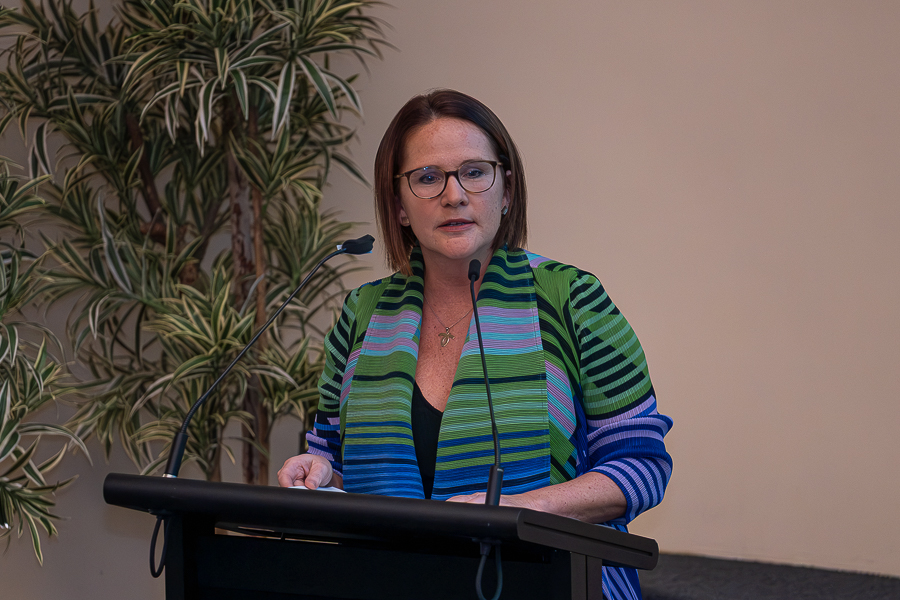
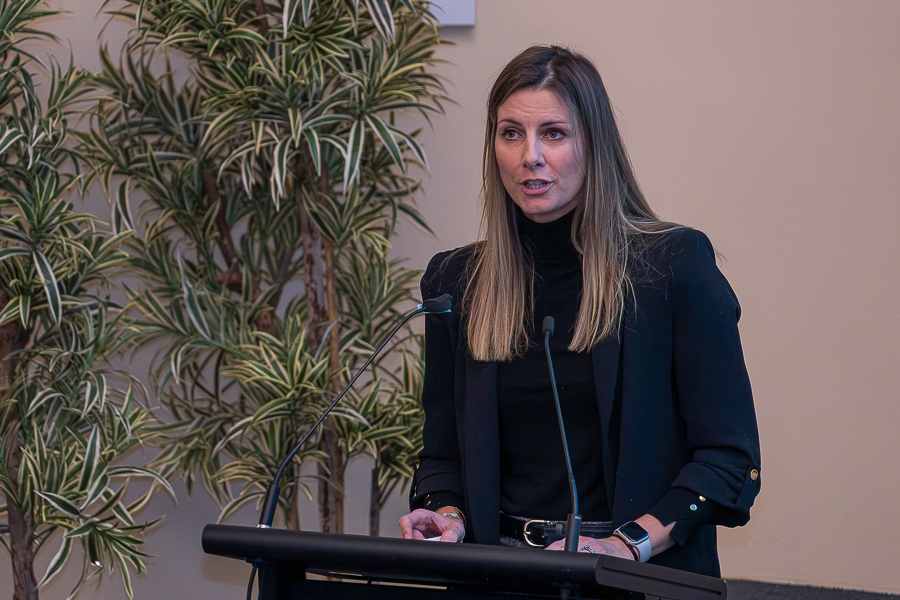
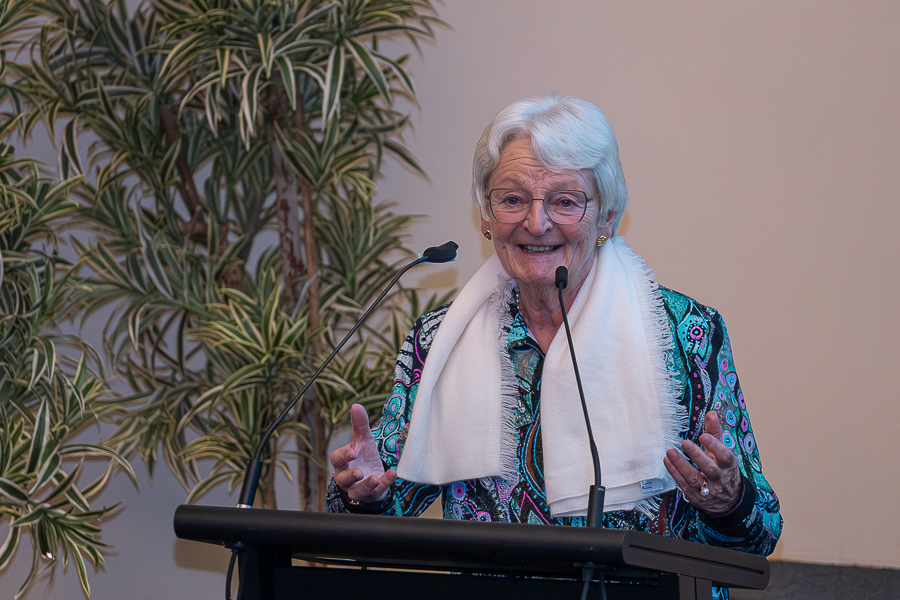
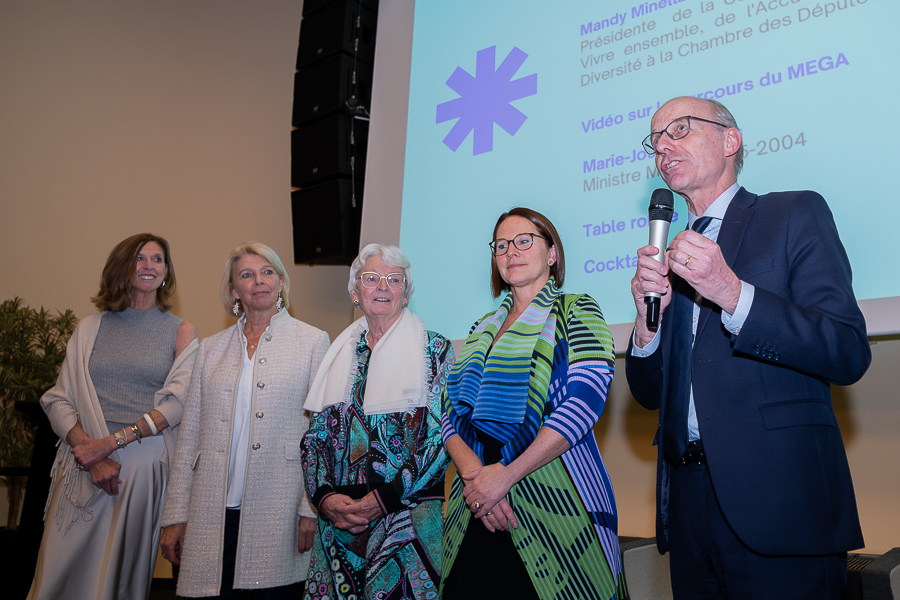
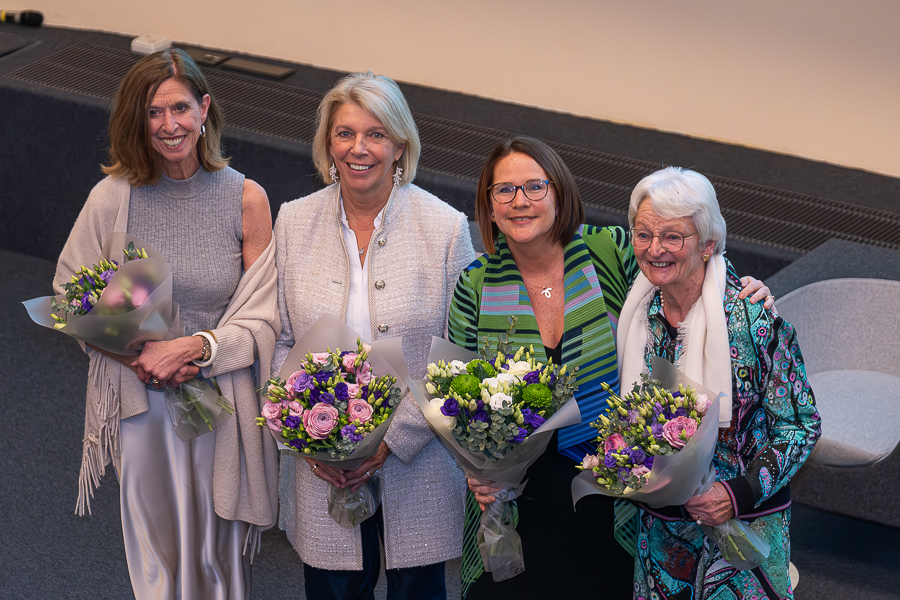
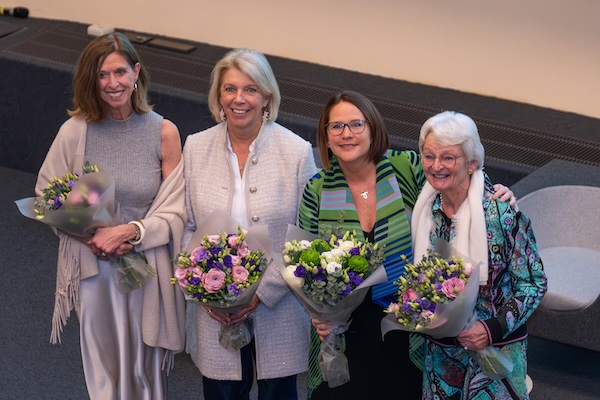
 (L-R) Former Ministers for Gender Equality and Diversity Lydia Mutsch and Françoise Hetto-Gaasch; Luxembourg’s Minister for Gender Equality and Diversity Yuriko Backes; Marie-Josée Jacobs, Minister of MEGA (1995-2004);
Credit: Ali Sahib, Chronicle.lu
(L-R) Former Ministers for Gender Equality and Diversity Lydia Mutsch and Françoise Hetto-Gaasch; Luxembourg’s Minister for Gender Equality and Diversity Yuriko Backes; Marie-Josée Jacobs, Minister of MEGA (1995-2004);
Credit: Ali Sahib, Chronicle.lu
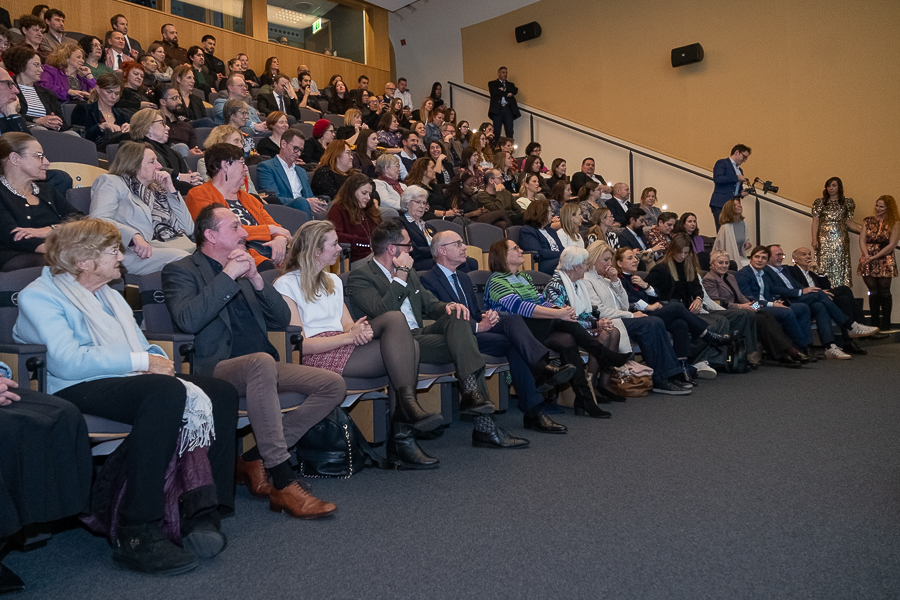
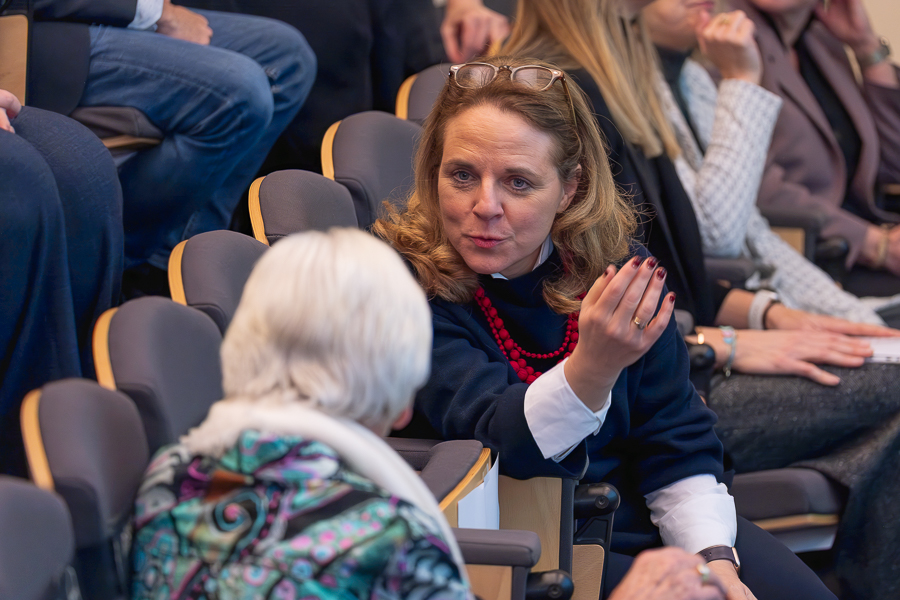
On Monday 15 December 2025, Luxembourg’s Ministry for Gender Equality and Diversity (MEGA) marked its 30th anniversary during a ceremony held at the Cercle Cité in Luxembourg-Ville.
The event brought together more than 130 guests, including Luxembourg’s Minister for Gender Equality and Diversity, Yuriko Backes, Prime Minister Luc Frieden, Minister of Culture Eric Thill, as well as Alderwomen of the City of Luxembourg Corinne Cahen and Simone Beissel. Former Ministers for Gender Equality and Diversity Marie-Josée Jacobs, Lydia Mutsch and Françoise Hetto-Gaasch were also present.
In her opening speech, Minister Backes marked the 30th anniversary of the ministry by highlighting that, while its name and responsibilities have evolved since 1995, its core mission has remained unchanged. She recalled major milestones, including the constitutional recognition of equality, legislation against gender-based violence and advances in LGBTIQ+ rights, stressing that these achievements were made in close cooperation with civil society.
She emphasised that equality and diversity are “not a ‘nice to have’, but a necessity”, pointing to ongoing challenges such as the gender pay gap, pension inequalities and persistent stereotypes that can fuel discrimination and violence. Minister Backes also warned against international backlashes affecting women’s and minority rights, saying Luxembourg must “not take a single step backwards”. Concluding, she said equality and diversity are fundamental rights for all, calling for continued collaboration between government, municipalities, civil society, businesses and the media to build a society based on respect, tolerance and solidarity.
Mandy Minella, President of the Committee on Family Affairs, Solidarity, Living Together, Reception, Gender Equality and Diversity at the Chamber of Deputies, said that advancing equality requires close cooperation between politics, institutions and civil society. She thanked those working daily in ministries, associations and support structures to promote these values. Referring to her experience in sport, she noted that inequalities, hate speech and various forms of violence remain present, particularly affecting young people. She welcomed recent initiatives such as the creation of the National Centre for Victims of Violence (CNVV) and the establishment of a legal framework for the Observatory on Equality, stressing that safeguarding and evidence-based policies are essential to prevent setbacks and ensure equal rights for all.
Marie-Josée Jacobs, the first Minister responsible for gender equality in Luxembourg (1995-2004), reflected on the early years of the ministry, recalling how the issue of equality was initially met with scepticism but gradually gained broader acceptance. She highlighted the importance of collective commitment and dialogue in embedding gender equality into public policy and society, noting that lasting progress required persistence and shared responsibility.
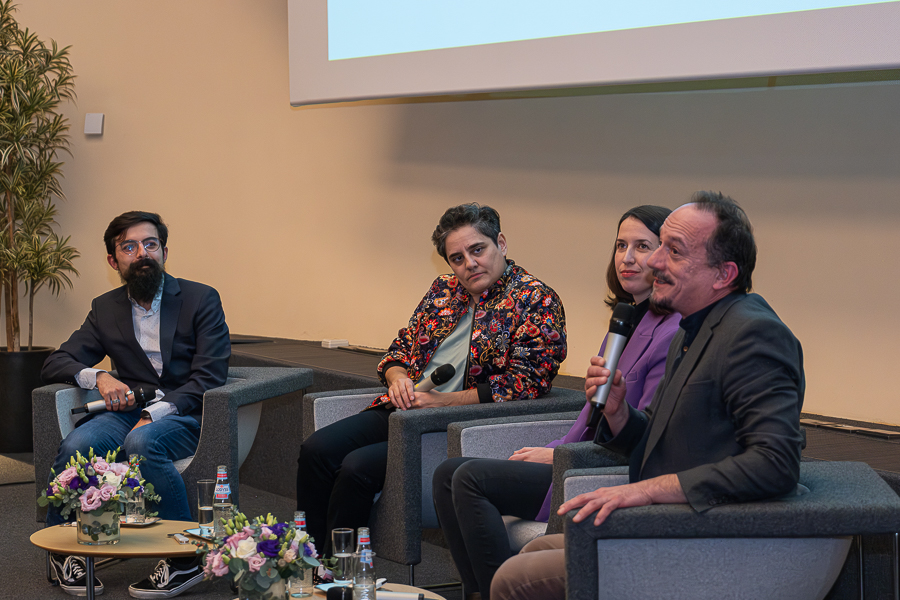
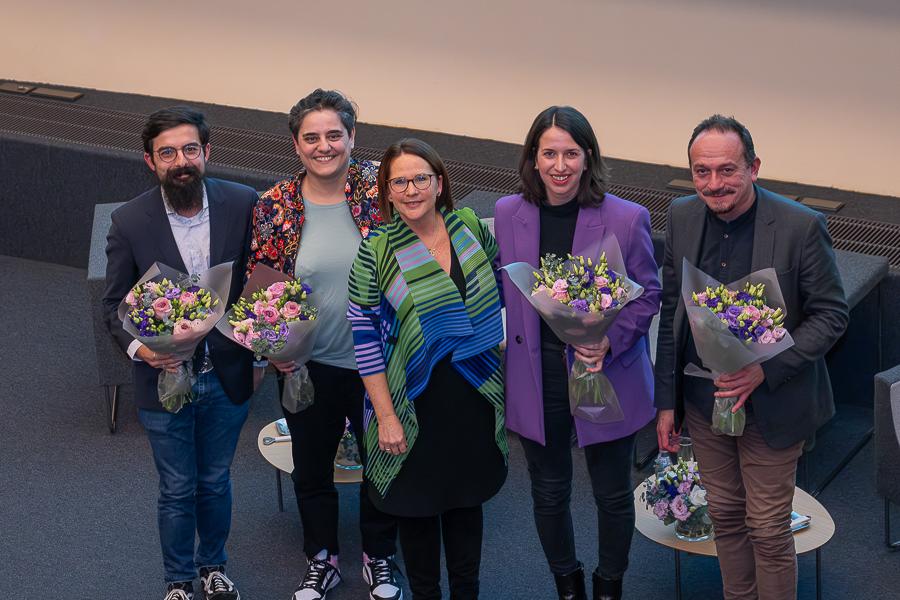
The evening continued with a round-table discussion featuring Sandy Artuso (LEQGF), Alex Carneiro (InfoMann), MP Marc Baum (déi Lénk) and Isabelle Schmoetten (CID Fraen an Gender).
During the discussion, participants addressed the ongoing relevance of gender equality policy, noting that persistent challenges such as the gender pension gap, domestic violence and unequal political representation underline the need for continued political and societal engagement. Speakers also discussed the importance of an intersectional approach, linking gender equality with LGBTIQ+ issues and broader questions of diversity, and emphasised that progress requires coordinated efforts across government, civil society and grassroots initiatives.
The event concluded with a dinner cocktail, providing an opportunity for informal exchanges among guests.