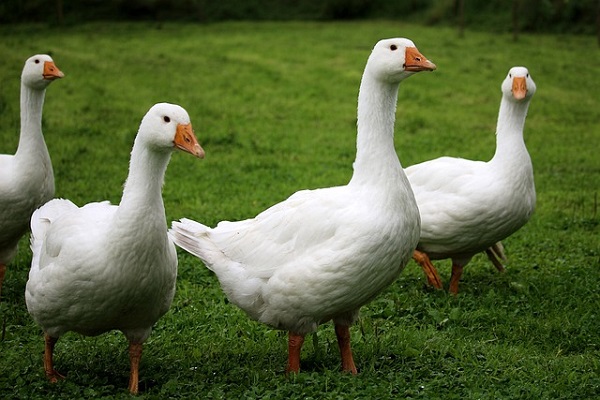
 Credit: Pixabay
On Thursday 5 February 2026, Luxembourg's Ministry of Agriculture, Food and Viticulture announced the detection of a new case of avian influenza (bird flu) among poultry kept by a private owner in the municipality of Schengen.
As the authorities have observed a general increase in bird flu cases across European countries, particularly along wild bird migration routes, the Luxembourg Veterinary and Food Administration (ALVA) recalled that poultry holders must avoid any contact between domestic poultry and wild birds. The ministry described the disease as highly contagious and often fatal for animals and urged holders to take preventive action to protect captive birds.
To prevent the introduction of this virus into domestic poultry, the authorities are implementing the following preventive measures:
-
poultry must be kept in enclosed premises;
-
feeding and watering must take place in areas that are inaccessible to wild birds;
-
access to net-protected outdoor runs must be kept to a minimum and is only permitted for animal welfare reasons, to prevent contact with wild birds;
-
biosecurity rules must be strictly observed;
-
any unusual poultry mortality, symptoms suggestive of bird flu or changes in production parameters (e.g. reduced feed and/or water consumption, decreased egg production, abnormal mortality) must be reported to a veterinarian;
-
until further notice, authorities have banned all exhibitions, fairs and markets involving poultry or captive birds.
ALVA stressed that all poultry imports are subject to a health certificate (TRACES), issued by an official veterinarian in the country of origin. This requirement also applies to poultry purchases at markets. In addition, poultry holders must register all poultry holdings with ALVA.
ALVA also recalled that avian influenza does not pose a public health risk through the consumption of eggs or poultry meat.