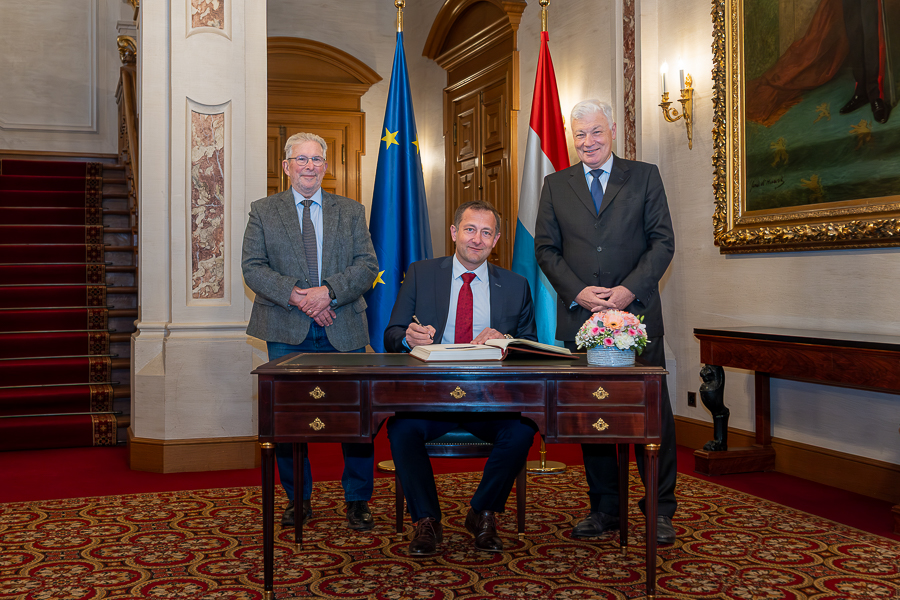
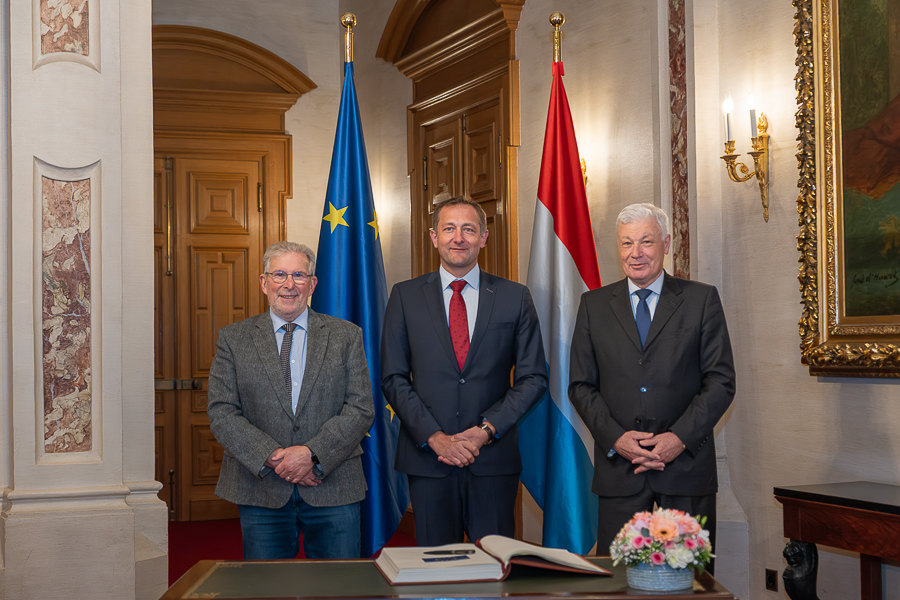
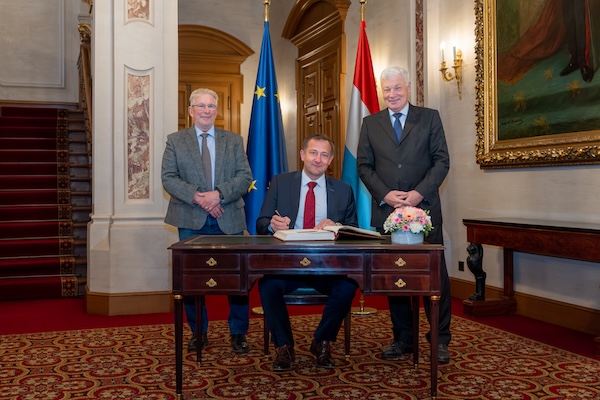
 (L-R) Mars Di Bartolomeo, Parliament Vice-President; EU Commissioner Christophe Hansen signing the "Livre d'Or"; Claude Wiseler, Parliament President;
Credit: Ali Sahib, Chronicle.lu
(L-R) Mars Di Bartolomeo, Parliament Vice-President; EU Commissioner Christophe Hansen signing the "Livre d'Or"; Claude Wiseler, Parliament President;
Credit: Ali Sahib, Chronicle.lu
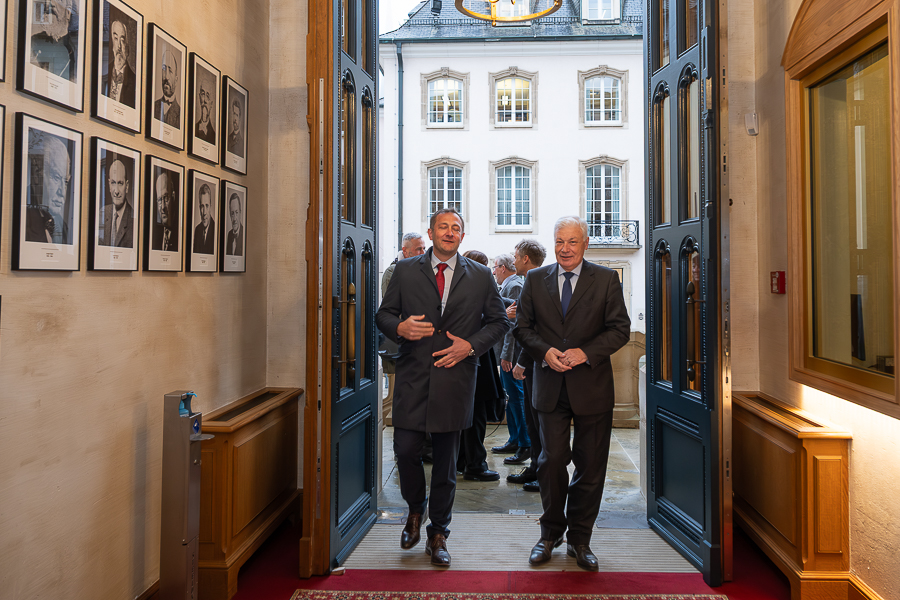
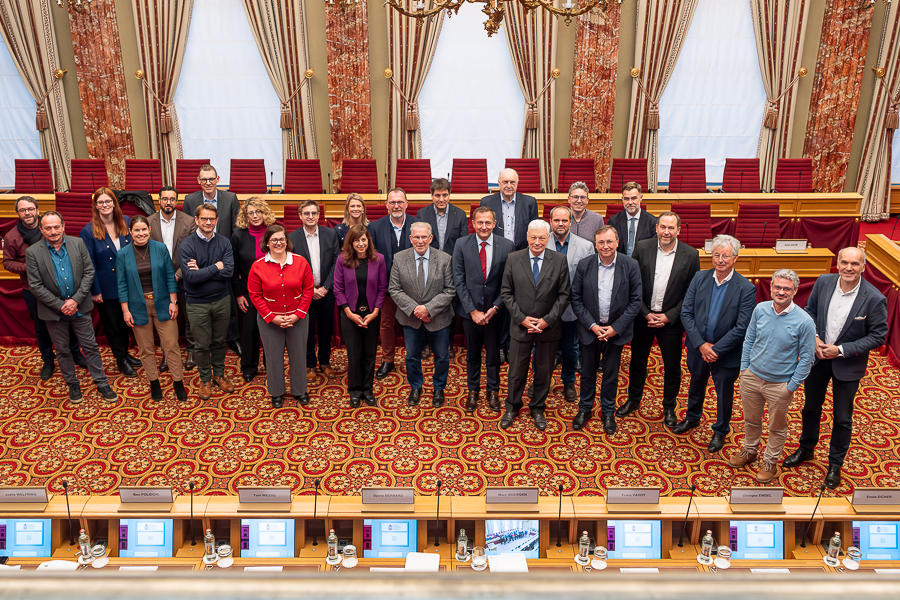
On Monday 12 January 2026, the European Commissioner for Agriculture and Food, Christophe Hansen, presented the European Commission's 2026 work programme to Luxembourg's Chamber of Deputies (parliament).
Titled "Europe's Independence Moment", the programme sets out the Commission's priorities in response to current and future challenges, including threats to European security and democracy, geopolitical conflicts and tensions, economic and industrial risks, and accelerating climate change.
In the afternoon, Commissioner Hansen had an exchange of views with members of the parliamentary Committee on Agriculture, Food and Viticulture, as well as the European Affairs subcommittee of the Committee on Foreign and European Affairs, Cooperation, External Trade and the Greater Region.
Following the parliamentary discussions, he addressed journalists at a press briefing.
Reflecting on the exchanges, Commissioner Hansen underlined the importance of dialogue with both MPs and people "on the ground". He noted that the 2026 work programme considers the future of Europe within "a very difficult" geopolitical context and how the EU can chart its own course, including in terms of guaranteeing its own security and defence.
In response to journalists' questions about the key priorities for 2026, he stressed the need for Europe to have greater geopolitical weight and for a more competitive Europe that is able to maintain production and industrial capacity on the continent, including in future-oriented sectors such as new technologies. Defence and security are another area where, he said, "we need more Europe, not less Europe". He emphasised that a small country like Luxembourg would be significantly weaker on its own, adding that "together we are stronger" and will continue to build up this strength and independence to prevent vulnerability in the current global environment.
One of the key topics raised during the parliamentary exchanges and the press briefing was the controversial EU-Mercosur free trade agreement, which was recently approved by the Council of the European Union. Five member states - Austria, France, Hungary, Ireland and Poland - voted against the decision, while Belgium abstained.
The agreement has drawn criticism from farmers' organisations and environmental NGOs, including Greenpeace Luxembourg, while European Commission President Ursula von der Leyen has described it as a "win-win agreement", with EU exports to Mercosur (Argentina, Brazil, Paraguay and Uruguay) expected to grow by almost €50 billion by 2040. The European Parliament still has to vote on the deal before it can enter into force.
Commissioner Hansen stressed the importance of respecting the procedures set out in the Treaty on the Functioning of the European Union, noting that the agreement has been under discussion for many years. An agreement was initially reached in 2019 and later revised to include additional commitments, including safeguard clauses.
Responding to questions on farmers' opposition to the Mercosur deal, Commissioner Hansen said he understood the concerns expressed by the agricultural sector. He pointed to a difficult market situation, citing issues such as "reciprocity" and the desire for a level playing field. He recalled that the EU has proposed a supplementary package consisting of €45 billion in financial aid for European farmers. He also stressed the need for concrete sanitary and financial measures to tackle issues such as animal sickness, notably lumpy skin disease among cattle in France. "The discussions are not over," he said.
Returning to the subject of geopolitics, Commissioner Hansen emphasised the need for the EU to be a "strong diplomatic voice in the world", one that is not caught between China, Russia and the United States. He reaffirmed Europe's commitment to multilateralism, dialogue and cooperation, while stressing the need to diversify partnerships and explore new markets. Europe, he said, must find its own path, grounded in democratic values.
The European Commission's work programme for 2026 is available online at https://eur-lex.europa.eu/legal-content/EN/TXT/?uri=CELEX%3A52025DC0870&qid=1761126156157