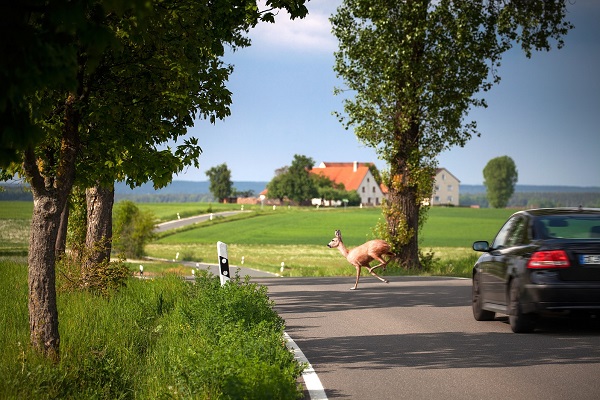
 Credit: Police Grand Ducale
The Grand Ducal Police has issued a warning to motorists to be vigilant when driving on the Grand Duchy's roads at this time of year as traditionally wild animals such as deer, wild boar, foxes and more are prone to cross roads, particularly at dawn and at dusk.
Each year, the Grand Ducal Police reports around 1,200 accidents involving wildlife, with statistics showing a stead increase in this type of traffic accident. In many cases, started animals run out onto a road, surprising motorists in the process.
Therefore, in order to reduce the risk of experiencing an accident involving wildlife, the police are advising motorists of the following:
- Drive slowly when warned by signs warning of deer and hunts;
- Pay increased attention on roads that lead through forests or along fields;
- Always count on several animals being together, as boars and deer are pack animals;
- If you encounter game in the road: brake, honk your vehicle's horn and dim your vehicle's lights;
- If a collision seems inevitable, you should brake as hard as possible, hold the steering wheel straight and do not make abrupt steering movements and hectic evasive maneuvers.
After a collision, attention must first be paid to self-protection (wear a visible safety vest). Subsequently, the accident site must be secured (turn on your vehicle's hazard warning lights, set up a warning triangle) and inform the police.
Damage to the car caused by wildlife accidents can range from a few scratches to a write-off. Most insurers cover the damage caused by their car in various insurance packages; however, should the insurance cover prove not be effective, the Automobile Club du Grand-Duché de Luxembourg (ACL) can offer its members up to a maximum €500, but only on presentation of an acknowledged vehicle repair workshop invoice and a certificate issued by the police. This applies only to wildlife accidents that have occurred within the Grand Duchy's borders.
For a list of registered hunts in Luxembourg, see http://bit.ly/2z5Vvgo