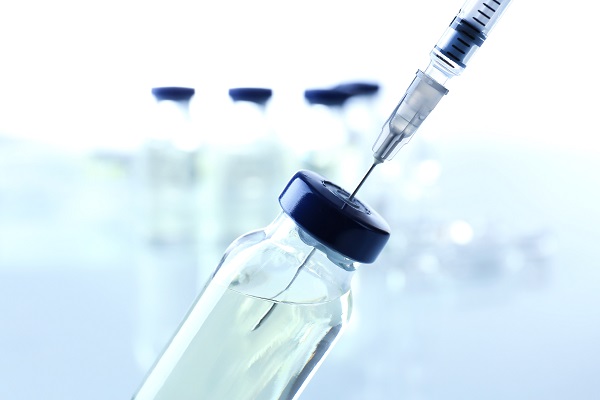
Luxembourg's Minister of Health, Lydia Mutsch, has come forward in support of vaccines as the most effective ways to protect against infectiours, preventable and potentially disabling or fatal diseases.
The Ministry of Health stated that immunisation has seen population health improve in recent decades, with life expectancy significantly increased worldwide. Vaccination campaigns in the 19th and 20th centuries led to the eradication of smallpox, polio has disappeared from Western Europe and other diseases such as diphtheria and tetanus are close to disappearing.
"To continue to protect themselves against these diseases and to prevent them from reappearing, it is important to get vaccinated and keep coverage at a high level," Minister Mutsch commented before declaring: "Vaccination can save lives!"
The immunisation coverage for resident children is reportedly evaluated every five years through a representative national immunisation survey conducted among children aged from 25 to 30 months. The most recent 2012 survey showed that MMRV (measles, mumps, rubella and varicella) coverage, with 82.3% of children having received two doses of the combined vaccine, is less than the threshold to guarantee a sustainable collective protection. The system remains fragile, with epidemic pockets experienced recently in Germany and Alsace.
According to the Ministry, vaccination coverage for that against measles and rubella should be increased to over 95% of children vaccinated with two doses as a means of breaking the circulation of the virus, including from other countries where the diseases have not yet been eradicated. Certain bacteria can also be dispersed this way which can expose the vulnerable to an increased risk of infection.
"If the percentage of people vaccinated decreases, some diseases that have not appeared for years in Luxembourg may return," warned the Minister. "Many examples that have arisen in our neighbours confirm this."
One case is Eastern Europe, where polio has reappeared due to under-immunisation. Outbreaks of diphtheria have also been experienced in these regions, and measles continue to claim victims. From January to December 2015, 3,969 cases of measles were reported in the 30 countries of the EU and the EEA, with Germany accounting for 62.1% of the cases. 77% of cases among 1 to 4 year-olds who had not been vaccinated.
The Minister further refuted claims that vaccines are dangerous, alleging that to date scientific studies have shown no increased risk of developing serious illnesses after being vaccinated and that millions of people are vaccinated each year across the world without developing specific complications. However, she conceded that a vaccine is still a drug which means it can induce side effects and adverse reactions such as fever, nausea, erythema or localised swelling. By contrast, she stated that these potential side effects are less serious that those that can cause the disease against which an individual is being immunised.
However, research published in the journal 'Pediatrics' has suggested that awareness programmes aiming to educate parents reluctant to vaccinate their children may have an adverse effect and cause more reservations, with the study's lead author telling Reuters: "We found political misinformation is often very difficult to correct and giving people the correct information can backfire."
Nevertheless, the Luxembourg Ministry of Health has launched an awareness camapign entitled 'Je suis vacciné(e) - et toi?' ('I'm vaccinated - are you?') as part of European Immunisation Week being held from 24 to 30 April 2016. Through posters and leaflets, the Ministry is aiming to promote vaccination, as well as boosters among the general public.
Several educational tools are available to download at www.sante.lu or can be ordered via e-mail by contacting commande@sante.public.lu or over the phone at +352 247 855 64.
Photo by Shutterstock