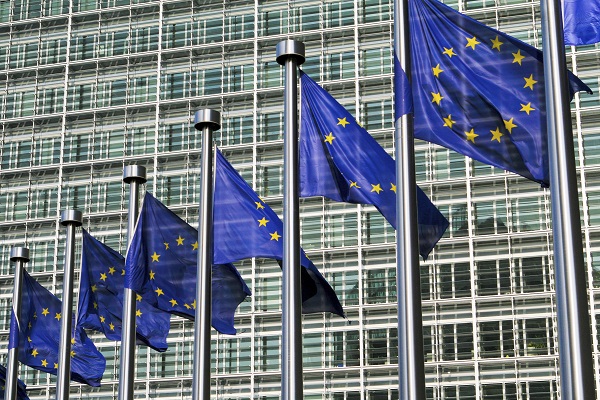
 Credit: IEEP
The European Commission has come under fire from trade unions for a perceived lack of visibility and leadership during the ongoing COVID-19 (coronavirus) crisis.
In addition to criticism from European and international media, Chronicle.lu understands that pressure is now mounting from trade unions representing staff from the European institutions for the European Commission to take a more visible and active role in the current crisis.
Two such trade unions recently issued open letters to the current Commission President Ursula von der Leyen urging for greater action in the fight against COVID-19, particularly in terms of the economy. Despite the fact that healthcare primarily remains the responsibility of the individual EU Member States, the unions urged the Commission to rise to the challenge and take on a more "pivotal" role based on European solidarity.
Although the unions recognised and praised the measures already taken by the Commission in response to COVID-19, such as the €100 billion SURE (Support to mitigate Unemployment Risks in an Emergency) loan scheme, they deemed them insufficient in tackling the economic crisis and generating economic recovery. They thus warned that the perception of continued inaction from the EU could result in increased Euroscepticism.
The trade unions proposed that the Commission, together with the other European institutions, come up with solutions to the crisis based on "creativity" and "solidarity". Indeed, the unions expressed support for the development of a new Marshall Plan aimed at rebuilding the European economy.
Another issue addressed by the unions was a perceived lack of visibility, urging the Commission to regularly share its proposed and implemented actions with European citizens in a more "proactive" and "innovative" way and using language that is easily understood.
Other points brought up by the EU trade unions were concerns over COVID-19 digital tracking applications and the Commission's role as protector of fundamental rights, as well as a desire to show more visibly the solidarity of EU staff with European citizens during the current crisis, such as the allocation of aid to hospitals and for medical equipment through the current solidarity levy on staff salaries.