 Credit: natur&ëmwelt/ Soren Salvatore
Luxembourg has what is known as a Temperate Climate in which winters are generally mild and summers comparatively cool, with rainfall that can be high; its flora and fauna have thrived in and adapted to this climate over the centuries and millennia, with ongoing challenges due to pollution and recent climate change, as well as the introduction of non-native species, resulting in disruptions to the norm.
Nevertheless, with various initiatives and organisations helping the ecosystem and habitat, including sustainability and re-wilding, there is a lot happening in nature across the Grand Duchy.
Chronicle.lu has teamed up with natur&ëmwelt (the non-profit organisation (naturemwelt), the foundation (Hëllef fir d'Natur) and the Wildlife Care Centre (Flegeestatioun) for a series of articles on Luxembourg's nature reserves, in which we look at the natural habitats that preserve biodiversity and protect ecosystems from development, pollution and intensive agriculture.
No. 24 in this series focuses on the Auf Roebben Nature Reserve.
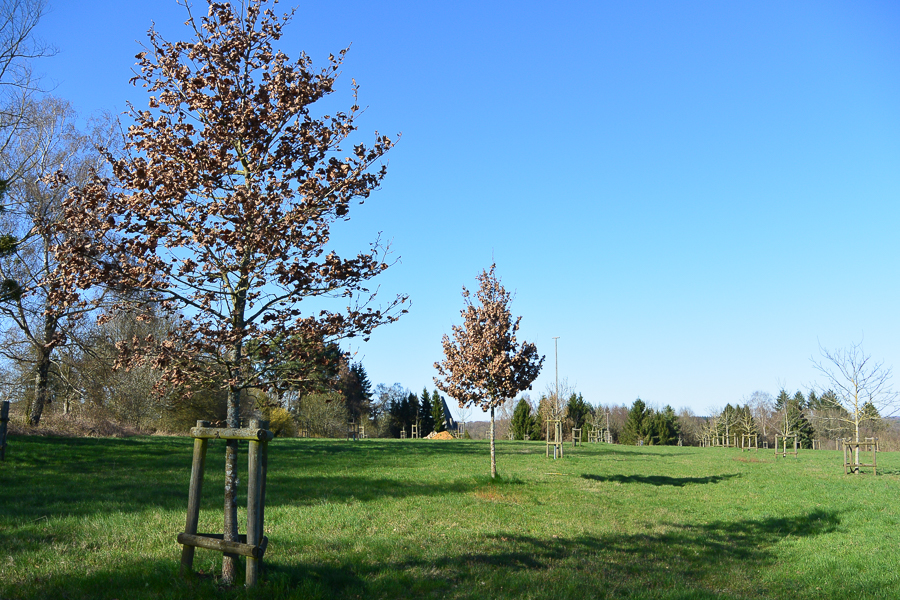
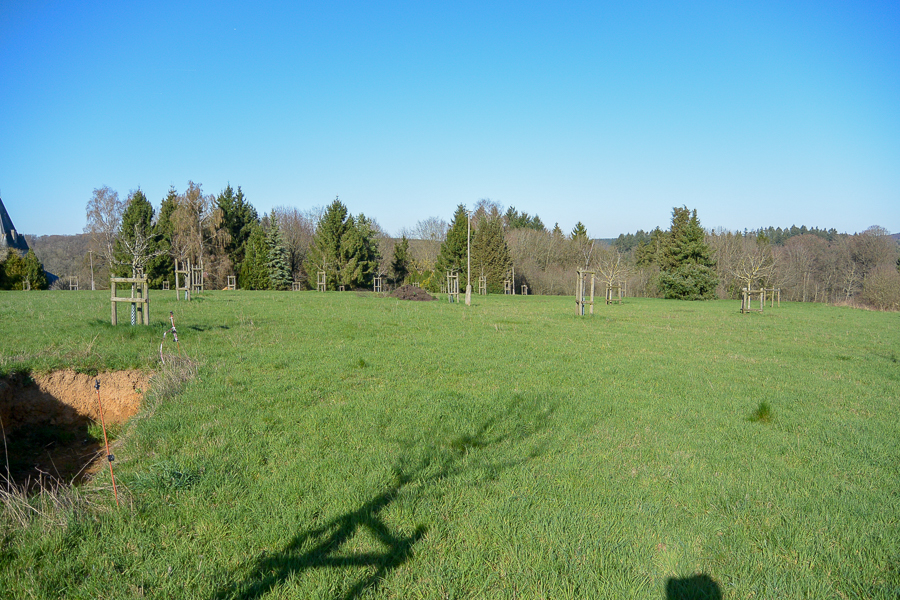
Located near Hollenfels, the Auf Roebben Nature Reserve illustrates how agricultural land can be transformed into a biodiversity-rich landscape. Since 2007, this former arable field on sandy soils has been gradually restored by the Fondation Hëllef fir d’Natur, creating a mosaic of habitats designed to support insects, birds, bats, reptiles and small mammals.
The site lies on a sandy plateau above the valley near Hollenfels. Originally used as intensively cultivated farmland, the land was integrated into the foundation’s network of reserves and progressively converted into a flower-rich hay meadow landscape. Today, the site includes meadows, hedgerows, an orchard and small habitat structures, forming an ecologically valuable area within a rural environment.
Ecological importance and threats
Open agricultural landscapes often suffer from habitat simplification and biodiversity loss, leaving few refuges for wildlife. By restoring extensive meadows and planting traditional orchard trees, Auf Roebben provides an important refuge for farmland species. Maintaining low-intensity management is essential, as fertilisation or intensive mowing could quickly reduce plant diversity and the associated insect populations.
Restoration actions
Ecological restoration at Auf Roebben was carried out in several stages. Former arable land was converted into extensive hay meadows, deliberately without reseeding or fertilisation to allow natural vegetation to develop. After an initial mulching phase, the parcels have been managed through a biodiversity contract with a local farmer, who carries out two mowings per year.
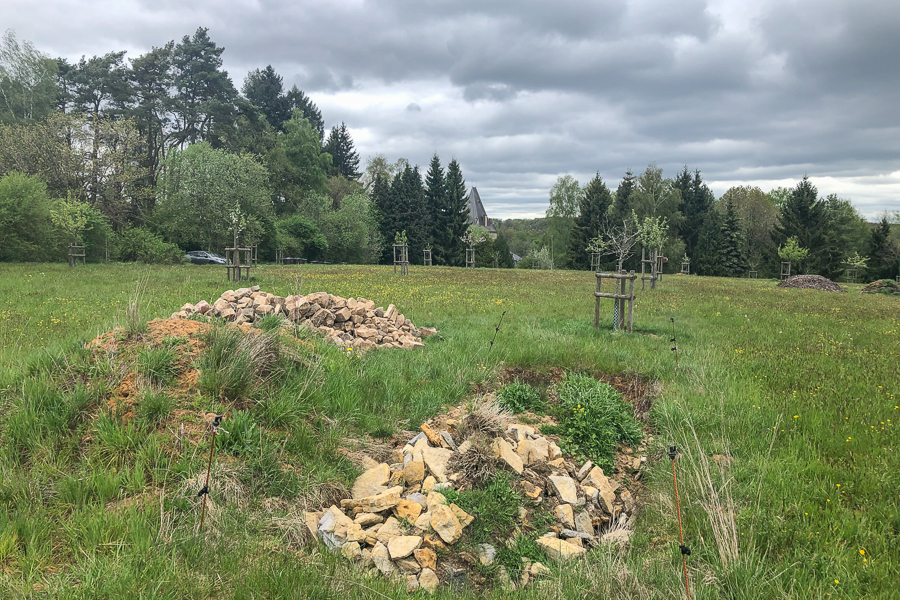
During the National Tree Day in 2007 and 2008, a traditional orchard with about 60 trees was planted, including high-stem fruit trees as well as ten walnut trees and ten oaks. A 60m hedgerow was planted to connect the site with the nearby forest, creating an ecological corridor particularly valuable for bats. Additional habitats such as stone piles and mulch heaps were created to support reptiles and insects. In 2014, a spruce plantation on the site was cleared and partially replanted with wild cherry trees. The ongoing management of the reserve is carried out by CNDS-Naturaarbechten together with the local section of natur&ëmwelt.
Diverse mosaic of habitats
Today, Auf Roebben consists of a diverse mosaic of habitats. The extensive meadows host a wide variety of grasses and wildflowers, while the orchard trees create a traditional cultural landscape. Hedgerows structure the site and provide shelter for birds and insects, while stone piles and mulch heaps offer warm microhabitats for reptiles and invertebrates. Together, these elements form an interconnected landscape beneficial to many species.
Remarkable biodiversity: Flora and fauna
The reserve supports a wide range of species typical of open rural habitats. The blackthorn (Prunus spinosa), often considered a pioneer species on poor grasslands, is a dominant shrub in local hedgerows. Its early spring flowering provides an essential nectar source for butterflies and pollinating insects.
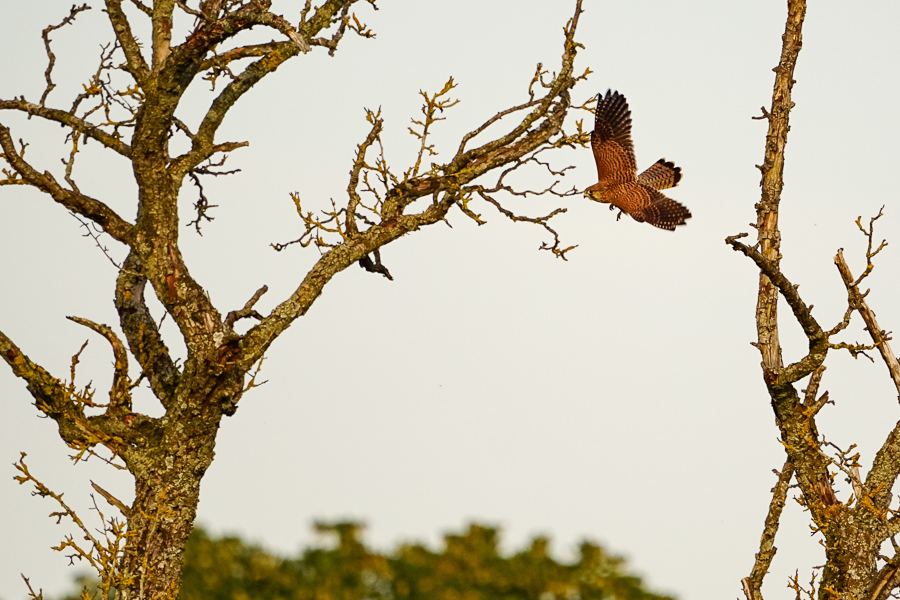
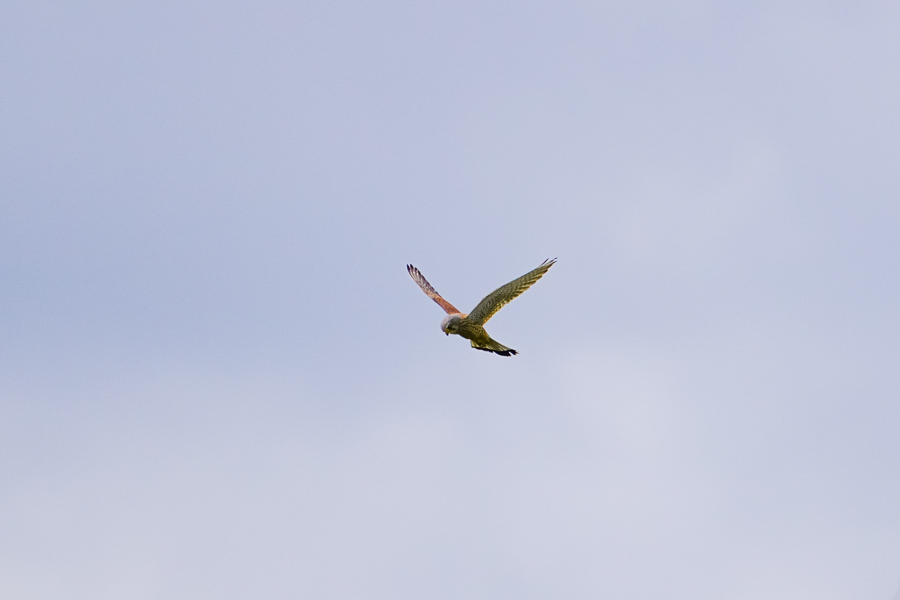
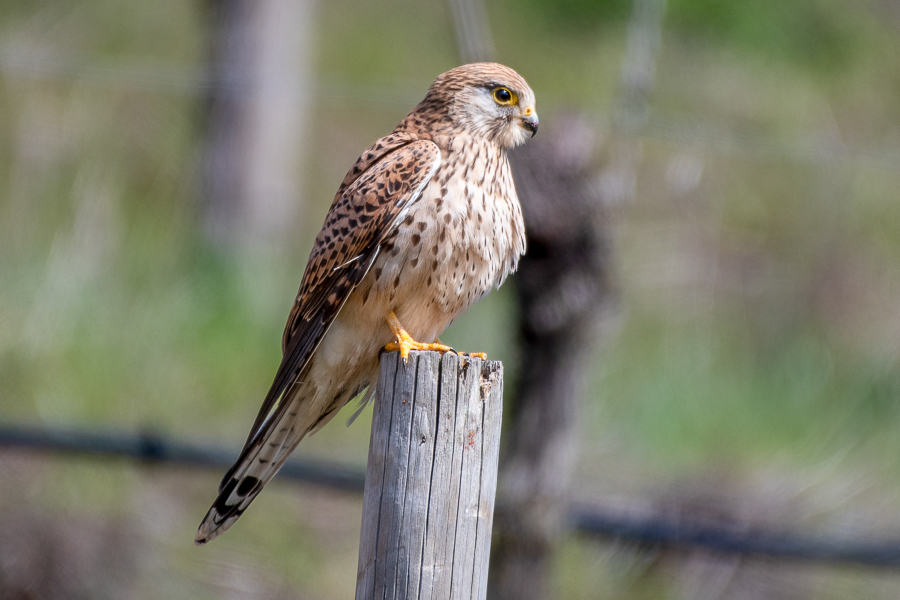
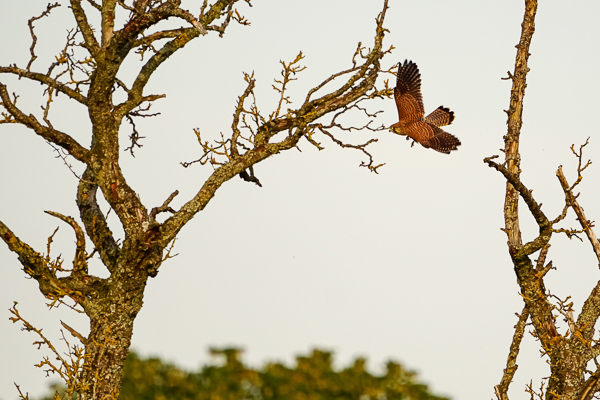
Birds of prey benefit from the installation of raptor perches, which offer excellent vantage points for species such as the common kestrel (Falco tinnunculus) to hunt small mammals. The meadows and open spaces also form a rich feeding ground for swallows, especially the barn swallow (Hirundo rustica) from nearby villages. These birds depend strongly on traditional farms and rural buildings, where they build their nests and raise their young.
Visiting advice
Auf Roebben offers visitors a peaceful example of ecological restoration in a rural landscape. Walking through the meadows and orchards reveals how simple measures, hedgerows, traditional fruit trees and extensive management, can greatly enhance biodiversity. Visitors are encouraged to respect the natural habitats and remain on existing paths, allowing wildlife to thrive in this restored countryside environment.