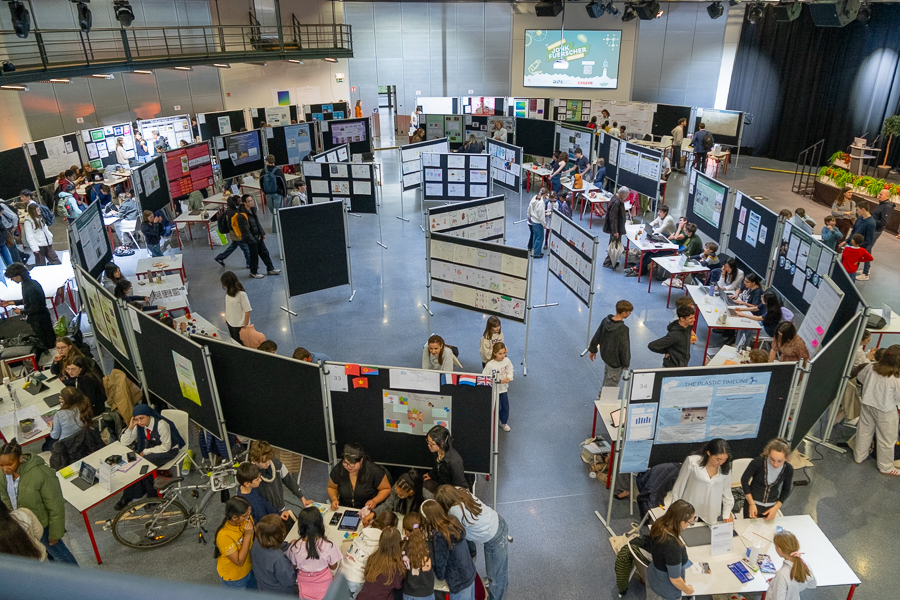
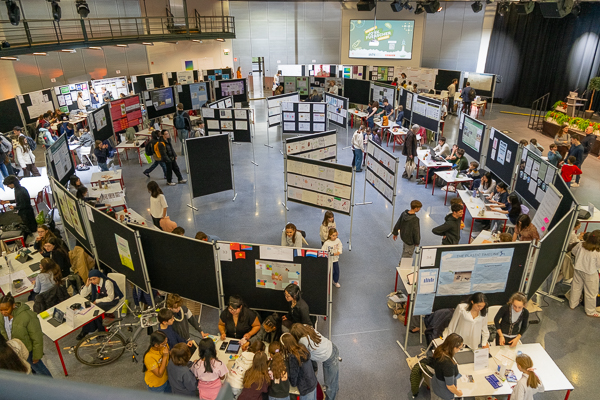
 National Jonk Fuerscher Contest 2026 at Forum Geesseknäppchen;
Credit: Ali Sahib, Chronicle.lu
National Jonk Fuerscher Contest 2026 at Forum Geesseknäppchen;
Credit: Ali Sahib, Chronicle.lu
The Fondation Jeunes Scientifiques Luxembourg (FJSL) is hosting the National Jonk Fuerscher Contest at the Forum Geesseknäppchen in Luxembourg-Merl on Friday 13 and Saturday 14 March 2026.
During the two-day event, visitors are invited to discover scientific research projects developed by some of Luxembourg's most talented young minds. Participants aged eleven to 21 have worked individually or in teams to investigate, analyse and explain questions they have about the world around them. The research topics span a range of disciplines, including mathematics, physics, biology and social sciences.
The exhibition was open to the public on Friday from 14:00 to 16:00. Visitors are invited again on Saturday from 13:00 to 16:00. In addition to the general public, younger pupils can attend the event to learn about the scientific projects.
A jury will evaluate the projects, with prizes awarded to the winners. The awards ceremony is scheduled to take place at the Lycée Athénée on Saturday evening.
Speaking to Chronicle.lu, FJSL Director Sousana Eang explained that participants begin working on their projects months before the event. "For the youngsters, the competition starts way before today," she said. "They were preparing the scientific projects beforehand, and then they needed to submit them by mid-February." Since then, the jury members have been reviewing and analysing each project.
On Friday morning, participants met with the jury for a "peer-to-peer" exchange, while later that afternoon the jury members were tasked with deliberating on the distribution of the 2026 awards.
Sousana noted that this year's contest features a record number of projects: 96 projects presented by 69 young men and 93 young women. "Science is in good hands," she said.
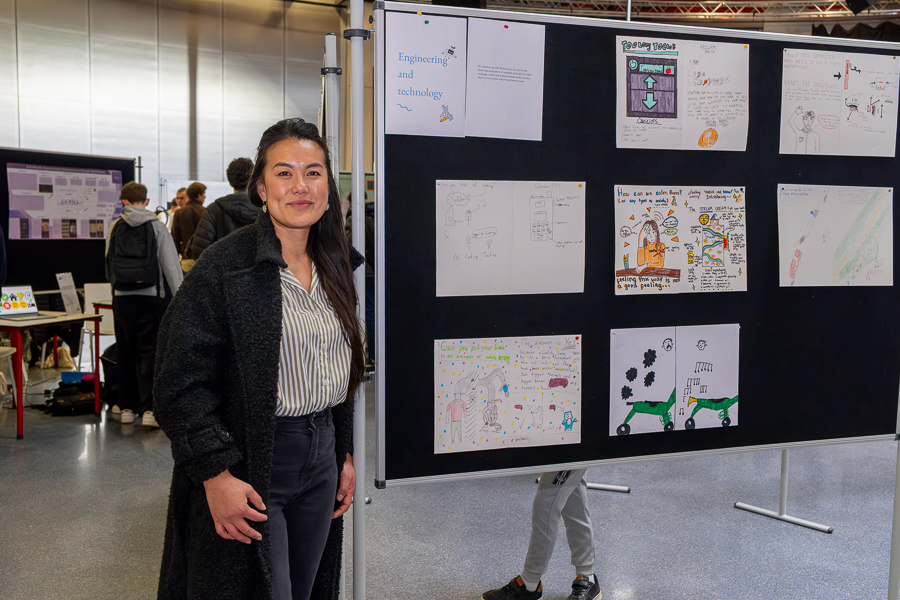
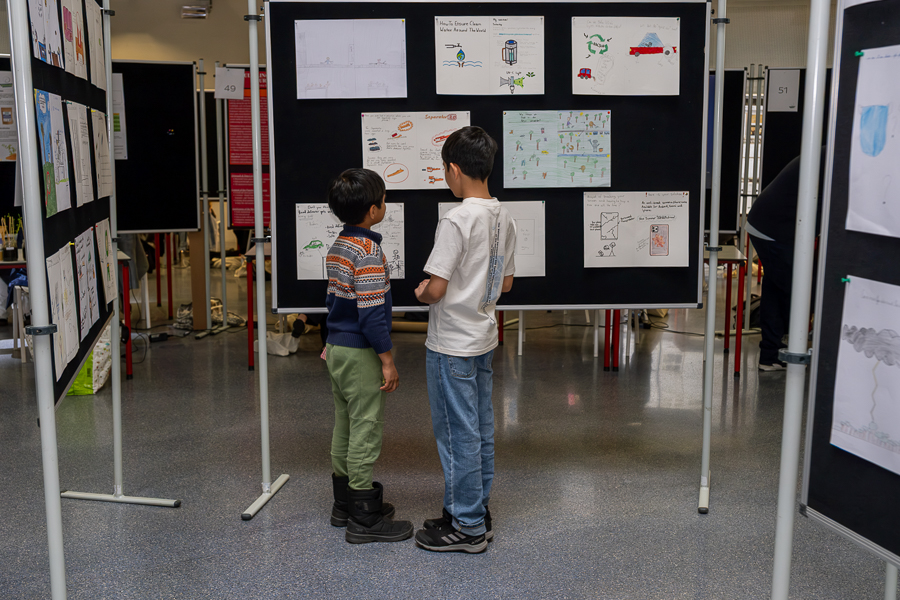
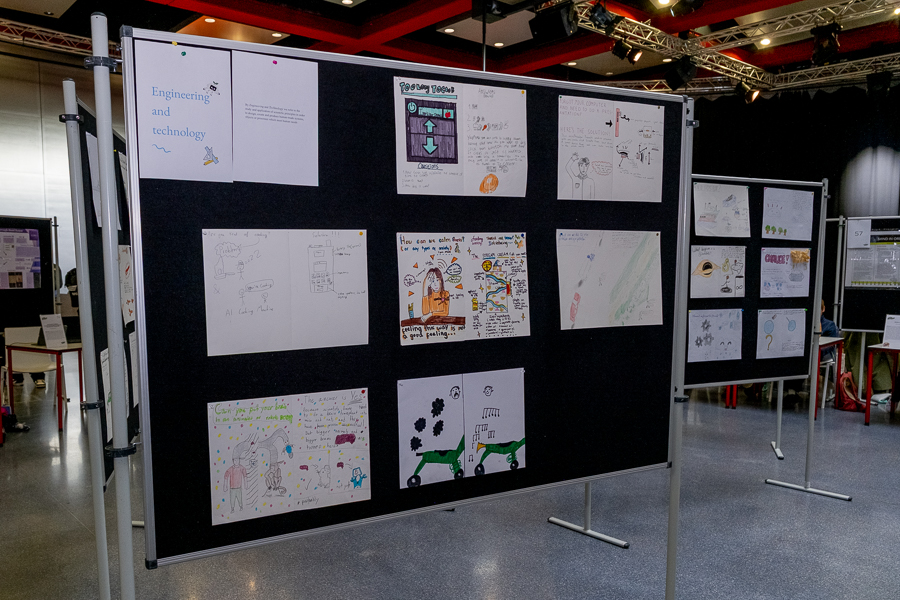
She also highlighted a new category introduced this year called "La Pepinière", a drawing contest for younger pupils. The initiative invites children aged eight to thirteen to present a scientific idea through drawings, including a research question, hypothesis and conclusion. The FJSL Director said this helps "already introduce the scientific and critical way of thinking at an early stage."
Due to the increased participation this year, additional destination prizes have also been introduced, including Japan, Egypt, Turkey, Spain and Google's offices in Paris, France.
The FJSL also works closely with schools to encourage participation in the competition and other programmes, including the "Science: next" training platform and the "Luxembourg International Science Expo".
Chronicle.lu also spoke with some of the young participants presenting their projects.
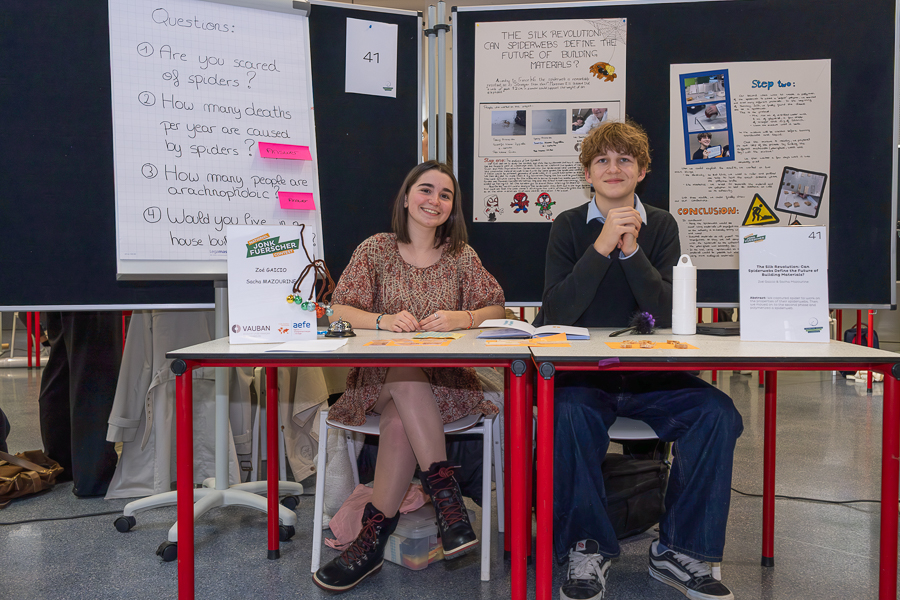
Among them were Zoé Gaicio and Sacha Mazourine from Lycée Vauban, who presented a project titled "The Silk Revolution: Can Spiderwebs Define the Future of Building Materials?" Their research explored the properties of spider silk and its potential as an environmentally friendly construction material.
As part of their experiment, the students studied spiders and their webs in a plexiglass terrarium before creating a polymer inspired by the structure of spider silk. The resulting material was based largely on corn starch, with glycerol as the only chemical additive, in an effort to develop a more sustainable alternative to conventional polymers. The students found that the polymer adhered well to natural materials such as wood but not to smooth artificial surfaces like plexiglass.
Zoé and Sacha, who are participating in the contest for the first time, explained that they began developing their idea in October / November 2025. The spiders used in their research - named Gwen and Miles, in reference to the Spider-Man characters - were released before the Christmas holidays.
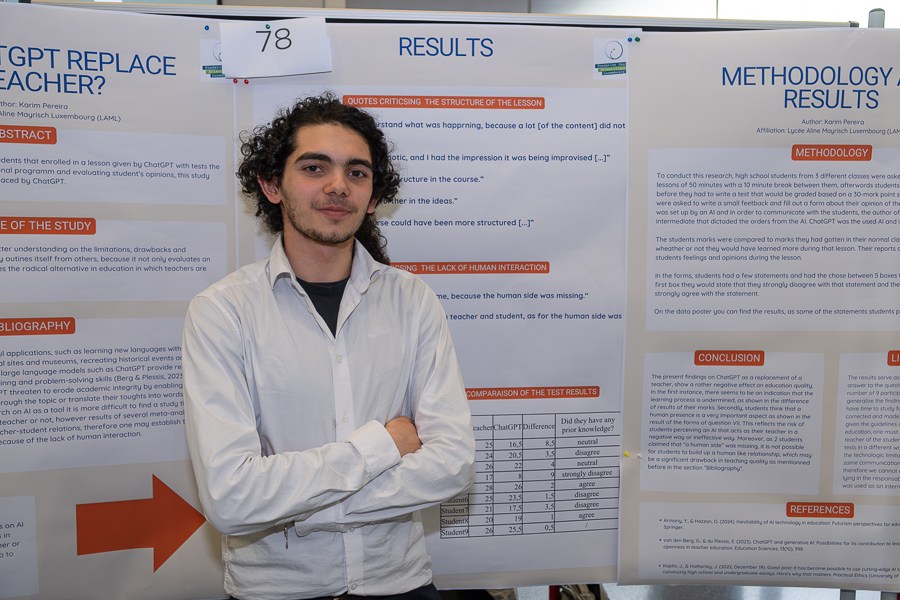
Another project examined the role of artificial intelligence (AI) in education. Karim Pereira from Lycée Aline Mayrisch presented the study "Can ChatGPT Replace a Teacher?" To test this idea, he asked ChatGPT to design and conduct a lesson for students, with himself acting as an intermediary between the AI tool and the class. ChatGPT created the lesson structure, exercises and a test, which it also corrected.
Karim compared the results with evaluations made by teachers and collected feedback from the students involved. The study found that most participants felt the human presence of a teacher was important. Karim noted that ChatGPT had included too much content for the two-hour lesson and missed some key subject matter. While acknowledging the limitations of his experiment, he concluded that AI cannot currently replace teachers, according to his findings.
Further information about the National Jonk Fuerscher Contest is available online at: https://fjsl.lu/activities/njfcontest