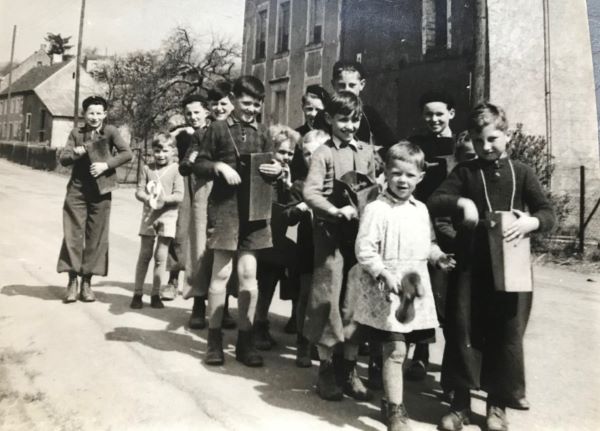
 Credit: IKI.lu - national inventory of intangible cultural heritage webpage
At the turn of the year, Chronicle.lu will present a series on ten popular and lesser-known practices passed down through generations and preserved as elements of Luxembourg's intangible cultural heritage.
The series draws on Luxembourg's national inventory of intangible cultural heritage, established in 2008 to document and preserve customs, crafts and community practices that contribute to the country's cultural identity.
The list is managed by Luxembourg's Ministry of Culture with advice from the Cultural Heritage Commission (COPAC) and aligns with the UNESCO Convention for the Safeguarding of the Intangible Cultural Heritage. It includes five categories: oral traditions and expressions; performing arts; social practices, rituals and festive events; knowledge and practices concerning nature and the universe; and traditional craftsmanship.
Marking the International Day of Intangible Cultural Heritage on 17 November 2025, the Culture Ministry announced five new additions to the list, now comprising a total of 21 elements. For more on this, see https://chronicle.lu/category/culture/57416-luxembourg-adds-5-traditions-to-national-intangible-cultural-heritage-inventory
"Klibbere goen"
Added to the national inventory in December 2022 under the category "social practices, rituals and festive events", the tradition of "Klibbere goen" (going rattling) takes place each year at the end of Holy Week, just before Easter, and is considered one of Luxembourg's loudest customs - even though the Schueberfouer still remains the absolute winner when it comes to noise.
According to tradition, children walk through villages and towns calling the faithful to prayer using their wooden ratchets or rattles ("Klibberen") three times a day - in the morning, at noon and in the evening. This replaces the ringing of church bells, which, according to legend, have "flown to Rome".
Since Catholic liturgy states that the bells do not ring from the evening of Holy Thursday until the Easter Vigil on Holy Saturday, rattle-children ("Klibberkanner") roam the streets on Good Friday and Holy Saturday to replace the bells. In some places, they also start on Holy Thursday evening, once the bells fall silent at the end of Mass.
As no bells ring during this period, the old Catholic tradition of "Klibberen" once relied on altar boys ("rattle-boys") who used rattles to replace the church's call to prayer. While the custom began with altar boys, it has since evolved and is now enjoyed across Luxembourg by all children who wish to take part. Adults who once practised "Klibberen" as children accompany the groups, pass on the wooden ratchets and the knowledge of how to use them, teach the local rhymes and look after the younger participants.
To ensure safety, many villages and towns place signs at their entrances signalling "children with rattles", reminding motorists to slow down and take extra care.
The "Klibberen" period continues until Easter Sunday. According to legend, when the church bells finally return on Holy Saturday and ring out to announce the resurrection of Jesus, children mark the moment by ringing doorbells that afternoon or on Easter Sunday to collect small donations or chocolate eggs from households in their neighbourhood. As most families colour Easter eggs during this celebration, these too become a valued part of the exchange, together with other small gifts often hidden in the garden.
Similar rattle traditions appear in several cultures, including parts of Germany, the Czech Republic and eastern France, as well as in Jewish celebrations.
EO