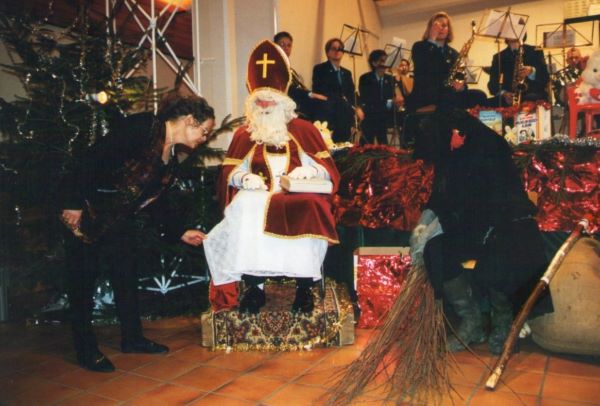
 Credit: National Inventory webpage
At the turn of the year, Chronicle.lu will present a series on ten popular and lesser-known practices passed down through generations and preserved as elements of Luxembourg’s intangible cultural heritage.
The series draws on Luxembourg’s national inventory of intangible cultural heritage, established in 2008 to document and preserve customs, crafts and community practices that contribute to the country’s cultural identity.
The list is managed by Luxembourg's Ministry of Culture with advice from the Cultural Heritage Commission (COPAC) and aligns with the UNESCO Convention for the Safeguarding of the Intangible Cultural Heritage. It includes five categories: oral traditions and expressions; performing arts; social practices, rituals and festive events; knowledge and practices concerning nature and the universe; and traditional craftsmanship.
Marking the International Day of Intangible Cultural Heritage on 17 November 2025, the Culture Ministry announced five new additions to the list, now comprising a total of 21 elements. For more on this, see https://chronicle.lu/category/culture/57416-luxembourg-adds-5-traditions-to-national-intangible-cultural-heritage-inventory
“Niklosdag”
The first article in this series will take a closer look at “Niklosdag” (Saint Nicholas Day), which was added to the national inventory on 29 July 2019 and falls under the category of “social practices, rituals and festive events”.
Celebrated on 6 December each year, the feast day reflects a long-standing tradition in which children receive presents from “Kleeschen” (Saint Nicholas). These gifts range from sweets to small toys for those who have behaved well throughout the year. “Naughty” children risk receiving twigs from the fear-inspiring “Houseker”, reflecting older moral lessons embedded in the custom.
According to tradition, children place a slipper outside their bedroom door the evening before 6 December, hoping to find it filled with surprises by morning.
The tradition is not only celebrated at home but also honoured through a variety of “Niklosdag” or “Kleeserchersdag” events organised across the country. In the run-up to Saint Nicholas Day, festive parades and “Kleesercherfeieren” (Saint Nicholas celebrations) take place, during which children receive a “tiitchen”, a small bag filled with sweets. In certain regions along the Moselle, it is said that Saint Nicholas arrives by boat, while in other towns and villages he makes his entrance by horse-drawn carriage, motor vehicle or train.
According to the national inventory, Kleeschen is welcomed by members of the municipal council and representatives of local clubs and organisations at these events. A festive procession then leads him to a hall, where he hands out presents to the children.Traditionally, one secondary-school student dresses up as Kleeschen, wearing a bishop’s robe with a crook and a long white beard. Beside him is the fearsome Houseker, sometimes appearing as a group, and in some versions he is accompanied by several angels.
The traditional pastry of this festive season is the “Boxemännchen” (a small, man-shaped brioche).
In Luxembourg, 6 December is significant enough that primary schools close for the day, and, according to some accounts, certain secondary school students celebrate by dressing as Saint Nicholas and visiting classrooms to foster a festive spirit.
A similar tradition of sharing, gifting and community support for children and those in need is observed across many Western Christian countries, although local customs differ. The custom’s origins are linked to various legends about Saint Nicholas, the fourth-century bishop of Myra, a town on the south coast of Asia Minor (in present-day Turkey).
EO