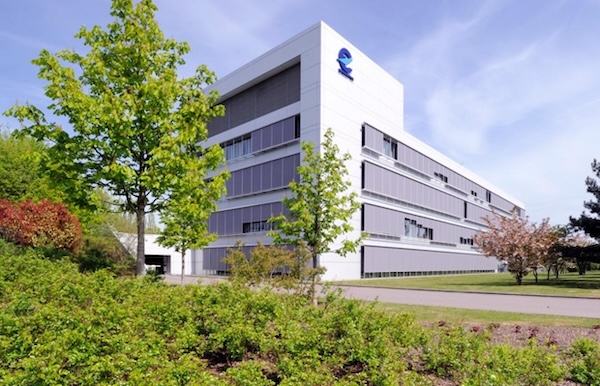
 Credit: EURCONTROL
Chronicle.lu has compiled a new series of articles dedicated to European institutions, bodies and agencies with a presence in Luxembourg.
Standing alongside Brussels in Belgium and Strasbourg in France, Luxembourg City is one of the European Union’s three official seats. A founding member of the European Union (EU), Luxembourg is known internationally as a business and financial hub and hosts several major EU institutions and other bodies.
Based mainly in Luxembourg-Kirchberg, these institutions shape European law, finance and democratic processes and employ around 15,000 international professionals.
Throughout this series, Chronicle.lu will introduce the main European institutions, bodies and agencies in Luxembourg and explain how they work. This article focuses on EUROCONTROL.
EUROCONTROL is a pan-European civil-military organisation dedicated to supporting European aviation. Founded in 1963, it brings together 42 Member States, as well as two additional comprehensive agreement states, working jointly to improve the performance of the European air traffic management network.
EUROCONTROL’s origins date back to 1960, when its founding six states - Belgium, France, the Federal Republic of Germany, Luxembourg, the Netherlands and the United Kingdom - signed the International Convention relating to Cooperation for the Safety of Air Navigation. The convention was ratified in 1963, marking the formal establishment of the organisation. Since then, its role has expanded significantly, while maintaining its core focus on providing technical expertise to support European aviation.
The organisation’s expertise spans research, development, operations and performance monitoring, with the aim of making aviation in Europe safer, more efficient, more cost-effective and with a reduced environmental impact. It supports a wide range of stakeholders, including air navigation service providers, airspace users, airports and aircraft and equipment manufacturers.
EUROCONTROL’s activities cover multiple areas of aviation, including airspace design and utilisation, network operations, safety, cybersecurity, artificial intelligence, sustainability and crisis management. It also works on forecasting, simulations, standardisation and the integration of unmanned aircraft systems, as well as digitalisation and information management.
With more than 2,000 staff and an annual budget exceeding €1 billion, EUROCONTROL operates across several sites in Europe, including in Belgium, France, Luxembourg and the Netherlands. Its work plays a central role in coordinating air traffic flows and improving the efficiency of Europe’s aviation network.
EUROCONTROL also has a presence in Luxembourg through its Aviation Learning Centre (ALC), which has been supporting aviation training for over 50 years. The centre has recorded around 900,000 course registrations and now offers more than 230 courses covering a wide range of topics, including air traffic management, sustainability, artificial intelligence and drone operations.
The ALC provides both in-person and online learning opportunities and works with a broad range of stakeholders, including national authorities and industry partners. Its activities reflect EUROCONTROL’s broader objective of preparing the European aviation sector to meet future challenges through knowledge-sharing and skills development.
A key aspect of EUROCONTROL’s work is its cooperation with the European Union Aviation Safety Agency (EASA). The two organisations bring complementary expertise: EASA focuses on regulation, certification and oversight, while EUROCONTROL provides operational, technical and network-level expertise. This collaboration aims to ensure that regulatory frameworks reflect operational realities and that aviation systems across Europe remain aligned, efficient and resilient.
According to its 2024 annual accounts, EUROCONTROL continued to meet the expectations of Member States and stakeholders despite ongoing financial pressures. Inflation contributed to rising operational costs, including staff-related expenses and energy prices, affecting the organisation’s overall financial flexibility.
At the same time, the agency maintained investment in key programmes, including digital and network infrastructure projects, aimed at supporting future air traffic growth and improving system resilience. European aviation is expected to expand significantly in the coming years, creating additional demand for coordination and innovation.
Working together with European and international partners, EUROCONTROL continues to support the development of a safer, more efficient and more sustainable aviation system across Europe.