 Credit: © Armée luxembourgeoise
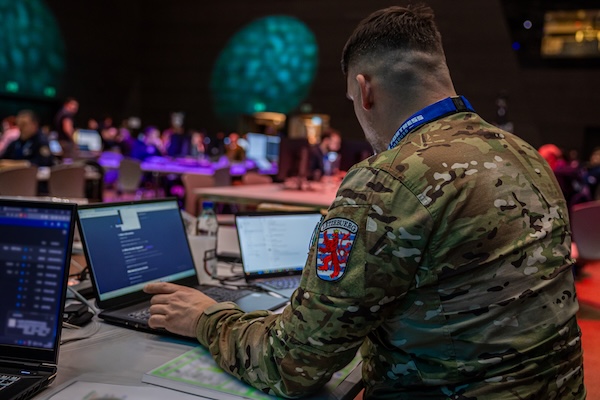
On Friday 13 March 2026, the Luxembourg army general staff reported that members of the Directorate of Defence and the army, the Grand Ducal Police and the Luxembourg House of Cybersecurity together with other partners took part in the largest local cyber defence exercise “Cyber Fortress”.
The aim of the exercise is to allow participants from the armed forces of several nations, namely Germany, Austria, Ireland, Latvia, Singapore and Switzerland, to train their cybersecurity experts and improve their skills in defending IT systems.
Since its launch in 2021, the annual “Cyber Fortress” exercise has continued to grow and evolve. It first focused on technical aspects. Since 2025, It has used a tailor made and highly realistic scenario that incorporates media injections, which makes the exercise more practical and engaging for participants.
This year four teams faced the exercise: a joint Germany, Austria, Switzerland and Luxembourg team; a joint Latvia and Singapore team; a Luxembourg team; and the Irish Joint Cyber Defence Command, which took part in the exercise for the first time with its own team. In total the exercise involved 500 participants, including around 300 who joined remotely, according to the army.
The exercise took place on a virtual simulation platform, the “Luxembourg Cyber Range”, which the Directorate of Defence provided.
The army also highlighted that the “Cyber Fortress” exercise aims to test interoperability and cooperation within teams made up of staff from different countries or organisations in a cyber crisis context. Participants face a large number of cyberattacks in real time. The exercise requires them to react as a team and work together as they would in a real cyberattack situation. This approach strengthens their ability to respond effectively to cybersecurity challenges while helping them to identify possible improvements in incident management.
“Cyber Fortress” covers technical, procedural and IT service management aspects. Since 2025, it has also included strategic and media communication topics such as deepfakes, fake news and disinformation. The exercise allows military personnel and government, research and other strategic partners to gain knowledge, share it within their organisations and exchange with other cybersecurity experts.