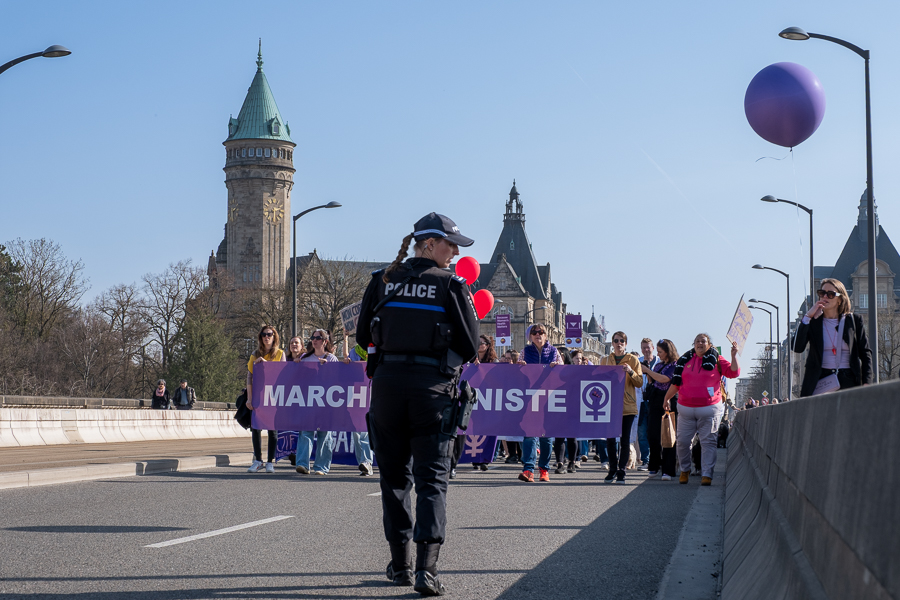
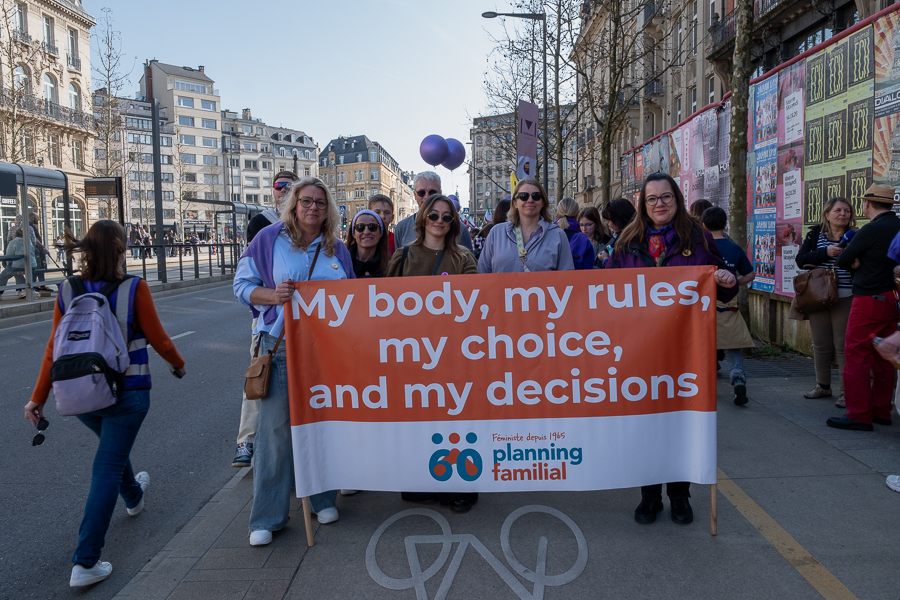
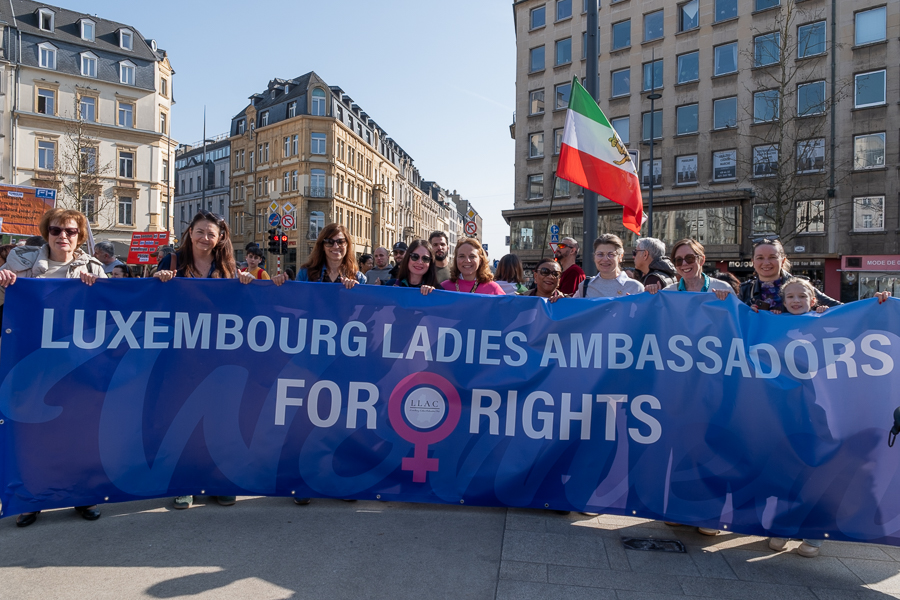
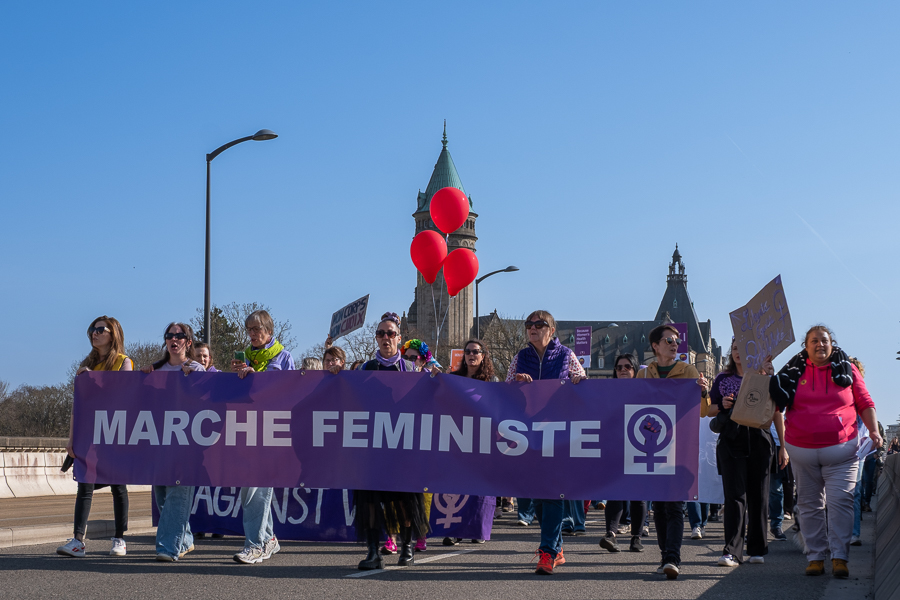
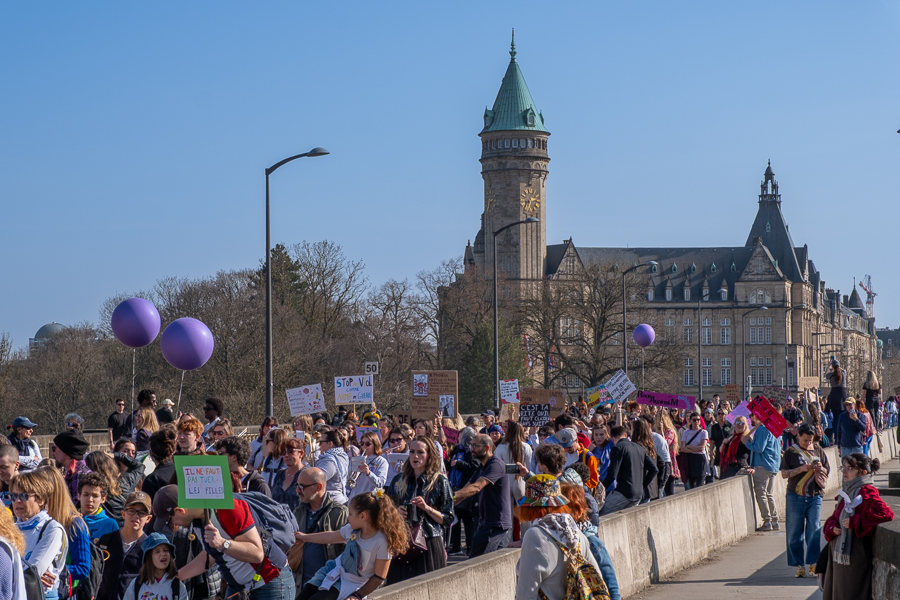
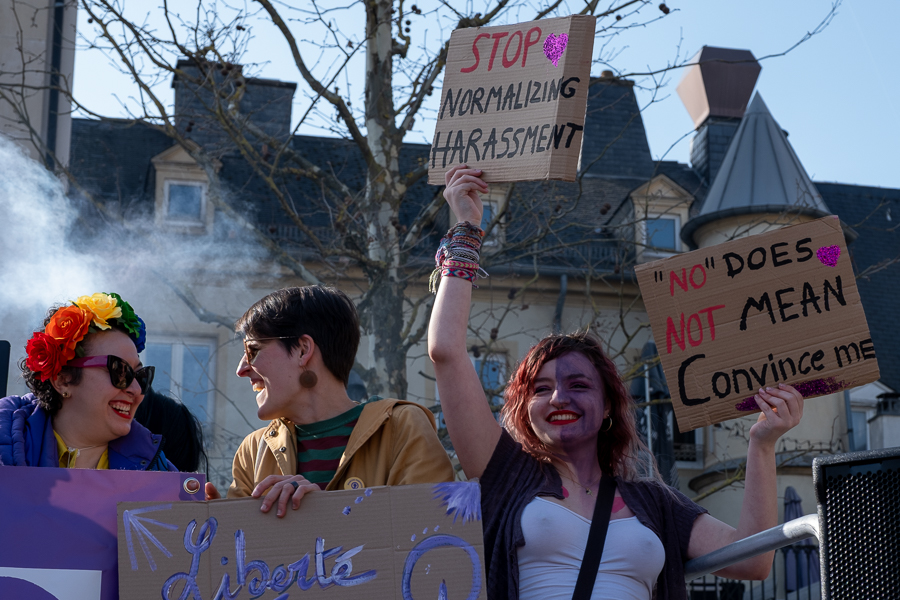
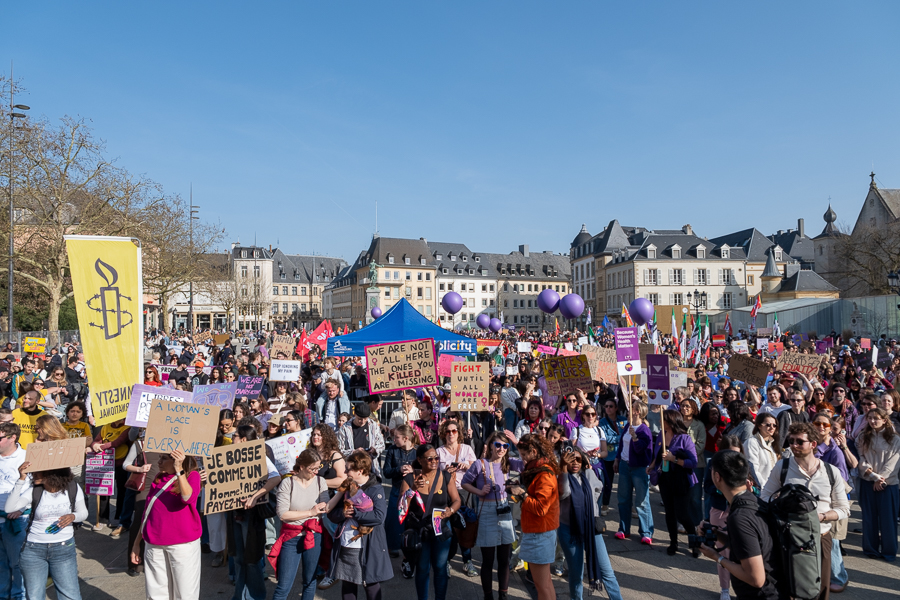
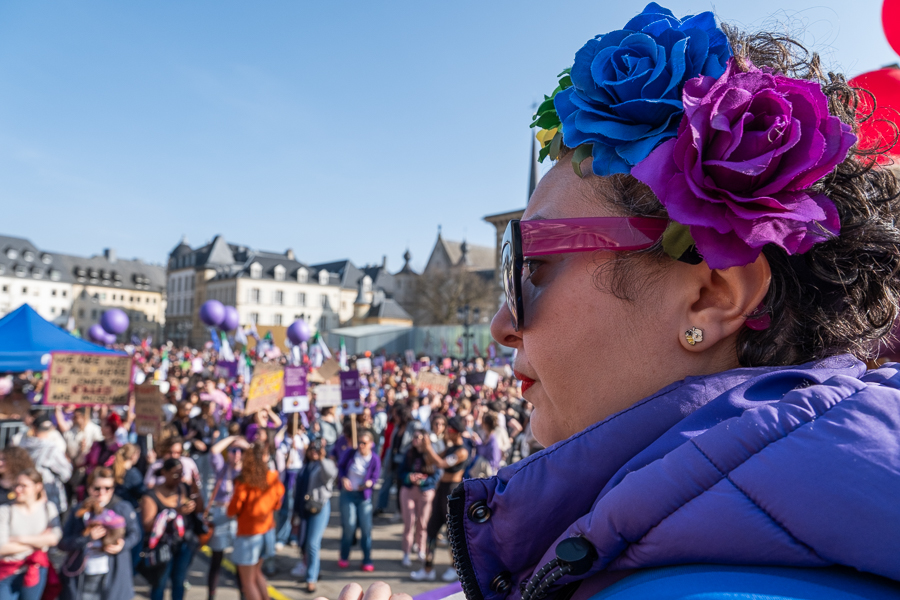
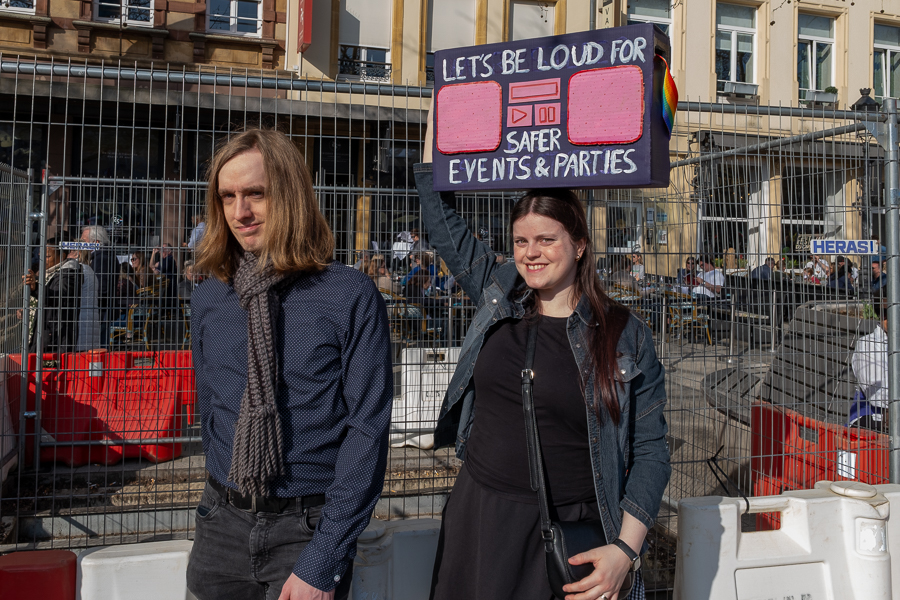
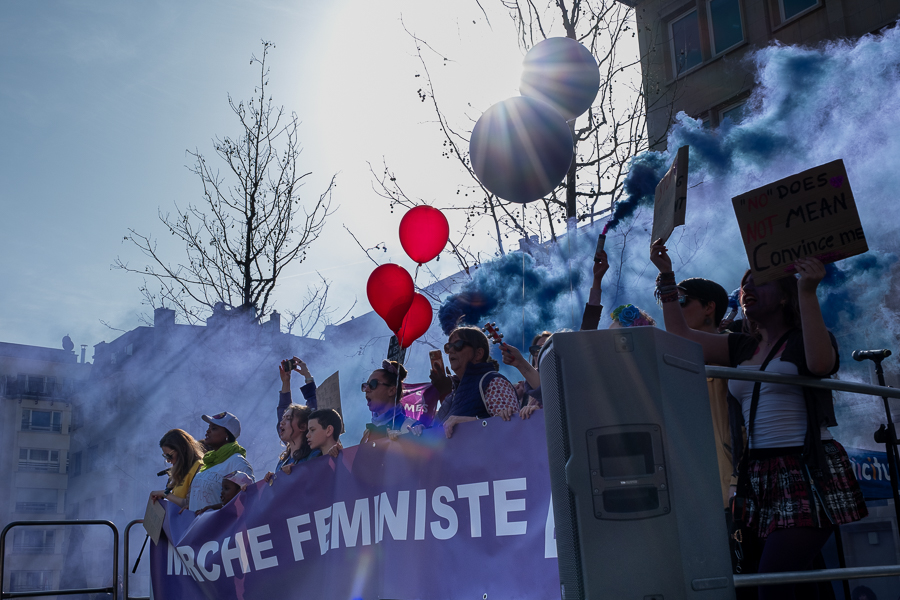
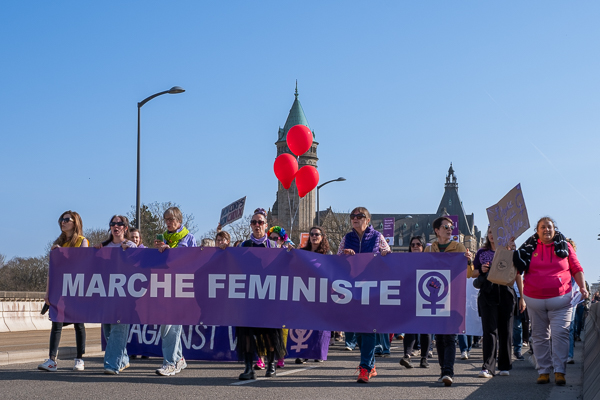
 Women's Day March 2026 in Luxembourg City;
Credit: Ali Sahib, Chronicle.lu
Women's Day March 2026 in Luxembourg City;
Credit: Ali Sahib, Chronicle.lu
Several thousand people took part in the annual Feminist March ("Marche Féministe") organised by the feminist platform Journée Internationale des Femmes (JIF) in Luxembourg City on Sunday 8 March 2026, marking International Women's Day.
An estimated 5,000 participants gathered in Place de Paris on this sunny Sunday afternoon before setting off towards Place Guillaume II (Knuedler). They carried banners and placards and chanted slogans linked to this year's motto, "Smash the Patriarchy", as well as the central theme of "Health as a Right, Not a Privilege".
Upon arrival in Place Guillaume II, speakers emphasised that access to healthcare, particularly for women and marginalised groups, remains unequal and influenced by systemic biases. They stressed that women's health concerns are often overlooked in medical research and treatment, noting that the male body is frequently treated as the universal norm in healthcare systems. They called for an end to what they described as "medical blind spots", better and quicker diagnosis of conditions affecting women (e.g. endometriosis, PCOS) and improved support for mental health.
The speeches also linked healthcare issues to broader social and economic structures, with speakers arguing that invisible labour and underpaid work in sectors such as cleaning and care disproportionately affect women. They called for measures including free access to all types of contraception, stronger protections for reproductive rights and a shorter working week without loss of pay.
The speakers noted that while abortion is now enshrined in Luxembourg's Constitution, access to reproductive healthcare must continue to be strengthened. "Our bodies belong to us," one speaker said. The speeches also highlighted the lack of publicly available data on issues such as abortion access, femicides and violence against women and children, arguing that transparency is necessary to ensure accountability. The speakers emphasised that women and gender minorities' access to healthcare is a human right and described this as a political issue rather than an individual one.
The programme also featured musical performances, including from the JIF feminist orchestra and various singers throughout the afternoon.
Founded in 2011, the JIF platform brings together around 20 organisations - including NGOs, civil society actors and political parties - to organise activities marking International Women's Day.