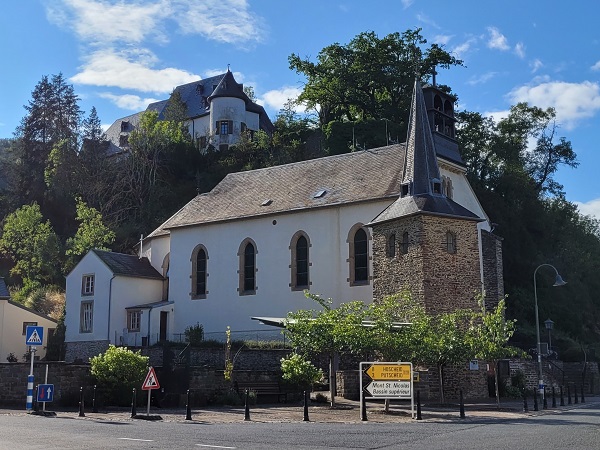
 Stolzembourg Church, Castle1;
Credit: Jazmin Campbell, Chronicle.lu
Stolzembourg Church, Castle1;
Credit: Jazmin Campbell, Chronicle.lu
Throughout August, Chronicle.lu will be shining a spotlight on various villages across the Grand Duchy; the focus is mainly on some of the (perhaps) lesser-known villages with particular points of interest or an interesting history (e.g. cultural and/or industrial heritage).
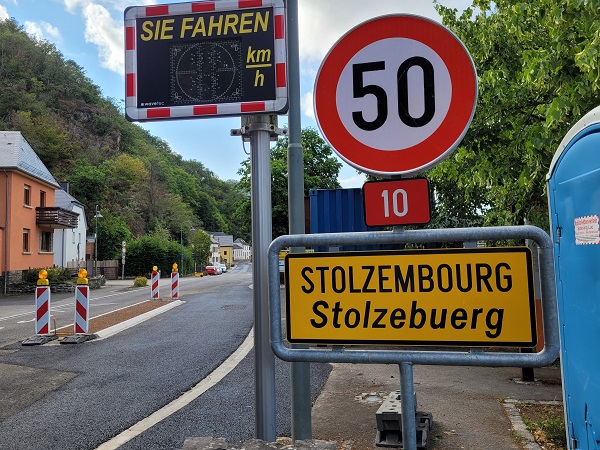
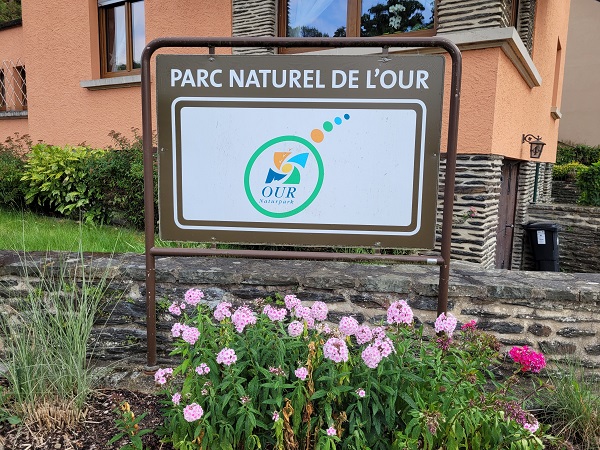
The next article in this series is dedicated to Stolzembourg, a village in the municipality of Putscheid in north-eastern Luxembourg (Canton Vianden) with a population of about 200. Stolzembourg (Stolzebuerg in Luxembourgish) is located in the scenic Our valley, in Luxembourg’s Ardennes (Oesling, or Éislek in Luxembourgish), right on the border with Germany. Nature lovers visiting the area can enjoy hikes and trails within the Our Nature Park.
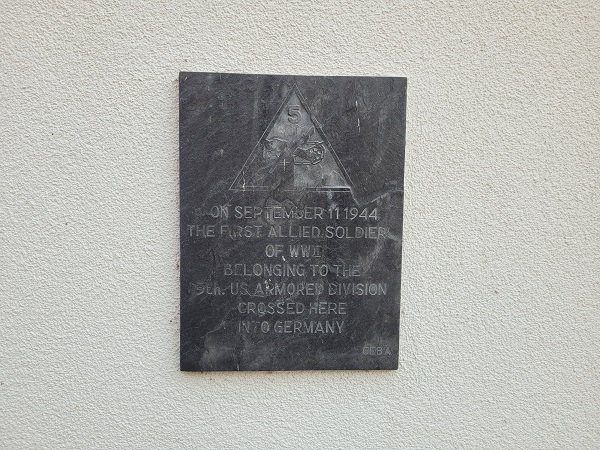
Remembrance tourism is strong in the Ardennes region, particularly in relation to the Battle of the Bulge, a major German offensive on the Western Front towards the end of the Second World War. Before this, on 11 September 1944, allied soldiers crossed the Our river border from Stolzembourg into Nazi Germany for the first time during the war: as detailed on a sign in Stolzembourg, six US soldiers and one French lieutenant of the 2nd Platoon, Troop B, 85th Cavalry Reconnaissance Squadron, 5th US Armored Division, crossed into the Third Reich where they went on to reconnoitrer the German pillboxes of the Siegfried Line ("Westwall") defence system; they reported what they learned back to Lieutenant Loren L Vipond. News of this first crossing spread quickly. These historic ties between the village of Stolzembourg and the United States are remembered today through several flags and memorial plaques. Local operators also offer remembrance tours in the area.
Another interesting sight in the village is the Château de Stolzembourg, which overlooks the village centre from atop a hill; it is particularly visible behind the local church (Église Saint-Odon). The now privately owned castle was built in 1898, on the ruins of a medieval castle. The first mention of a fortress on this site dates to the 14th century; according to local sources, the castle was destroyed a first time by a governor called Antoine de Croy in 1454 and a second time by French troops in 1679. The current structure is described as a "Scottish-style" country house and is closed to the public.
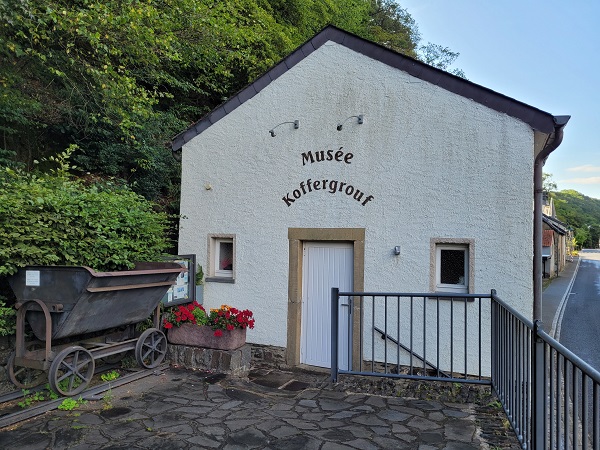
Stolzembourg is also known for its old copper mine, located about 1.5 km outside the village. The first written evidence of the mine can be traced back to the 1700s. Copper continued to be mined here up until 1944, when the mine closed due to the war. Today, the remains of the underground galleries are partially accessible to the public; in 2022, more than 2,700 people visited the copper mine (according to the Our Nature Park). Visitors can also learn more about the mine and its history at the Musée Koffergrouf, located on the main street (Rue Principale) in Stolzembourg.
Since 2020, the Our Nature Park and the Syndicat d'Initiative Stolzembourg have teamed up with a local bakery (Au Croissant d'Or) over the Christmas period to produce "Stollen" (a festive fruit bread typically combining nuts, spices and dried/candied fruit) in the mine itself. In 2021, 1,000 of these Christmas breads were sold as part of the "Stollen aus dem Stollen" initiative.
Until recently, the village also hosted a "Plant Exchange" (Planzenbörse), a type of plant and garden festival/exhibition organised by the Syndicat d'Initiative Stolzembourg. However, the latter announced its decision earlier this year to cancel the event "until further notice" (citing issues related to organisation and dwindling visitor numbers).
Last but not least, Stolzembourg is home to one of the largest pumped-storage hydroelectric plants in Europe. Operated by the Société Électrique de l'Our (SEO) SA, the complex is open to the public throughout the year (opening hours subject to change) and features various explanatory models and films about the power plant as well as electricity generation and consumption.