This March 2016 will be Haemophilia Awareness Month, 31 days of advocacy to bring attention to those living with a bleeding disorder preventing their blood from clotting properly.
Currently, 75% of all haemophiliacs receive insufficient medication, meaning that many of them subsequently do not reach adult age. Both internal and external bleedings can be dangerous for the individual concerned if untreated, and can often result in lameness of premature death.
As a specific factor needed for their blood to clot is missing or defective, haemophiliacs usually require an intravenous injection two to three times a week in order to keep their blood coagulation at the right levels. Although this can an effective solution, the medications involved are generally very expensive, and more often it happens that haemophiliac patients receiving these clotting factors develop inhibitors which reduce the ability of the drugs. Research as found that future gene therapy could provide a definitive solution, but has yet to become a reality.
As it is an inherited disease, haemophilia often pervasively affects several family members who then all require medication. It is also known as the 'royal disease' due to the several royal families who were affected by it in the past, including the British, the Spanish, the Tsars and the Prussian monarchy.
In 1986, then US President Ronald Reagan declared the month of March as Haemophilia Awareness Month, which is commemorated by associations such as World Federation of Haemophilia (www.wfh.org) and Save One Life (www.saveonelife.net). 17 April 2016 also represents International Haemophilia Day, when individuals and organisations are encouraged to spread awareness of haemophilia by word of mouth or social media.
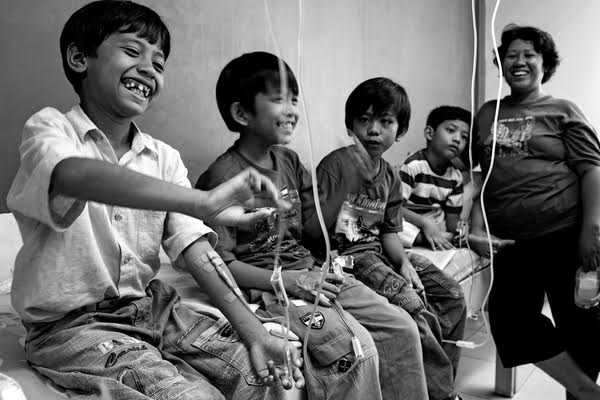
Photo provided by Marelle Hart