 Credit: CGDIS
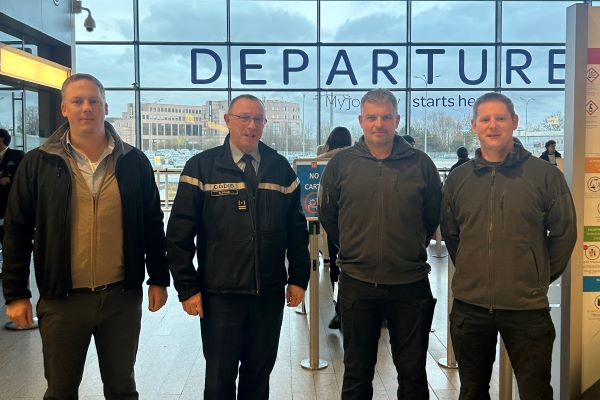
Luxembourg's Ministry of Home Affairs, the Ministry of Foreign and European Affairs, Defence, Development Cooperation and Foreign Trade and the Grand Ducal Fire and Rescue Corps (CGDIS) have announced the recent deployment of two members of the CGDIS Humanitarian Intervention Team (HIT) and emergency.lu satellite equipment in areas affected by Tropical Cyclone Gezani in Madagascar.
The deployment follows a request from the Emergency Response Coordination Centre (ERCC) under the European Civil Protection Mechanism. The two HIT experts departed on Friday 13 February, carrying the equipment required to deploy emergency.lu satellite antennas and to help restore essential communications in disaster-affected areas.
These systems support rescue teams and humanitarian organisations currently operating in Madagascar. Authorities estimate the initial duration of the mission at approximately three weeks.
The authorities noted that the CGDIS intervention group responsible for civil security and humanitarian missions intervenes outside the territory of Luxembourg in the event of serious disasters by order of the government, either at the request of the country or countries concerned or within the framework of international assistance.
Emergency.lu is a mobile satellite telecommunications platform designed to restore communications after disasters and to support coordination among humanitarian organisations on the ground. It operates as a public-private partnership between the Ministry of Foreign and European Affairs, Defence, Development Cooperation and Foreign Trade, and three Luxembourg companies: SES Telecom Services; Hitec Luxembourg; and Luxembourg Air Ambulance SA.
The European Civil Protection Mechanism was created in 2001 to strengthen cooperation in civil protection between European Union (EU) Member States and six additional participating countries, with the aim of improving disaster prevention, preparedness and response.