Médecins Sans Frontières (MSF) today reported that it has been mobilised since violence first erupted in the Central African Republic capital of Tangui on 26 September 2015 following the murder of a motorbike taxi driver.
The murder was followed by retaliation and generalised violence between Christian and Muslim groups, with many parts of the city experiencing anti-government demonstrations, mobbing, barricades and roadblocks, and destroyed and looted buildings, including the bases of several international NGOs.
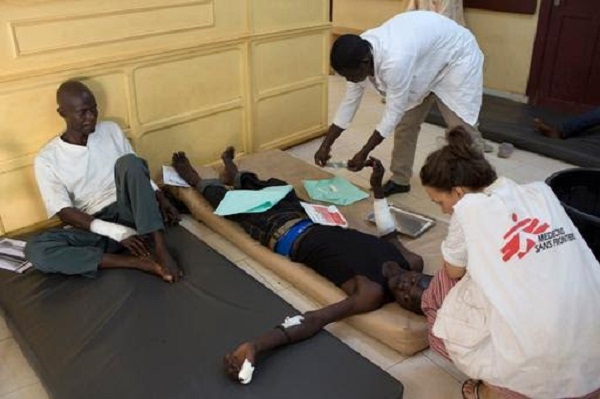
MSF teams who have been working at the organisation's three medical facilities in the city, the Mpoko displaced persons camp and the Castor and Bangui General Hospitals, put emergency plans into action to cope with the influx of wounded people, supporting nearly 84 patients between 26 and 28 September 2015 at Mpoko and Castor and 97 more at the General Hospital.
"Among the hundreds of injured received, fifteen were severe cases and two were already dead on arrival," reported Thomas Lauvin, MSF Medical Coordinator in Bangui. "The majority have gunshot wounds, but we have also taken care of injuries from stabbings and grenade explosions and operated on 45 patients".
"Because of the insecurity, our ambulances can no longer circulate," explained Emmanuel Lampaert, Head of the MSF mission in RCA. "Where possible, we ensure patient transfers, by taxi, to our structures. But most of the wounded, the sick, the patients in general have to find them on their own, on foot or by motorcycle. Because of this, on the 28th no woman came to give birth in Castor, whilst normally 30 babies are born, on average, every day".
On Sunday all access was blocked, preventing the injured from the PK5 district, Castor and Mpoko from reaching the General Hospital and resulting in some dying there on the spot. In the evening, only 15 peiple were able to make it to the Hospital.
"Given what is happening in the City, the number of injured reaching us seems low," continued Thomas Lauvin. "We believe that - unfortunately - many people have no access to emergency care in Bangui today, either because they are failing to reach health facilities, or because we cannot get access to them".
Another consequence of the violent outbreaks has been an extensive movement of people in search of safety from certain areas of Bangui towards pre-existing camps for displaced persons. The MSF teams in Mpoko, who have been at the sire since the crisis of 5 December 2013, reported the arrival of thousands of people within the last few days.
Photo by MSF