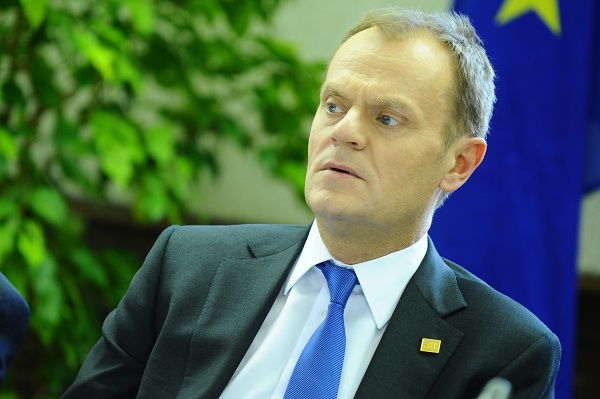
To prepare for the meeting in Brussels on EU-Turkey cooperation on Monday 7 March 2016, Donald Tusk, President for the European Council travelled to 8 European countries to continue to build a European consensus on migration.
In the past week Donald Tusk travelled to Austria, Ljubljana, Zagreb, Skopje, Athens, Ankara, Istanbul and Belgrade in an attempt to bring Europe together on the issue of migration. Throughout his visits Tusk discussed three main issues: the EU borders and the Schengen agreement, the need for better cooperation with Turkey and the necessity of more humanitarian assistance.
“The countries of the Western Balkans route, also those outside the EU, are all ready and determined to return to the full application of our common rules and decisions, including the Schengen Borders Code. This will mean an end to the so-called wave-through policy of migrants,” said Donald Tusk in an open letter on Friday, 4 March. He admitted that such actions would not solve the migration issue but would be a necessary pre-condition for a European consensus. He added: “On Monday, we should all confirm this approach. With that we will close the Western Balkans route, which was the main entry point for migrants with 880,000 entering in 2015 alone and 128,000 in the first two months of this year.”
On the matter of EU-Turkey cooperation Donald Tusk and the Prime Minister of Turkey, Ahmet Davutoğlu agreed that although the collaboration has yielded positive results in some areas, others need further attention, such as the amount of illegal entries from Turkey to Greece.
“We both believe that we can reduce the flow through large-scale and rapid return from Greece of all migrants not in need of international protection. The political will is there but it poses a logistical challenge, in which we have to support Greece,” said Donald Tusk.
The Turkish Prime Minister also declared the country’s willingness and readiness to take back all the immigrants apprehended in Turkish waters.
Thirdly Donald Tusk agreed with Alexis Tsipras, Prime Minister of Greece, on his statement that Greece must not become “a warehouse of souls”.
“On Monday, I would like us to agree that all available EU tools, including accelerated relocation, should be used to address the humanitarian consequences for the refugees, not least in Greece, in a speedy and effective way,” said Donald Tusk.
This would also include the proposal from the European Commission of a new Emergency Assistance instrument of €700 million, and the recognition of the role of national governments in humanitarian efforts.
The President for the European Council finished with a hopeful look to the future, “For the first time since the beginning of the migration crisis, I can see a European consensus emerging. It is a consensus around a comprehensive strategy that, if loyally implemented, can help stem the flows and tackle the crisis.”
Photo by European People's Party/Wikimedia (Donald Tusk)