Fairtrade Lëtzebuerg has called on the Luxembourg Government to take a strong stand in the trialogue negotiations between the European Commission, Parliament and the Council of Member States on the subject of 'conflict minerals', due to begin this month in Brussels.
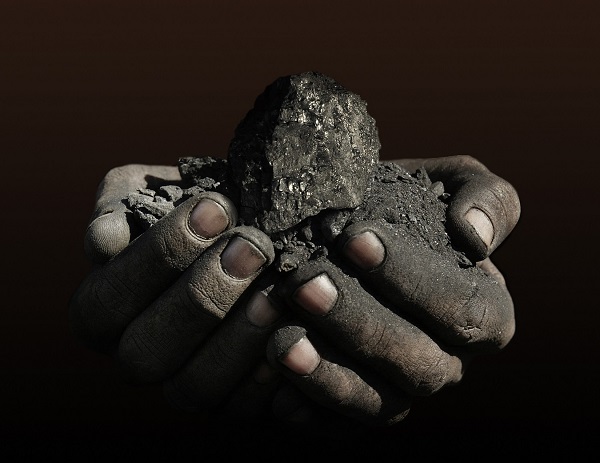
The Luxembourg-based NGO has urged the country's national authorities to defend a binding text determined in accordance with the Organisation for Economic Co-operation and Development (OECD) guide on responsible sourcing. The trialogue negotiations are expected to lead to the adoption of European regulation on 'blood minerals', so called due to their unlawful extraction and their subsequent financing of armed groups.
Organisations such as Amnesty International have also recently published reports on the subject, highlighting the situation as an urgent challenge which holds the potential to threaten the reputation of companies and investors who do not comply.
In a statement released Wednesday, Fairtrade Lëtzebuerg voiced concerns that the mandate of the Council of Ministers approved under the Luxembourg Presidency by the Committee of Permanent Representatives (COREPER) on 17 December 2015 aims to renegotiate and weaken the OECD guide on due diligence - a standard that has been negotiated and agreed internationally by indsutry, governments and civil society.
According to Fairtrade Lëtzebuerg, "the Council's mandate does not provide an effective European response to the 'conflict minerals' problem" and the voluntary measure put forward by the Council excludes the vast majority of companies selling tin, tantalum, tungsten and gold in the European market.
The contrast between the Council's position and the rhetoric of the European Union regarding responsible supply chains was also cited as a major concern. The Commission has argued that the "responsible management of global supply chains is essential to align trade policy on European values" and has committed to "base itself on the work of the OECD".
Fairtrade Lëtzebuerg has taken issue with certain specific aspects of the Council's proposal, which it claimed has put forward far less stringent due diligence measures compared with the OECD standard, does not cover a significant number of downstream businesses and does not take into account the progressivity and flexibility of reasonable diligence under the OECD Guide on duty of care.
The NGO therefore asked the Luxembourg Government to reveal its position and call on the Council and Commission to accept the European Parliament's strengthened amendments to draft regulations which it saw as likely to limit the illegal mining of minerals and subsequently improve respect for human rights. It further urged the government to be part of a comprehensive strategy by ensuring that all due diligence obligations are consistent with the OECD standard, using a language reflecting the progressivity and flexibility of due diligence so as not to prevent companies from working but to enable them to do so within a framework that ensures peace, development and the defense of human rights.
Photo by Shutterstock