 Credit: Ali Sahib, Chronicle.lu
On Wednesday 15 April 2026, the Grand Ducal Police held “Speed Marathon 2026”, carrying out nearly 288 speed checks over a 24-hour period across the country.
Organised by Roadpol, the network of European traffic police forces, this campaign is part of the fight against excessive speed, the leading cause of road deaths in Europe and a trigger and aggravating factor in accidents.
During the operation in Luxembourg, officers issued 300 fixed fine notices, including 166 fines of €49 and 134 fines of €145, each including the deduction of two points.
The police also confiscated five driving licences on the spot due to excessive speed and carried out a further two confiscations due to driving under the influence of alcohol.
In addition, fixed and mobile speed cameras recorded nearly 2,637 triggers during the control check across the country, including 406 from fixed cameras and 2,231 from mobile cameras.
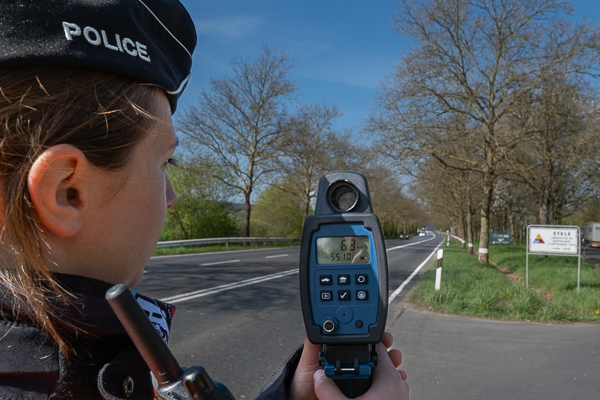
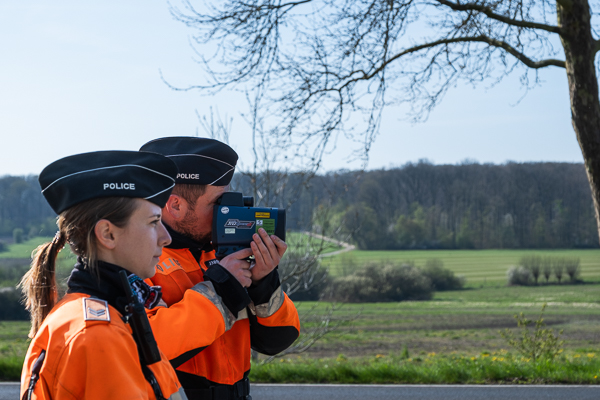
To measure speed, such operations across Europe typically use LiDAR (Light Detection and Ranging) scanners. It works by sending rapid pulses of invisible laser light toward a vehicle, which then reflect back. By measuring how long the light takes to return, it calculates the distance. It performs this measurement repeatedly each second and calculates the vehicle’s speed by analysing how the distance changes over time.
The key difference lies in how they operate. Radar guns use radio waves that spread over a wide area, which allows them to detect multiple vehicles at once. In contrast, LiDAR guns use light and focus on a single vehicle. They feature a narrow optical sight with multiple circular lenses at the front, which makes them more precise.