The next seven days involve the inaugural editions of several new initiatives, including the first European Day on the Protection fo Children Against Sexual Exploitation and Sexual Abuse on Wednesday 18 November 2015, and the first Global Week of Antibiotic Resistance, running from Monday 16 to Sunday 22 November 2015.
The inaugural Global Week of Antibiotic Resistance is the result of joint efforts between the World Health Organisation (WHO) and the European Centre for Disease Prevention and Control (ECDC) to promote awareness of the misuse of antibiotics which results in around 25,000 patients dying every year from infectious diseases which are untreatable due to bacterial resistance to antibiotics.
Whilst antibiotics have been integral to the reduction of mortality from infectious diseases in the 20th century, their extensive and repeated use has led to the emergence of bacteria capable of resisting these drugs. Without effective antibiotics, modern treatments such as surgical operations and chemotherapy, are not possible.
Antimicrobial resistance is a major health issue in Europe, with people paying less and less attention to correct dosage and interval indications in the use of antibiotics as a treatment. In October, the Luxembourg Presidency held the Transatlantic Task Force on Antimicrobial Resistance (TATFAR) meeting to attempt to develop an action strategy between the EU and US for this issue.
It is for this reason that the WHO has selected the theme of 'Antibiotics: Handle with Care' for the first Global Week of Antibiotic Resistance', to highlight these drugs as a valuable resource to be employed with caution and used to treat bacterial infections only and as prescribed by a doctor. Antibiotics are only effective against bacteria and have no effect on the fungi and viruses which cause infections such as colds, tonsillitis, flu and bronchitis.
In addition, antibiotic treatment should never be shared amongst more than one person and should always be followed through with right until the end. Poorly cured bacterial infections are able to re-emerge and lead to the development of resistant bacteria later. It is also of little use to put aside antibiotics for a later date, as one infection is not like another and a bacteria-fighting antibiotic may be ineffective against another strain.
On the occasion of the 8th European Day of Antibiotic Resistance, the ECDC today published a Euscape report tracing the recent development of resistant bacteria in European hospitals, showing that the situation of antibiotic resistance is worsening in terms of the proliferation of Carbapenemase-producing enterobacteriaceae. That is to say that in many European countries, infected patients can no longer be treated with carbapenems.
However, a European response to the issue is being established, with the study also revealing that the use of antibiotics at the community level and in the primary healthcare sector fell for the first time in Denmark, Luxembourg, Slovenia, Spain and Sweden.
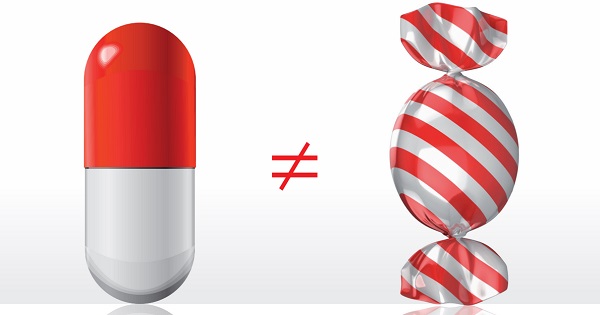
To continue this, the Ministry of Health is launching its 'Les antibiotiques ne sont pas des bonbons!' ('Antibiotics Are Not Sweets!') campaign for the third consecutive year, from 16 to 22 November 2015. The campaign appears to have previously bore fruit, with outpatient antibiotic consumption falling 7% last year.
For the Global Week of Antibiotic Resistance, several conferences on the topic will be organised for healthcare staff and prescribers. For more information, visit www.sante.lu.
Photo by Ministry of Health (cropped)