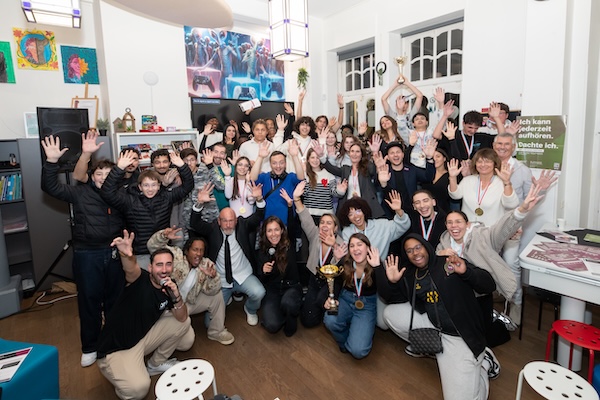
 Attendees at the first brb gathering at the Centre de Rencontre et d'Informations pour Jeunes (CRIJE) in Esch-sur-Alzette;
Credit: Andra Matresu
Attendees at the first brb gathering at the Centre de Rencontre et d'Informations pour Jeunes (CRIJE) in Esch-sur-Alzette;
Credit: Andra Matresu
brb – Be Right Back is a Luxembourg initiative focused on supporting young people in reducing their digital consumption and creating a healthy, offline environment as an alternative. Created by Andra Matresu, who combines digital marketing, strategic communication, video storytelling and media literacy to develop and lead projects that connect audiences and encourage participation, the initiative has been brought together with support from Fondation Bindels-Kauthen, under the aegis of the Fondation de Luxembourg.
Chronicle.lu recently spoke to Andra Matresu about her motivation behind the initiative, how the it supports healthier digital habits among young people, and what brb’s plans are for the future.
Chronicle.lu: What motivated/inspired you to develop brb – Be Right Back?
Andra Matresu: The starting point was Dr Andreas König from ZEV (Zenter fir exzessiivt Verhalen a Verhalenssucht), Luxembourg’s centre for behavioural addictions, where I work on youth prevention alongside my work with other organisations in digital communication and video storytelling. He invited me to develop a project around excessive screen use and later presented several proposals to Fondation Bindels-Kauthen, under the aegis of the Fondation de Luxembourg. The foundation selected brb, the concept I had developed, as the first project it would support. Since then, I have led the project, overseeing its concept, budget and content production, organising our first live event and building the community around it, in collaboration with partners such as the youth centre CRIJE, youth workers and participating influencers.
As clichéd as it may sound, my inspiration was the desire to help build a better future for the next generations, including my own children. I also thought back to my younger years, when we used Messenger and would type "brb" to say we were stepping away from the computer. Today, we hardly step away anymore. Being online has become our default. We have made it the final destination, instead of just a means to an end.
I come from marketing and video, and much of my work over the years has been to use these tools to build communities, online and offline. I know from the inside how platforms, content and campaigns are designed to capture attention and keep it, and I have not been immune to it myself. But I have also come to believe that the best antidote to excessive screen use is not to fight screens; it is to nurture, in real life, what screens promise us: connection, competence, belonging. With brb, I wanted to use the same tools, storytelling, video, social media, in the other direction: to bring people back together rather than keep them scrolling and deepen their isolation.
Through conversations with young people, I realised that many already recognise that their screen use might be a problem, especially as excessive use is now widely discussed. What they often lack is practical guidance on how to use technology positively, alongside offline opportunities where they feel connected, have a voice and are trusted to make their own choices. Offline experiences should also help them develop self-acceptance and learn to cope with rejection and boredom without automatically turning to their phones to escape uncomfortable feelings.
Chronicle.lu: What are the main goals of the initiative?
Andra Matresu: The goal is to help young people understand their digital habits and make mindful choices about how they use technology. Instead of using the phone to feel connected, to use the phone to set up a meeting with a friend. As a creator myself, I believe in digital minimalism rather than digital detox: technology is here to stay, so the question is how to live with it in a healthy way, using it intentionally rather than being used by it.
brb works mainly through a twelve-episode podcast and social media content, and increasingly, through offline activities. Alongside the podcast, we want to showcase and support activities led by youth centres and youth organisations, where young people can connect with others, contribute their skills and help shape what happens. Online connection is real; it just needs opportunities to continue offline.
Chronicle.lu: The evidence that excessive smartphone and social media usage can be detrimental to mental health is now well-documented, yet many people still persist in using both. What can brb do to help people understand these dangers and change their habits?
brb continues to raise awareness, because moments of reflection can spark change. But repeatable real-life interactions, shared experiences, relatable stories and communities are what turn that awareness into action.
The approach is to understand how the design captures attention, identify the real need it exploits, and build something offline that meets that need better. The response so far shows that young people will engage with this topic when the format feels relevant to them. The brb.mode Instagram account started from zero in June, with no advertising budget and on a prevention topic that does not naturally go viral; it passed 74,000 organic views in its first two months, the large majority from people who did not yet follow us and has since passed 158,000 views. On 9 October, on the eve of World Mental Health Day, four youth structures came to its first live offline event. That is reach and participation, not yet changed habits, but it is where change starts.
That is why we bring young people together with creators and influencers who speak openly about the impact excessive screen use has had on their own mental health. Hearing those experiences directly makes the issue more relatable. A mental health professional is usually part of these conversations, so that they stay grounded.
Chronicle.lu: Which experiences of social media addiction in Luxembourg have you heard that surprised you the most?
Andra Matresu: In one of the interviews on our YouTube channel brb.mode, an educator told us that at the start of each school year they ask their students about their screen time. Last year, the answers averaged fourteen hours a day. That may include passive use, such as videos running in the background. Even so, it shows how much space technology occupies in young people's lives.
Chronicle.lu: What is your opinion on the legislation now being implemented in various countries, including Luxembourg, around smartphone usage in schools and social media access for children?
Andra Matresu: Legislation is a positive step when it combines age restrictions with the tools children need to navigate life in the 21st century: media literacy, emotional skills (for example, how do I deal with boredom or rejection without reaching for a phone?) and meaningful offline alternatives.
But restrictions alone are unlikely to be enough, because young people can move to unregulated platforms, where the potential harm may be greater. For these measures to succeed, they need to be accompanied by media literacy programmes, socio-emotional learning and offline opportunities.
I started more than ten years ago, as a volunteer with an earlier initiative of my own, developing programmes for younger children that combined these same elements, media literacy, emotional skills and offline activities, at a time when the topic received much less attention. What I noticed then still holds today: children do better when we prepare and accompany them, with access that grows with their age, than when we rely on bans alone. The need to support children from an early age is now much more widely recognised. The point is to teach young people to use these tools to amplify their real-life potential instead of being used by them.
Chronicle.lu: As attitudes, both young and old, change about the impact of social media and smartphones, what are brb's plans for the future?
Andra Matresu: My next goal is to train and support young people and youth workers across Luxembourg to run their own brb activities, and not only in youth houses: schools, residential homes, sports clubs, scouts and any structure where young people spend time together. The format is the same everywhere: regular events that young people help shape themselves, with the podcast and their own content as a starting point for discussion. Our social media presence can start the conversation and give these initiatives visibility, but the activities themselves should not depend on me to organise them. Our first event showed we can bring people together; now I want to make that repeatable.
One idea I would love to explore is closing streets to traffic so people can skate, cycle or simply walk together, enjoying time away from their phones. Or a phone-free bus for a day, not as a rule but as an invitation, where people simply look up and notice each other. That was also the spirit of our first season, filmed with inline skater Matthias Stelzmüller: at the end of our week of filming, he invited young people to put their phones down and come and spend time with him. One person turned up. On 9 October, at CRIJE in Esch-sur-Alzette, more than 40 did, including young people from three youth centres, Croix-Rouge in Eischen, Arcus Mamer-Garnich and CRIJE, and from a youth residential structure. Some travelled quite a distance to join us. What we are learning is that the interest is there; what young people need is a place where showing up feels normal, and a reason to come.
The biggest impact will not come from one event or from social media clips. It will come from youth workers running activities like this regularly, where young people already are, with young people shaping them. Reach, repetition and relationships: in prevention, that is the formula that works. Or, as Seth Godin puts it, people like us do things like this. Change spreads when it becomes what your group does, not what you are told to do.
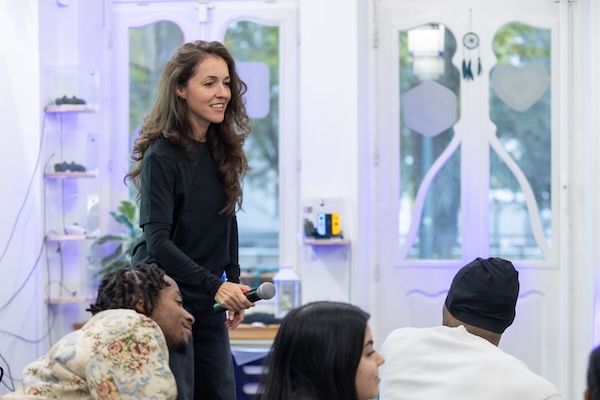 Caption: Andra Matresu, creator of brb – Be Right Back
Credit: Andra Matresu