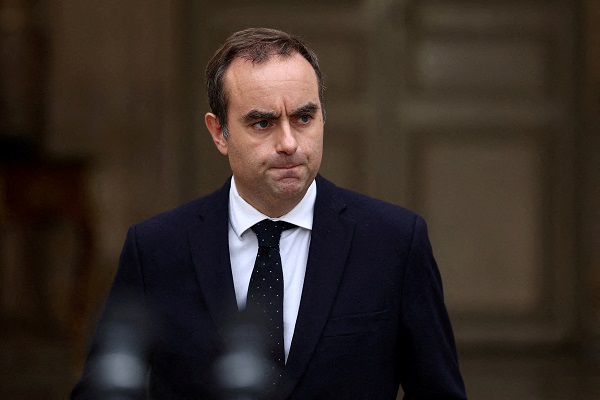
 French Prime Minister Sebastien Lecornu at the Hotel Matignon in Paris, France, 6 October 2025;
Credit: Reuters/Stephane Mahe/Pool/File Photo
French Prime Minister Sebastien Lecornu at the Hotel Matignon in Paris, France, 6 October 2025;
Credit: Reuters/Stephane Mahe/Pool/File Photo
PARIS (Reuters) - On Tuesday 9 December 2025, France's social security budget faced a knife-edge vote that could trigger a fresh political crisis and leave a €30-billion hole in funding for healthcare, pensions and welfare.
Prime Minister Sebastien Lecornu has no majority in parliament and his scramble to win Socialist support - including suspending President Emmanuel Macron's pension reform - has alienated centrist and conservative allies, leaving the bill's fate uncertain.
Lawmakers in the lower house begin reviewing the bill after 16:00 (CET) on Tuesday, days after narrowly approving the taxation side of the legislation.
Asked if she thought the government would win the vote, French Budget Minister Amelie de Montchalin told BFM TV on Tuesday: "I cannot say."
Montchalin added the government could pledge more money to fund the country's hospitals, in order to win over reticent political parties such as the Green party bloc.
Socialist leader Olivier Faure said on Monday 8 December 2025 that his party could back the bill after winning concessions - including suspension of Macron's landmark 2023 pension reform until after the 2027 presidential election.
But the far right and hard left are expected to vote against, while government allies such as the centrist Horizon and the conservative Republicains could abstain or vote "no". They say Lecornu gave too much ground by sacrificing pension reform and raising taxes to appease the Socialists.
Social security accounts for over 40% of France's overall public sector spending, covering welfare, healthcare and pensions.
Lecornu, a Macron loyalist, warned last week that rejection would create a shortfall of up to €30 billion - nearly twice the €17 billion in the original bill. That would jeopardise the entire 2025 public sector budget with time running out to pass it before year-end, potentially forcing him to seek stopgap legislation.
The government aims to cut France's budget deficit - already one of the euro zone's largest - to less than 5% of GDP next year. But it has little room to manoeuvre in a fractious parliament where no party holds a majority.
Budget battles have intensified since Macron lost his majority in a snap election last year, triggering instability that has toppled three governments. A fight over last year's budget brought down Michel Barnier's cabinet through a no-confidence vote.