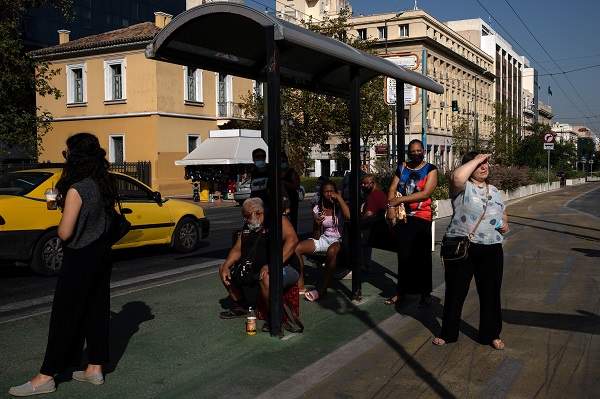
 Commuters wait at a bus stop in Athens, Greece, 3 September 2020;
Credit: Reuters / Alkis Konstantinidis
Commuters wait at a bus stop in Athens, Greece, 3 September 2020;
Credit: Reuters / Alkis Konstantinidis
ATHENS (Reuters) - Greek workers began a day-long nationwide strike on Wednesday 6 April 2022 over what they call a "deepening crisis" of rising prices and squeezed incomes, disrupting transport, ferries, schools and public hospitals.
The country's two biggest labour unions, representing about 2.5 million public and private sector workers, called the general strike expected to culminate in a protest in central Athens.
Greece emerged from a decade of financial crisis in 2018, only for the coronavirus pandemic to bring global travel to a standstill two years later, hurting its vital tourism industry.
Now, soaring energy prices, exacerbated by sanctions against Russia since its invasion of Ukraine in February 2022, have further hurt workers' pockets.
"For the last fourteen years, workers have been carrying the burden of a deep crisis that has affected everyone's incomes and lives", said GSEE, the country's umbrella private sector union. "As the years go by the crisis is constantly deepening, the burdens remain, our rights are shrinking".
Greece's annual consumer inflation surged to a 25-year high of 7.2% in February on the back of rising energy, housing and transportation costs.
The government has spent about €3.7 billion since September 2021 to alleviate the burden of soaring energy and fuel costs for farmers, households and businesses.
For the striking workers, the measures do not go far enough.
GSEE said in March it had proposed a 13% increase in the monthly gross minimum wage to €751 due to soaring inflation.
The conservative government raised the minimum wage by 2% to €663 in January 2022 and Prime Minister Kyriakos Mitsotakis has promised a second, larger increase from 1 May 2022.