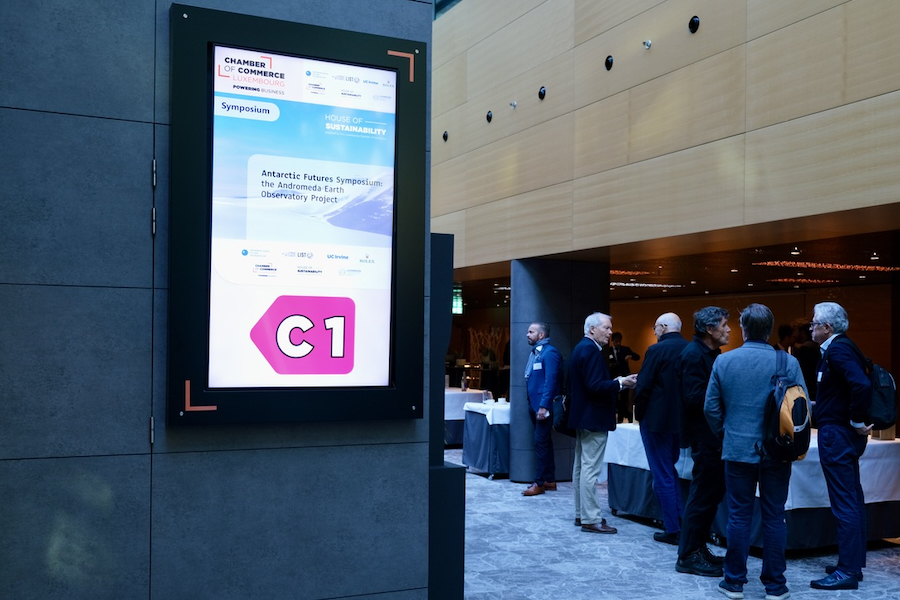
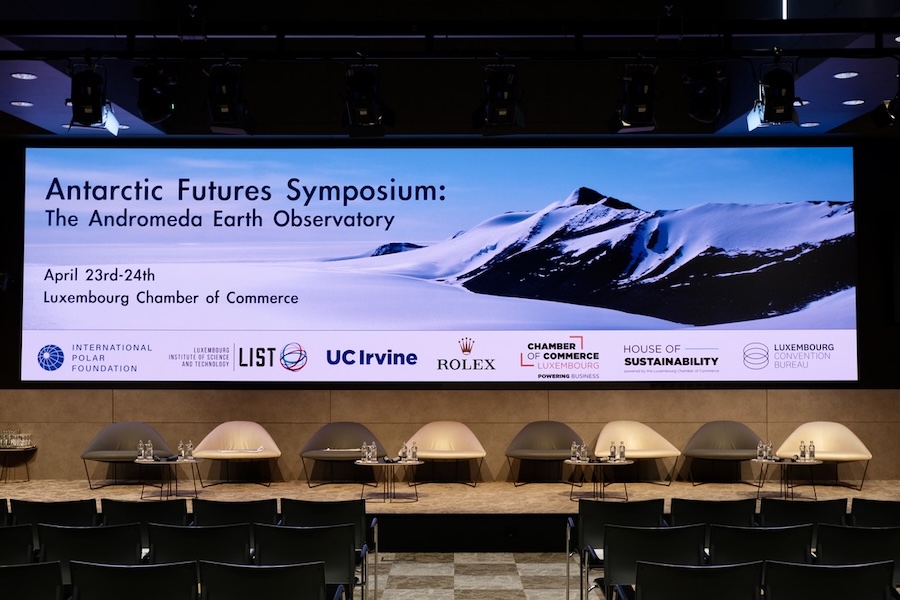
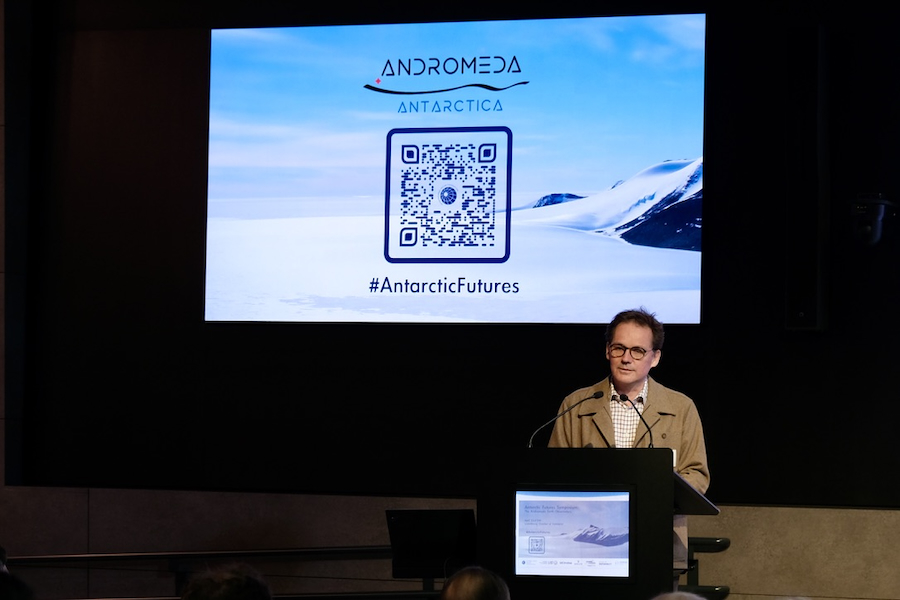
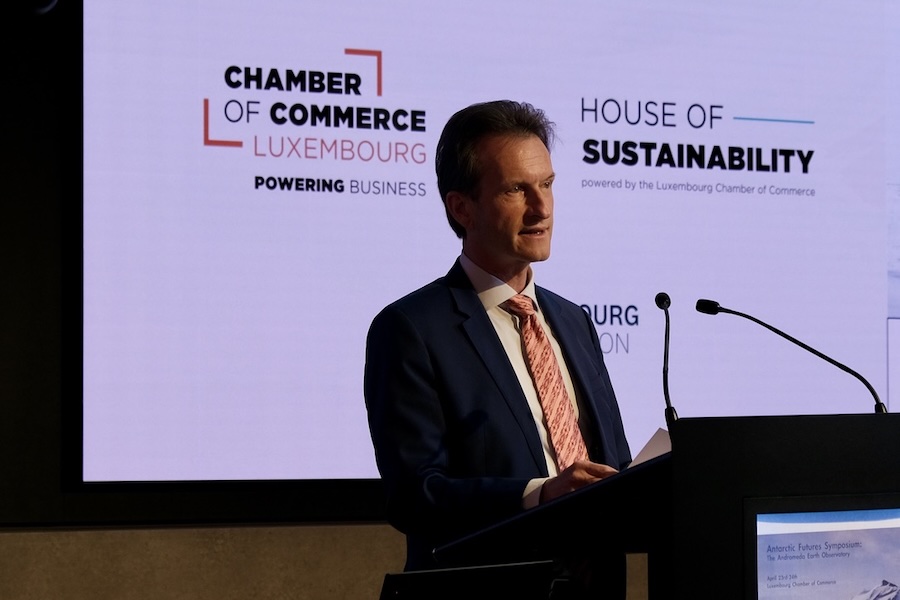
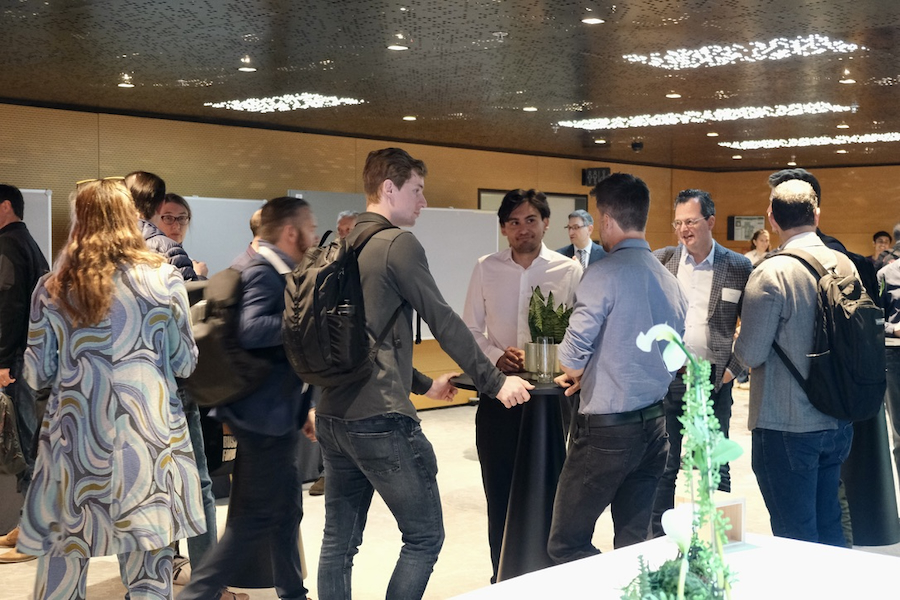
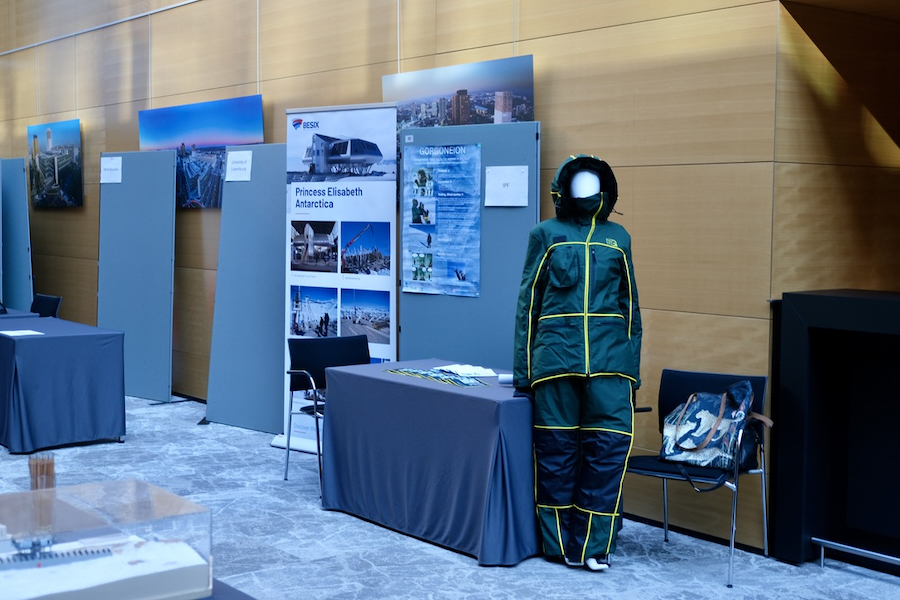
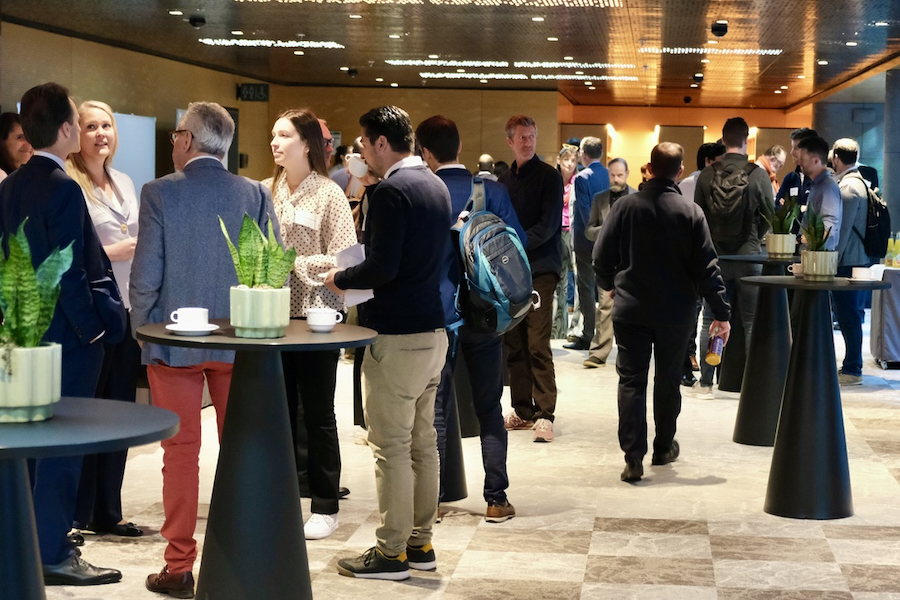
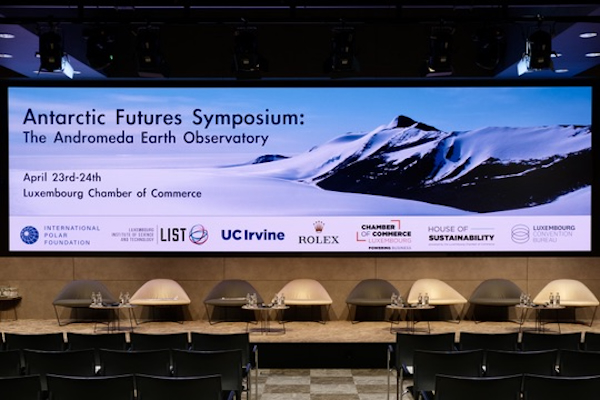
 Antarctic Futures Symposium at the Luxembourg Chamber of Commerce in Luxembourg-Kirchberg;
Credit: Steven Miller, Chronicle.lu
Antarctic Futures Symposium at the Luxembourg Chamber of Commerce in Luxembourg-Kirchberg;
Credit: Steven Miller, Chronicle.lu
On Thursday 23 April 2026, the first day of the Antarctic Futures Symposium was held at the Luxembourg Chamber of Commerce in Luxembourg-Kirchberg.
The two-day event, titled “Antarctic Futures Symposium: The Andromeda Earth Observatory", was organised by the International Polar Foundation (IPF), the Luxembourg Institute of Science and Technology (LIST) and the Luxembourg Chamber of Commerce and brought together representatives from around the world in the fields of science, technology, exploration and Space for a series of sessions and workshops relating to projects and developments in the Antarctic region, specifically in relation to the development of the Andromeda Earth Observatory.
The observatory, scheduled to begin operations in 2032 is a research and development centre designed to enable applied research and industrial collaboration under extreme conditions. It will function as a ground station, supporting earth observation, data acquisition and advanced communication infrastructures.
The opening session, moderated by Jean de Pomereu (IPF), featured contributions from representatives of Luxembourg’s Ministry of the Economy, IPF, LIST, the University of California, Irvine and the Belgian Government on the planning and development of the Andromeda Earth Observatory and the challenges such projects face in the harsh environment of Antarctica.
Opening the symposium, Director General of the Luxembourg Chamber of Commerce Carlo Thelen said: “Together, we are laying the foundations of a project that goes far beyond this event. In fact, this project engages our collective responsibility in addressing the major challenges of this century. It marks a key milestone as it is part of a large-scale, forward-looking scientific and technological initiative, the development of a zero-emission polar research station designed for the 22nd century.”
He added: “Why is this event so important? Well, because Antarctica plays a crucial role in balancing the global climate system. Better understanding its evolution means better anticipating the profound transformation that will affect our societies and our economies.”
Gilles Schlotus, First Advisor of Luxembourg’s Minister of the Economy then introduced a pre-recorded video message from Luxembourg’s Minister of the Economy Lex Delles, who was unable to attend the symposium due to other commitments. In his message, Minister Delles said: “Projects such as the Andromeda Earth Observatory demonstrate how cutting-edge technology, scientific excellence and long-term vision can be combined to generate knowledge of global significance. Luxembourg may be geographically distant from Antarctica, yet it is well-placed to continue meaningfully to this type of research. Over the past years, Luxembourg has positioned itself as a hub for research and innovation, with a strong emphasis on international collaboration, data-driven science and Earth observation.”
He added: “Our robust research ecosystem, openness to global partnerships and expertise in space and data-related fields create a stable and attractive environment for investment. This setting enables companies to put down lasting roots, grow sustainability and see ambition in forward-looking projects flourish. We firmly believe that investment in research and innovation is essential not only for the economic diversification and competitiveness but also for informed policymaking and sustainable development.”
Alain Hubert, Founder & President of IPF, then gave a presentation detailing the importance of scientific research in the Antarctic, particularly in relation to climate change, the role the Andromeda Earth Observatory will play and the work being done to bring the project to life.
He said: “Andromeda will offer joint infrastructure management to countries wishing to engage in Antarctic research activities. It supports a base for consultative status at the Antarctic Treaty, provides access to a state-of-the-art scientific research station operated entirely with renewable energy, with flexible, technical and logistical support to deliver research outcomes in extreme conditions.”
The next speaker, Eric Rignot, Professor of Earth System Science at University of California, Irvine (US), described his role in the symposium of encouraging those in attendance to “think boldly and ambitiously about what we want to achieve with Andromeda”. He noted that it is critical to observe the polar regions as they are warming faster than any other part of the planet because of climate change and gave detailed examples of the impact of the rise in sea levels projected for the coming decades, and how scientific study in Antarctica is important in understanding the mechanisms behind this.
Eric Rignot said: “We want to broaden the access to Antarctic science. Antarctica should not be limited to a few nations. It belongs to the entire planet. So, all the nations are invited to participate in Antarctic science. We want to do that responsibly, securely and intelligently.”
In his presentation, Olivier Guillon, Chief Executive Officer, LIST, said: “At the Luxembourg Institute of Science and Technology we see this initiative as much more than only a new research station. We see it as a living lab for the technologies and systems that will shape the future of sustainable infrastructures in extreme environments, like, of course, Antarctica, other places on Earth, deep in the oceans and potentially even beyond.”
He added: “LIST's mission is to transform scientific knowledge into technologies and solutions that benefit society and projects like Andromeda align perfectly with that mission. It requires systems that are efficient, reliable and autonomous, where every resource - energy, water, materials and also waste - must be carefully managed.”
Michel-Etienne Tilemans, Special Envoy to Belgium for the Polar Regions, then provided a more political perspective of the project and other developments in the polar regions. He remarked: “In the Antarctic, natural resources are a source of latent tension. Exploitation of natural resources, fishing activities and bioprospecting in the Southern Ocean already generate economic and political tensions. In Antarctica as such, mineral and biological resources represent a deferred yet structuring security issue. That is precisely why the governance framework that is in place is there to protect Antarctica as a natural reserve devoted to peace and science. Let us make sure that this remains so in the future.”
The final speaker, Nighat Amin, Co-Founder & Head of Environmental and International Affairs at IPF, talked of the history of Antarctic science and exploration, the vital part the continent plays in circulation of the Earth’s oceanic currents and the need to modernise the treaties and politics which currently protect Antarctica. She said: “The Earth is adapting and it's not going to wait for us to catch up. We have to think of ways that we can be more efficient and a little bit more intelligent if we're going to survive. Antarctica is important in this quest.
The first day of the symposium continued with a series of presentations and discussions on the challenges of building Andromeda Earth Observatory, the scientific case for the development of the installation and discussions on the challenges and benefits of undertaking scientific research in Antarctica.