 Credit: natur&ëmwelt
Luxembourg has what is known as a Temperate Climate in which winters are generally mild and summers comparatively cool, with rainfall that can be high; its flora and fauna have thrived in and adapted to this climate over the centuries and millennia, with ongoing challenges due to pollution and recent climate change, as well as the introduction of non-native species, resulting in disruptions to the norm.
Nevertheless, with various initiatives and organisations helping the ecosystem and habitat, including sustainability and re-wilding, there is a lot happening in nature across the Grand Duchy.
Chronicle.lu has teamed up with natur&ëmwelt (the non-profit organisation (naturemwelt), the foundation (Hëllef fir d'Natur) and the Wildlife Care Centre (Flegeestatioun) for a series of articles on Luxembourg's nature reserves, in which we look at the natural habitats that preserve biodiversity and protect ecosystems from development, pollution and intensive agriculture.
No. 14 in this series focuses on the Labich nature reserve.
The Labich reserve, along with the adjacent Bann reserve, lies along the banks of the Woltz river, just south of the hamlet of Schleif. The valley floor features a rich tapestry of wetlands, marshes, wet meadows and interspersed copses. This area was nearly transformed into a tourist lake; between the 1970s and 1990s, a dam project was planned for the Wiltz valley upstream of Winseler. Recognising the vital ecological importance of these wetlands, both the Foundation Hëllef fir d’Natur and Oeko-Fonds acquired separate parcels in the Labich site to successfully block the dam project.
Habitat Creation for the Umbrella Species
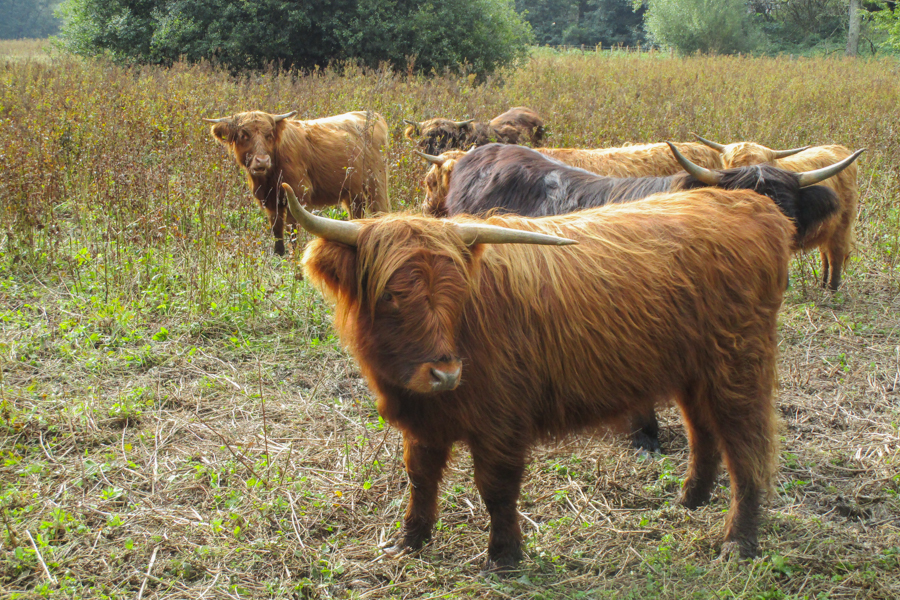
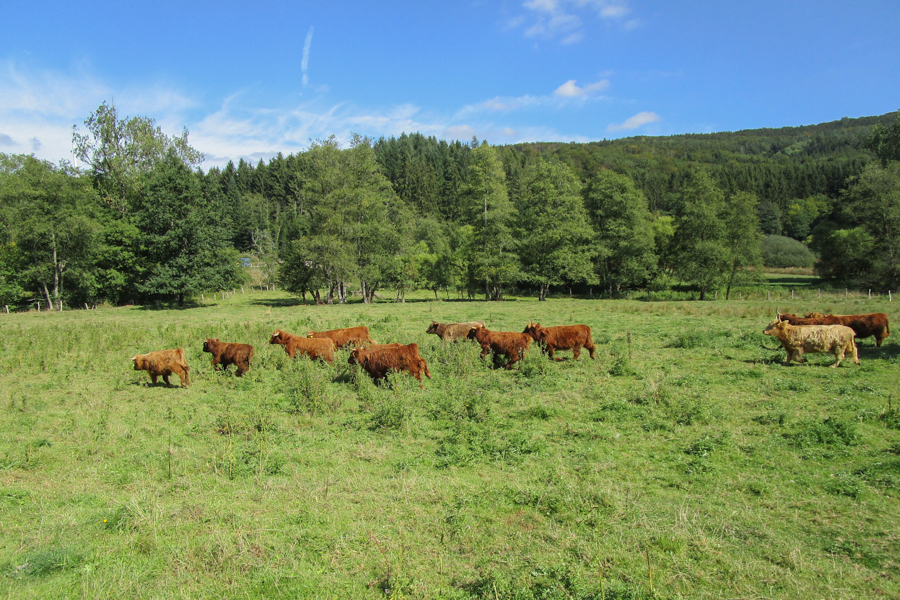
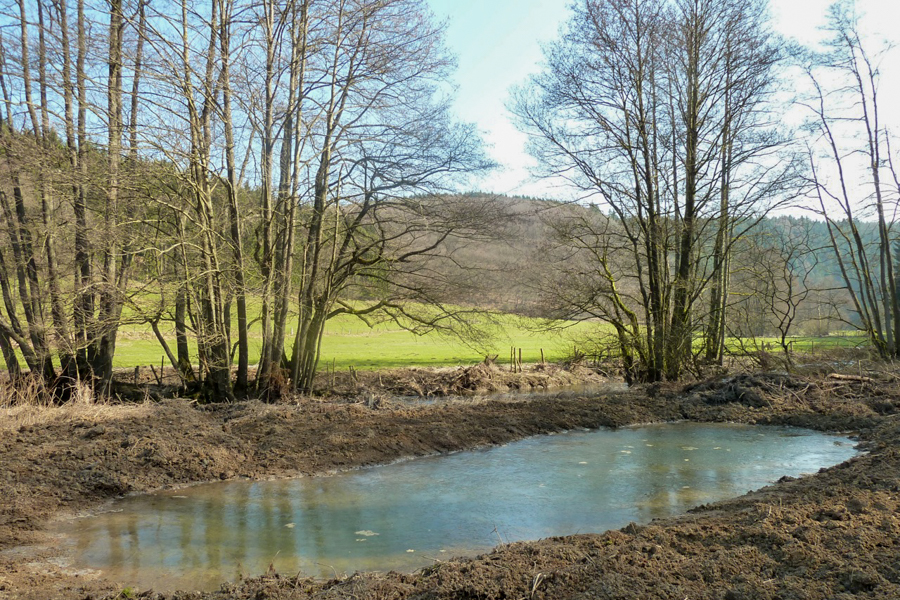
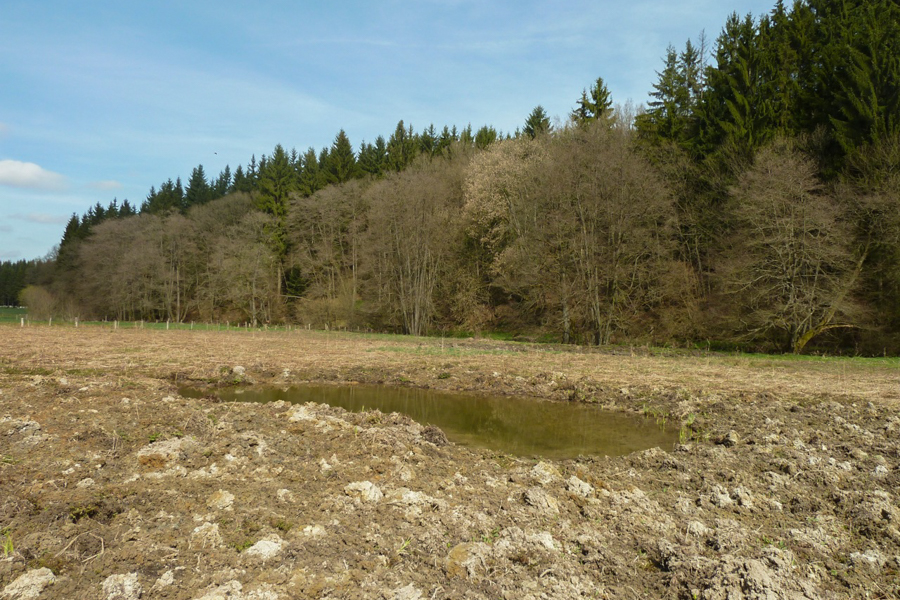
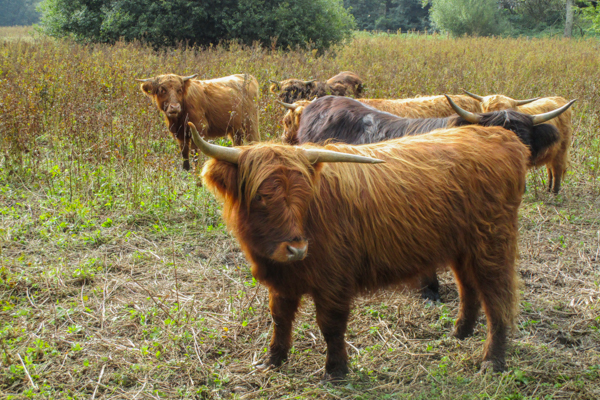
As part of the LIFE Otter project conducted between 2007 and 2012, concrete development measures were implemented across both sites specifically to recreate habitats suitable for the Otter (Lutra lutra). Because the Otter serves as an important "umbrella species," these measures, notably the creation of about ten new ponds, benefit a multitude of other species. Complementing the Foundation’s parcels, a private initiative around the Schleif Mill contributes to the appropriate management of the wet meadows. The reserve lands are managed via extensive grazing using Highland cattle, with special consideration given to the management practices needed to support the Marsh Fritillary (Lycaena helle).
Flora and Fauna of the Wetlands
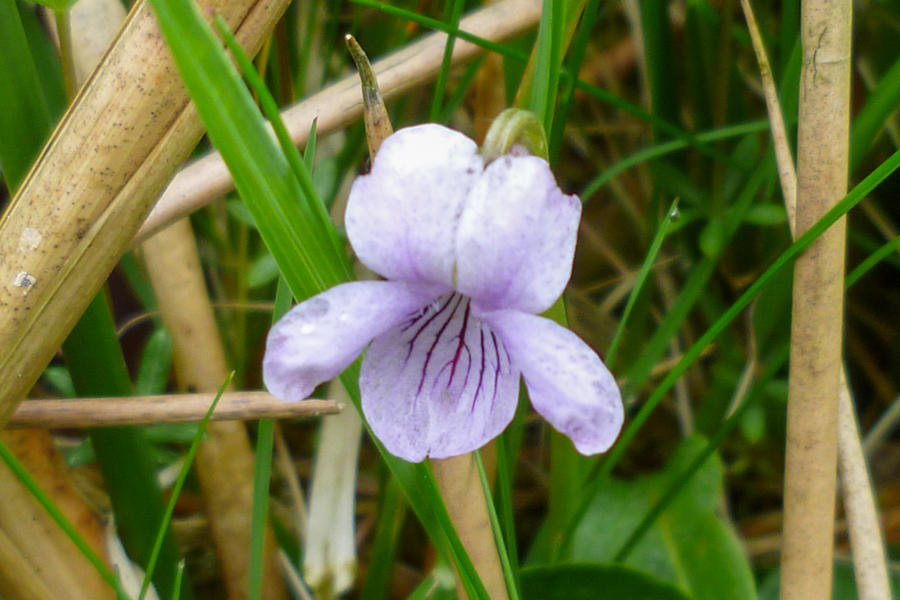
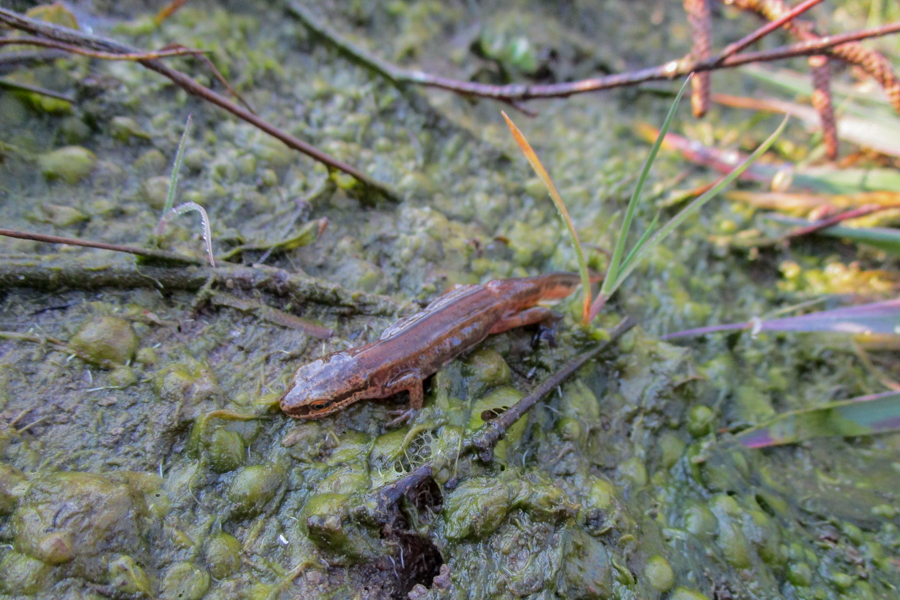
Labich's wet meadows are home to characteristic species. The Marsh Violet (Viola palustris), a plant thriving in humus-rich, nutrient-poor and often peaty wetland environments, loves the numerous springs that feed the alluvial plain. These wetlands also provide ideal breeding grounds for the Palmate Newt (Lissotriton helveticus), Europe's smallest newt, which utilises the small ponds created in the wet scrublands, keeping close to the wooded slopes that serve as its terrestrial habitat. Furthermore, spruce plantations established in waterlogged areas are currently being converted back into riparian alder forest.
A Legacy of Conservation: Honouring Néckel Knoch
A portion of the reserve was recently acquired in honour of the late Mr Néckel Knoch, former president of the Ettelbrück chapter of natur&ëmwelt. Mr Knoch was a tireless activist who strongly opposed the proposed tourist reservoir upstream of Winseler. His legacy is cemented by the ongoing conversion of spruce stands in wet locations into valuable alluvial forest.
Visitor Information: Experiencing the Woltz Valley Resilience
The Labich reserve offers a fascinating look at successful resistance against development and dedicated habitat creation. The best time to visit is spring and early summer, when the Marsh Violet (Viola palustris) is blooming near the numerous small springs feeding the ponds and the Highland cattle are actively grazing the wet meadows. Visitors can appreciate the habitat creation efforts firsthand, especially the numerous new ponds established for amphibian breeding. While the site is focused on conservation and cattle management, visitors can observe the landscape from designated approaches. Please remember that the area is under specialised management, requiring visitors to respect the grazing animals and remain outside fenced conservation zones to allow the otter and other rare species the undisturbed space they need.