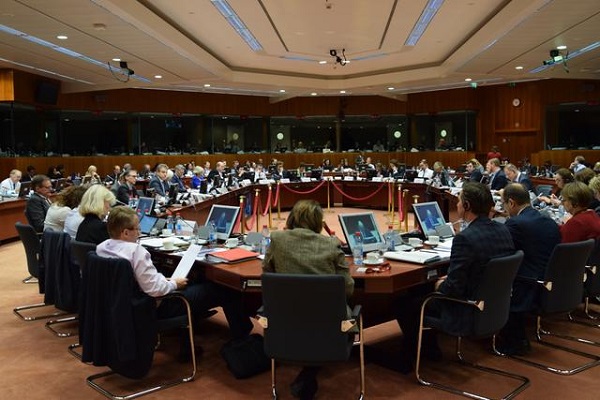
On Monday 23 November 2015, Ministers of Youth and Education of European Union Member States met in Brussels for the first part of the 'Education, Youth, Culture and Sports' Council to discuss the need to prevent radicalisation following the tragic attacks in Paris on Friday 13 November.
Luxembourg Minister for National Education, Childhood and Youth, Claude Meisch, chaired the Council, remarking afterwards it that the Ministers looked at how education, schools, childcare facilities and youth initiatives could contribute towards preventing such "barbaric acts".
Minister Meisch emphasised the reinforcement of social inclusion and the prevented marginalisation of young people, stating that it was important to understand why young Europeans were being pushed towards radicalisation and felt they had no prospects for the future. The Ministers concluded that investing in schools, education systems, childcare facilities and youth programmes must become a top priority for European and national policies.
"By combatting school dropout rates, by offering greater scope for youth political by fostering academic achievement for children from migrant backgrounds, by targeting young migrants using youth-work tools, by providing quality support from a very early age aimed at preparing all children for the challenges of school, by imparting European values to young people, by ensuring education in citizenship and social cohesion, we have the means to prevent the radicalisation and marginalisation of so many young people', stated Claude Meisch. He stressed that European education systems must 'adapt to a multicultural situation'," Minister Meisch commented, recalling that it is often children from migrant backgrounds that are at risk of leaving school without high school diplomas and of ending up unemployed.
Tibor Navracsics, European Commissioner for Education, Culture, Youth and Sport, was of the opinion that the disadvantaged and refugees should be better integrated in society, viewing the recent Paris attacks as evidence that youth and education policies need to be used "more effectively". He found that EU actions in this area should attack the causes of radicalisation, such as inequality, social exclusion, poverty and unemployment.
He cited the Erasmus+ programme as an important tool in the continued support of inclusion and the fight against radicalisation, stating that the number of projects dedicated to social integration increased by over 100 from 2014 to 2015.
The Commission will also call for funding proposals worth €10 million for projects against radicalisation on the ground. Inclusion will be placed at the heart of youth policies, stated the Commissioner. Tibor Navracsics also called on guaranteeing refugees and migrants access to education and pointed out that specific measures to facilitate the recognition of diplomas had been launched.
French Minister for National Education, Higher Education and Research, Najat Vallaud-Belkacem, stressed schools as key in the fight against terrorism and that these institutions must do everything to "prevent the temptation of radicalisation and ensure that [...] social cohesion and the values of liberty, equality and fraternity still mean something." She further emphasised education and training as a "bulwark against fanaticism and a vector for openness, mutual respect, and fraternity."
Photo by MENEJ