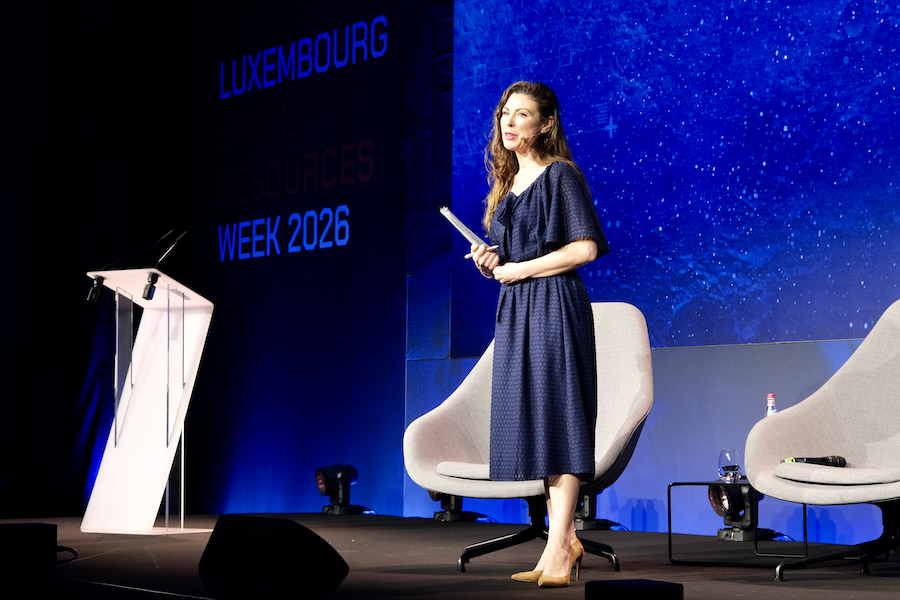
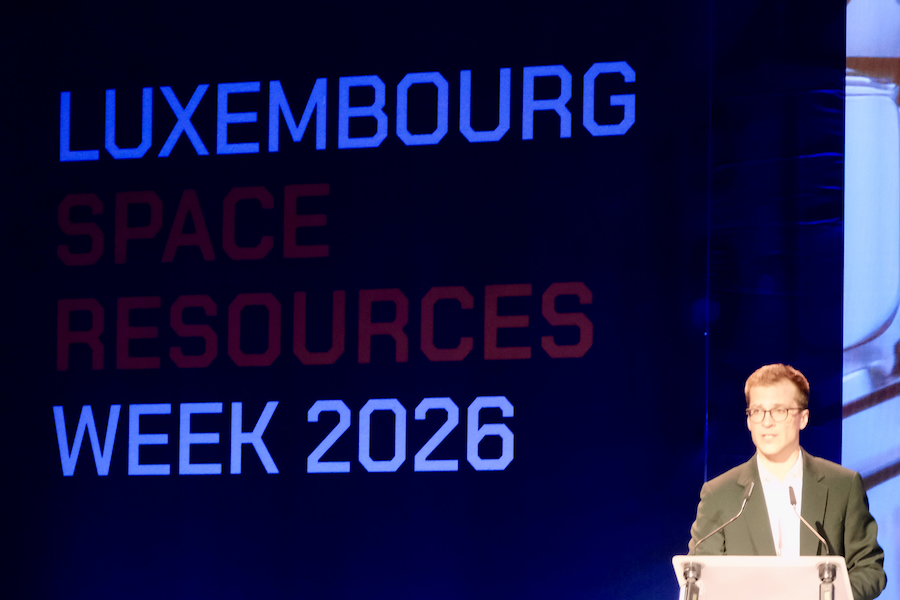
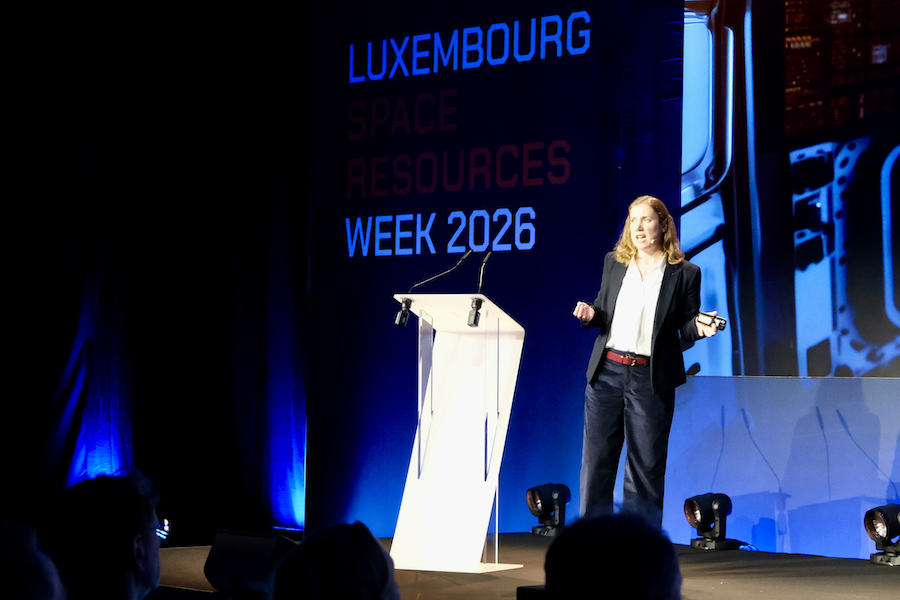
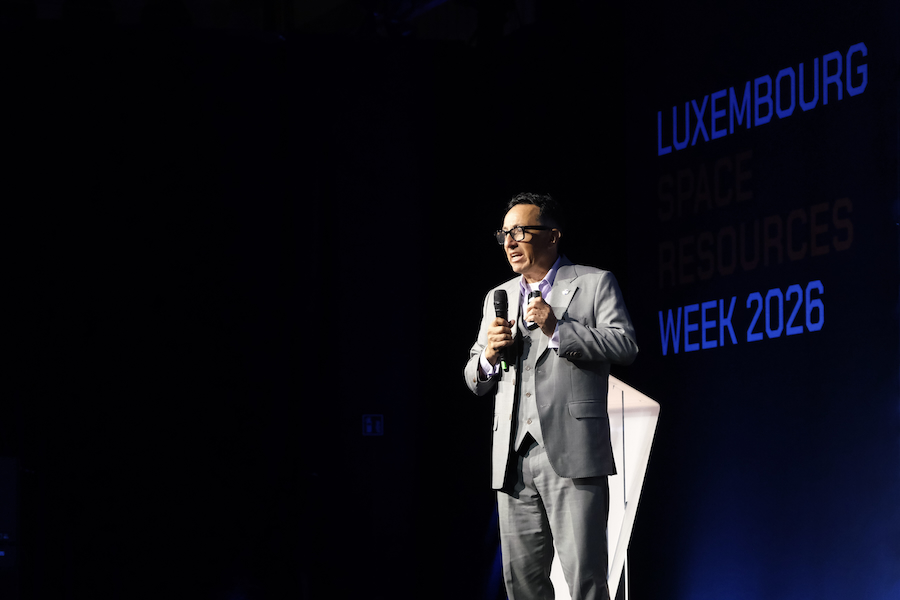
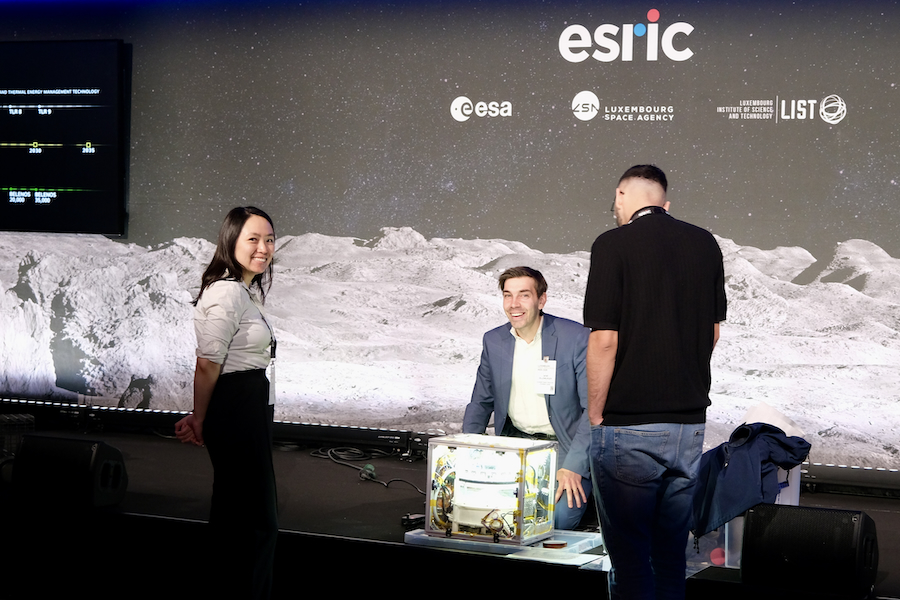
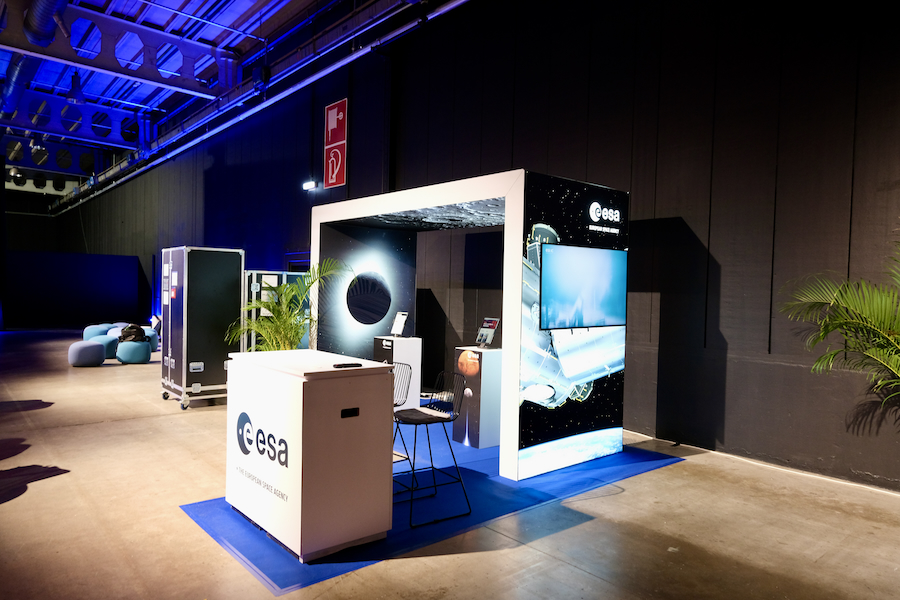
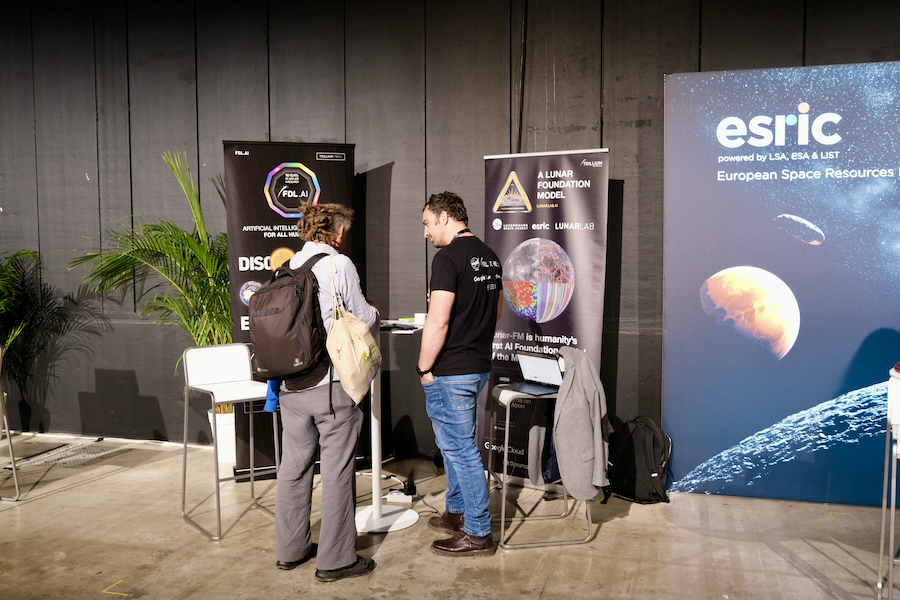
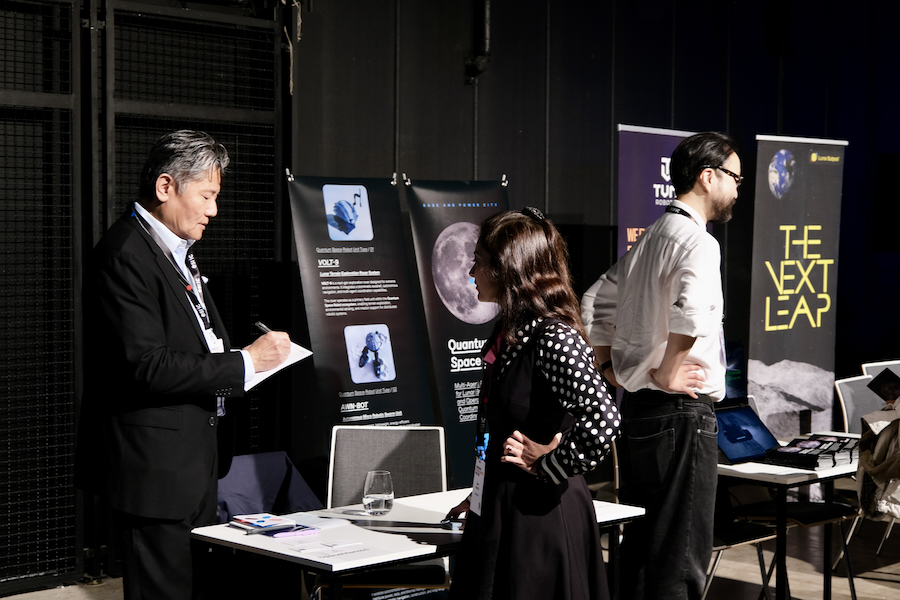
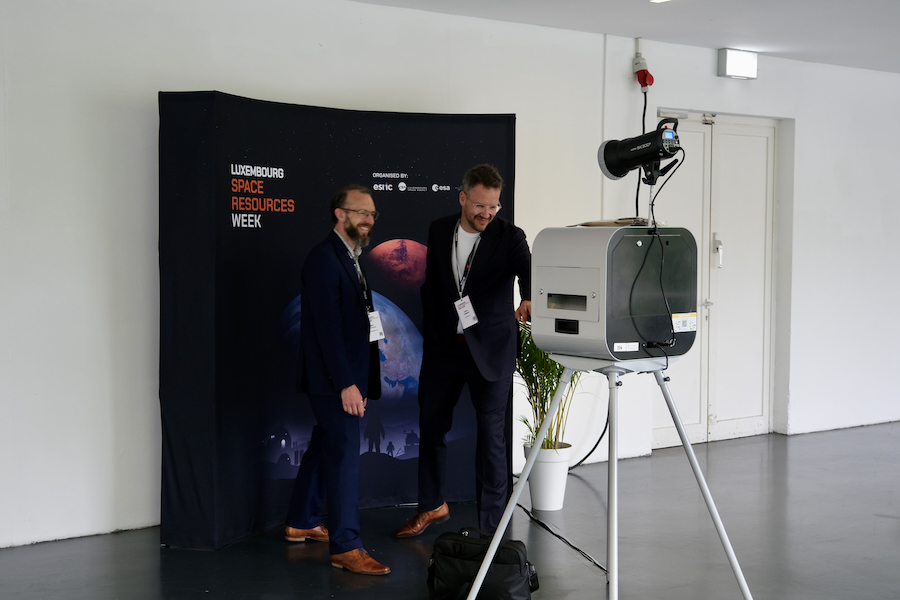
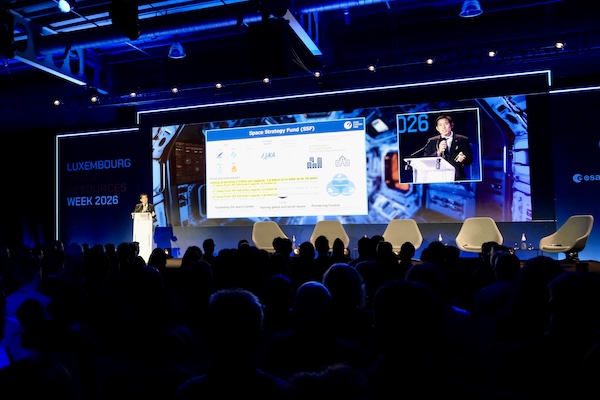
 Space Resources Week 2026 at LuxExpo The Box in Luxembourg-Kirchberg;
Credit: Steven Miller, Chronicle.lu
Space Resources Week 2026 at LuxExpo The Box in Luxembourg-Kirchberg;
Credit: Steven Miller, Chronicle.lu
On Monday 4 May 2026, the Space Resources Week Conference 2026 opened at LuxExpo The Box in Luxembourg-Kirchberg.
The event will run from Monday 4 to Thursday 7 May and will host experts and developers in the fields of space science and technology from 35 countries for a series of discussions, workshops and demonstrations on various space-related subjects including future lunar missions, near-Earth asteroid detection, mineral analysis, governance and law.
With around 400 people in attendance, the opening ceremony, hosted by presenter Lisa Burke welcomed contributions from representatives from Luxembourg’s Ministry of the Economy, the Luxembourg Space Agency (LSA), the United Nations (UN), the European Space Agency (ESA), the European Space Resources Innovation Centre (ESRIC), the National Aeronautics and Space Administration (NASA), the Australian Space Agency (ASA) and the Japan Aerospace Exploration Agency (JAXA).
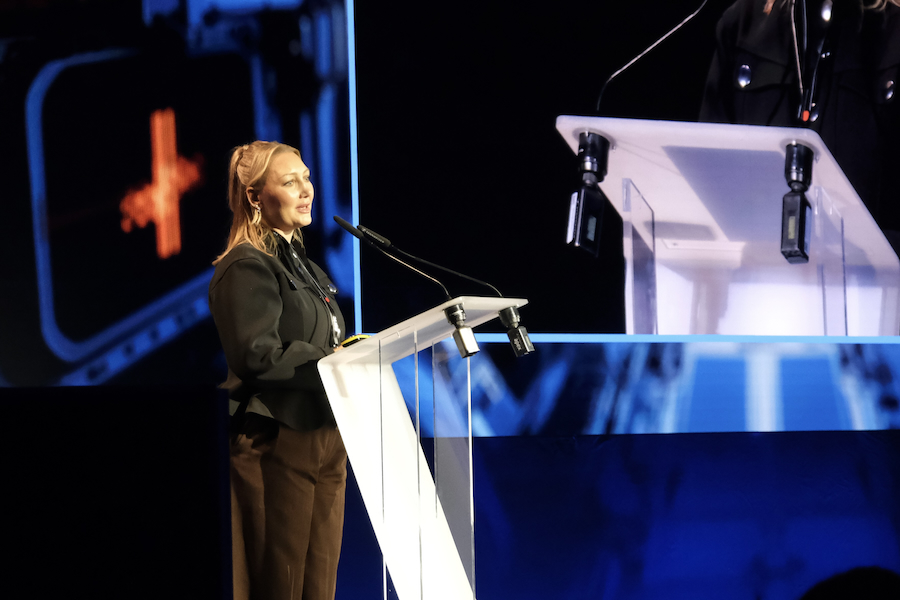
In her opening speech, Kathryn Hadler of ESRIC welcomed attendees and outlined the details for the four-day conference. She also described how the event has grown and established Luxembourg within the space community and recalled her first visit to Luxembourg for Space Resources Week in 2019, an experience which contributed to her moving permanently to the Grand Duchy. She remarked: “Fast forward seven years and I am proud to call Luxembourg my home. I hope you will find the conference that we have put on for you this week as being engaging and dynamic as I found it all those years ago.”
In the following speech, Jacques Thill, representative for Luxembourg’s Ministry of the Economy, thanked the conference’s contributors and highlighted how Luxembourg’s reputation has grown within the industry. He said: “Your presence here today to celebrate with us means a lot. It is an acknowledgement of the strong development of the field since the beginnings of the Luxembourg initiative SpaceResources.eu. It is also an acknowledgement of the role Luxembourg has been playing in the space resources field on a global stage over the past decades. The topic has been growing extensively and its instrumental role for the future human presence in space is now recognised by all international players.”
ESA astronaut, Andreas Mogensen, was then invited to the stage and he spoke of ESA’s role in the recent Artemis moon missions and Europe’s plans for lunar exploration, which include developments in lunar architecture, payload delivery, lunar rovers and communication solutions. He noted: “I am proud that Europe played a small role in the mission via the European Service Module and it is clear that ESA hopes to continue playing a role in future Artemis missions. But it is also clear that there exists some uncertainty and that we are in a new context in exploration, meaning that we in Europe need to take stock, realign and ensure that our posture represents European goals and priorities.”
On the subject of Europe’s position within global space development, Andreas Mogensen highlighted the importance of Europe’s lunar lander project “Argonaut” and stated: “We are now looking for European autonomy to achieve our goals and priorities. Looking at the international context, we see international partners and commercial partners really accelerating and we can expect even more landers in the coming years. Here, the European Argonaut is a key priority for Europe.”
The next contributor, Edgar Castro, Chief, Propulsion & Power Division at NASA, provided an engaging presentation on what the future holds for lunar exploration and development. He detailed plans for establishing a permanent lunar presence, the various challenges this presented and how collaboration will be required to bridge technology gaps and to meet the ambitious timescales put in place to build a moon base. He said: “Our mentality has to change about how we approach this opportunity. It is our opportunity right now to go play in that game and so I am super excited about the tempo, I am super excited about the technology and the long-term objective of a moon base.”
There then followed a video message from Enrico Palermo of the ASA, who outlined the Australian Space Agency’s plans for various lunar missions involving robotic landers to study lunar seismic activity, undertaking geophysical exploration of lunar environments and developing a world-class space automation AI robotic control centre. In closing, he congratulated Luxembourg on its role within the space industry. He remarked: “Luxembourg has shown global leadership in space resources through policy, innovation, investment and the creation of forums like Space Resources Week that bring this community together. Australia values our strong relationship with Luxembourg, including between our space agencies and the shared emphasis we place on responsible, sustainable and commercially viable space action.”
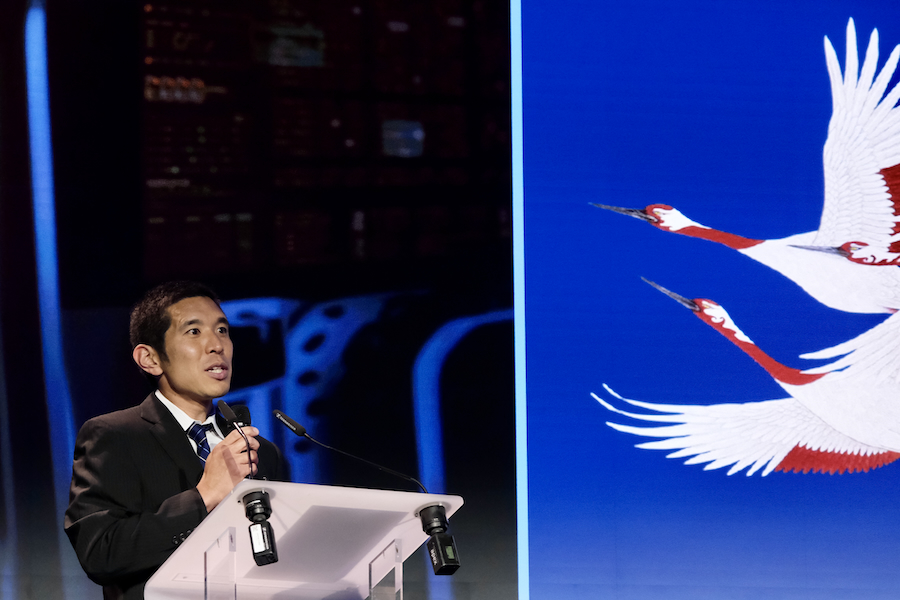
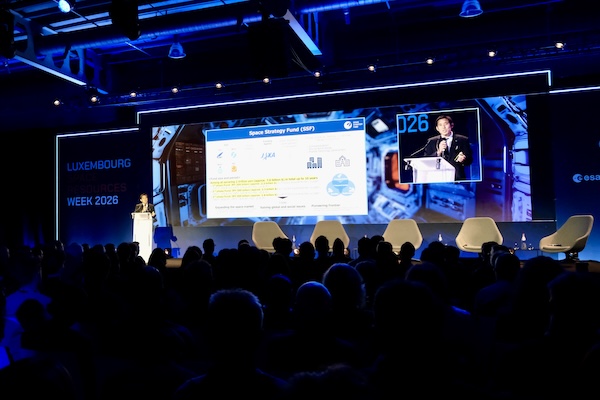
Other contributions came from Jun Shimada from JAXA, who gave a presentation on the role of the Japan Aerospace Exploration Agency and its long-term strategy in development and funding for space technology and business opportunities, including the JAXA lander, which will travel to the Moon’s South Pole region to investigate water ice resources, and from Aarti Holla-Maini, Director of the United Nations Office for Outer Space Affairs, who gave a speech via video in which she highlighted the importance of collaboration. She stressed: “If we are to maintain a sustained and sustainable presence on the moon and in deep space more generally, then we need to be able to extract and utilise space resources in situ. But as every respectable miner will tell you, technology and funding can only go so far. Given the inherent global nature of space as a medium that does not belong to any individual actor, international law, cooperation, and coordination will play a crucial role in the success of space resource activities.”
The final speaker, Rosanna Deim-Hoffmann from the United Nations Office for Outer Space Affairs talked of the legal aspects of space development and exploration, the desire for developing nations to enter the conversation and how the work of the UN is crucial in helping countries meet their project goals successfully and safely. She stated: “What makes space activities grow, what makes them safe, predictable, what makes them sustainable, is legal clarity, the confidence that rules of the road exist.”
She added: “I would say in the last one to two years, space resource activities is a continuous request we are getting from emerging space-faring nations, from developing nations. They want to understand how they can include this in their national laws, how they can include this in their policy, how can they attract investment around these types of activities, how can they provide a legal, certain environment for their academia, for potential startups. So, this is really something that we are seeing, receiving a momentum around the activities that we do at the UN.”
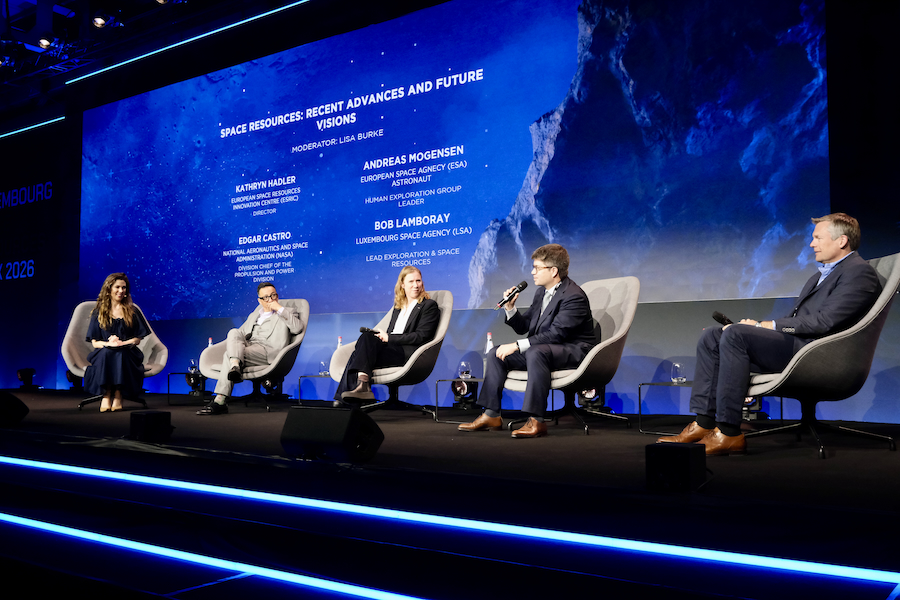
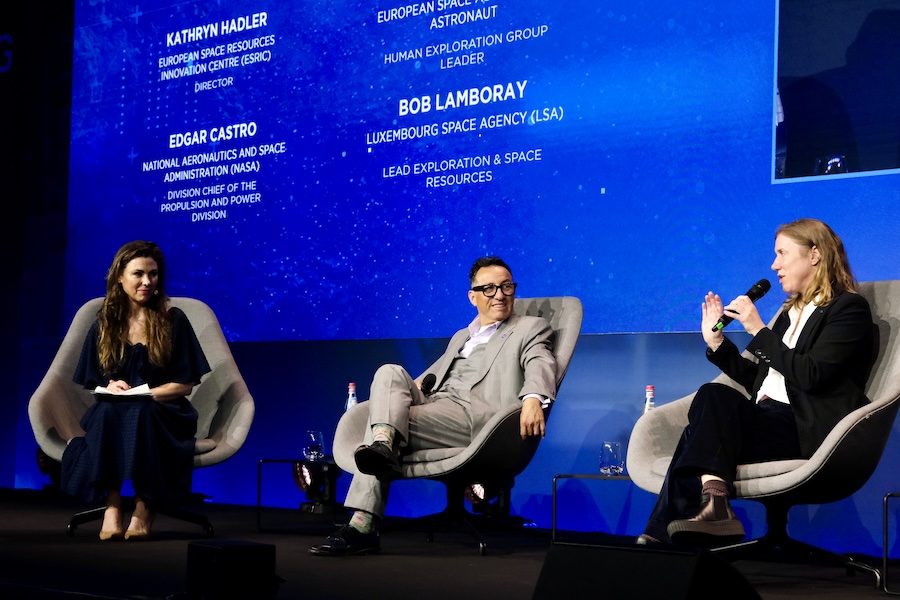
Following a coffee break, the event continued with a panel discussion, moderated by Lisa Burke, which featured Bob Lamboray (LSA) Andreas Mogensen, Edgar Castro and Kathryn Hadler and focused on subjects including the work of ESA, the challenges of collaborating, legal frameworks and space sovereignty.