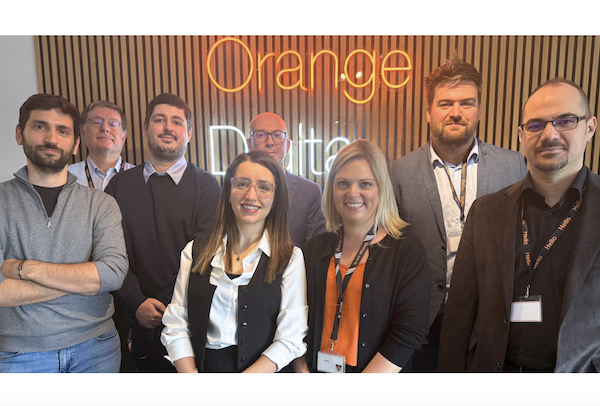
 Credit: LIST
On Tuesday 16 June 2026, the Luxembourg Institute of Science and Technology (LIST) announced the launch of a new research project with Orange Luxembourg aimed at reducing energy consumption across Luxembourg's mobile network infrastructure by at least 10% through the use of artificial intelligence, without affecting service quality for end users.
According to LIST and Orange Luxembourg, the 36-month RAISE (Radio Access Intelligence for Saving Energy) project is supported by the Luxembourg National Research Fund (FNR) and Luxembourg's Ministry of the Economy. The initiative aims to reduce energy costs, lower carbon emissions and make Luxembourg's mobile network a model for digital sustainability in Europe.
The project focuses on the Radio Access Network (RAN), the part of the mobile network responsible for transmitting signals between users' devices and network infrastructure. The RAN accounts for more than three-quarters of a mobile operator's energy consumption.
Mobile operators have traditionally had limited tools to adjust energy consumption in real time. RAISE aims to address this by enabling the network to use energy more intelligently based on demand and time of day. The project will also examine future developments towards 6G networks, which are expected to create additional opportunities for energy optimisation.
To support the project, researchers will develop a detailed digital twin of Orange Luxembourg's network. The virtual model will allow different energy-saving measures to be tested safely using real network data, including traffic figures, energy consumption readings and technical performance logs.
The digital twin will make it possible to assess scenarios such as switching antennas to low-power mode during the night or identifying the most efficient frequency bands at different times of the day. All data will be anonymised and processed in accordance with European privacy regulations.
“With RAISE, we are taking AI out of the simulation laboratory and putting it to work on one of the most energy-intensive parts of our daily digital lives. Working with real data from an active operator makes all the difference: the solutions we develop will work in practice once deployed, not only in theory,” said Sébastien Faye, Head of the Distributed & Intelligent Connectivity research group at LIST.
The project will develop a suite of AI-powered tools, each dedicated to a specific task. One tool will forecast network activity over the following 24 hours, another will determine when antennas can switch to low-power mode and a third will manage batteries installed at certain network sites by charging them when electricity prices are low and using them during periods of peak demand.
LIST added that Luxembourg's unique mobile traffic patterns will play an important role in the project. The AI models will be trained using real network conditions characterised by significant weekday traffic peaks driven by cross-border commuters and comparatively quieter weekends. These conditions are unlike those found elsewhere in Europe and could help make the resulting solutions particularly precise and effective.
The tools are expected to reduce electricity consumption across Orange Luxembourg's network by at least 10%, without users noticing any difference in service quality.
“By leveraging artificial intelligence in collaboration with the Luxembourg Institute of Science and Technology (LIST), we are optimising the management of our network to reduce our energy consumption by at least 10%, while guaranteeing impeccable service quality. This initiative reflects our commitment to a more responsible and sustainable digital future,” said Christophe Van Yck, Head of Network & Strategic Projects at Orange Luxembourg.
The project is scheduled to run until 2029 and contributes to European energy-efficiency objectives for next-generation mobile networks.